






Money expert Martin Lewis has issued a fresh update on the much hated energy bill standing charges which are set to see bills reduce by £39 a year.
A consultation has been launched by the government, exploring options for reducing the standing charges on gas and electricity bills in future.
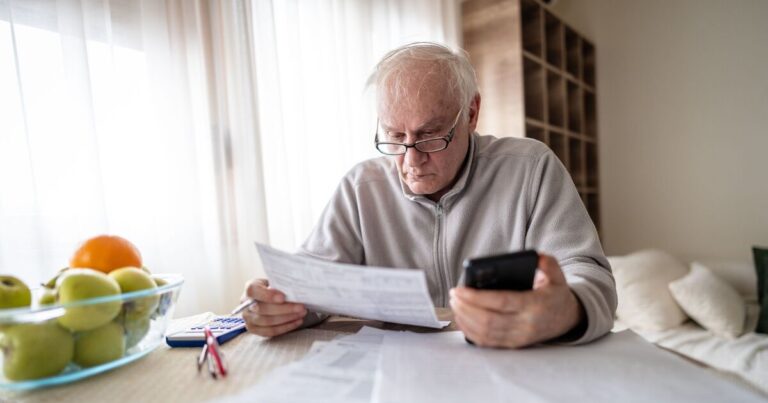
Standing charges are the charges levied on households on their bills each day, just for the privilege of having gas or electricity. On the current price cap, they are 34.03p per day for gas and 53.68p for electricity, meaning a dual fuel household is paying over 87p a day even if they don’t use any energy.
Martin Lewis has often referred to this phenomenon as a ‘moral hazard’ and called for more to be done to tackle it.
Now, Martin said, the government has announced a consultation on cutting the standing charges by an average of £39 a year by scrapping the Warm Home Discount costs from the charge.
Speaking on the latest episode of The Martin Lewis Money Show, he said: “Energy standing charges to drop, the government is consulting on shifting the Warm Home Discount cost to the unit rate, it’ll be typically £39 a year off the lowest standing charges from April when the unit rates are due to drop after Budget changes. There’s a consultation, search WHD cost recovery gov.uk if you want to feed in. I know many of you are really, really passionate about the standing charge.”
In the consultation released by the Department for Energy Security and Net Zero, the government says: “The costs of the Warm Home Discount (£39 on the typical dual fuel bill) are recovered by suppliers through the standing charge: a fixed daily fee applied to all customers regardless of energy usage.
“This consultation seeks views on the impacts of a proposal to move WHD cost recovery from the standing charge to the unit rate – the per-kWh charge for electricity and gas usage – for both consumers and suppliers. We are seeking views from energy suppliers, WHD recipients, consumer groups and consumers on how WHD costs are recovered.”
In the consultation document, it adds: “Alongside the other actions taken by government to tackle high energy bills, there is a strong case to make standing charges fairer for consumers. Standing charges are a fixed daily fee applied to all customers regardless of energy usage for households. This consultation sets out a proposal to move the cost recovery for the WHD from standing charges to the unit rate. If this proposal is implemented, these standing charges for dual fuel households could be reduced by approximately £39. Instead, the recovery of WHD costs would be achieved via the unit rate.”
Explaining how this would work, the document adds: “Standing charges are applied no matter how much energy the consumer uses so consumers who use less energy — often those in smaller homes or on lower incomes — bear a relatively larger burden. This means that the current method of recovering WHD costs through the standing charge results in households with lower energy consumption paying a higher proportion of their total bill toward WHD policy costs compared to those with higher consumption.
“By shifting WHD from standing charges to the unit rate, there is an overall reduction in the average dual-fuel bill for the average consumer.
“This is because more of the costs are recovered from higher consuming non dual-fuel households including those with electric heating and those households with electric vehicles. This is a more progressive approach to cost recovery compared to the status quo: a flat levy unrelated to total consumption. On aggregate, average consumers will see bill savings if the proposal to move WHD costs from the standing charge to unit rate proceeds.”