







How IFS says Reeves can raise taxes and fill £30bn black hole (Image: Getty)
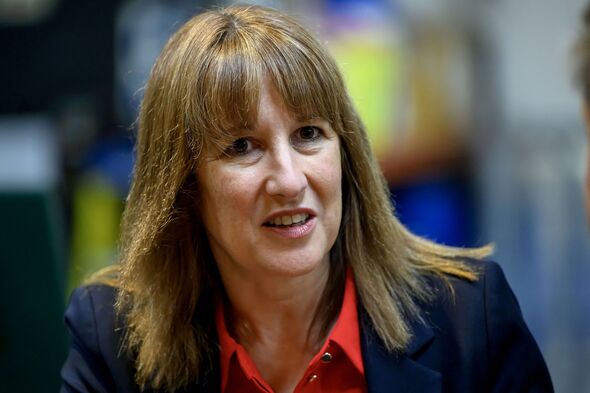
Chancellor Rachel Reeves is widely expected to raise taxes in her autumn Budget to fill an estimated £30billion fiscal hole. The Institute for Fiscal Studies (IFS) think tank shared suggestions for how Ms Reeves can raise the money without breaking Labour’s manifesto pledges not to increase income tax, National Insurance, and VAT rates.
It suggested that tax reform would be a “worthy goal”, but the focus should be not only on how much tax to raise, but also on how to raise it fairly. Isaac Delestre, a senior research economist at IFS, said: “Revenue-raising seems likely to be a major goal of the coming Budget. But if Rachel Reeves limits her ambition to collecting more revenue, she will have fallen short. Almost any package of tax rises is likely to weigh on growth, but by tackling some of the inefficiency and unfairness in our existing tax system, the Chancellor could limit the economic damage.”
READ MORE: Britain’s cities ‘where buying a home with just 5% deposit could beat renting
READ MORE: Council tax warning as new report shows ‘majority of houses in wrong band’

Reeves is widely expected to raise taxes in her autumn Budget to fill an estimated £30billion fiscal (Image: Getty)
He added: “The last thing we need in November is directionless tinkering and half-baked fixes. There is an opportunity here.
“The Chancellor should use this Budget to take real steps down the road towards a more rational tax system that is better geared to promoting the prosperity and well-being of taxpayers.”
Analysts have said Ms Reeves will have to raise tens of billions of pounds through either increasing taxes or cutting spending to meet her “non-negotiable” fiscal rules.
The two main rules are not to borrow to fund day-to-day public spending by 2030 and to reduce Government debt as a share of national income by the end of this parliament in 2030.
The IFS said it would be possible to raise tens of billions of pounds a year more in revenue without breaking manifesto promises not to raise the three headline taxes, but the process would not be straightforward.

The IFS said property taxation is an area in “desperate need of reform”. (Image: Getty)
Property taxes
The IFS said property taxation is an area in “desperate need of reform”.
The think tank suggested the Chancellor overhaul council tax in general, for example, raising the rates for the most expensive properties. However, it pointed out that this extra revenue would accrue to local authorities rather than the treasury in the first instance.
According to estimations from the IFS, doubling the rate of council tax for the top two property bands could raise as much as £4.2billion, while raising council tax rates by 1% could raise £0.5billion.
It suggested a “good end goal” would be to reform the system, or introduce a recurrent property tax proportional to up-to-date property values, rather than keeping the bands which are based on property values as of 1991.
It also called for the scrapping of Stamp Duty Land Tax levied on housing, which it argued “discourages relocation and upsizing/downsizing, and drags on growth.”
Inheritance tax
Analysts widely expect Ms Reeves to target inheritance tax again to raise more revenue.
Currently, people can pass on up to £325,000 worth of assets tax-free. An additional £175,000 tax-free allowance, referred to as the residence nil rate band, is available to those passing on a primary residence to children or grandchildren. Couples can combine their allowances, potentially passing on up to £1million tax-free.
The IFS said that scrapping the residence nil-rate band could raise £6billion. Other reforms the Chancellor may look to make could include gifting rules, such as extending the seven-year rule or introducing a lifetime gift allowance
Our community members are treated to special offers, promotions, and adverts from us and our partners. You can check out at any time. Read our Privacy Policy
Pensions
The IFS said that restricting income tax relief for pension contributions would raise “large sums”, but warned the move “should be avoided”.
It argued that restricting up-front relief but continuing to tax pension income at the taxpayer’s marginal rate would be “unfair and distortionary.”
It added that it would also be “practically extremely difficult” to attribute employer contributions to defined benefit arrangements to specific individuals so that they could be taxed.
However, it suggested that a better option for increasing pension tax could be to levy some NICs on employer pension contributions and/or reform the 25% tax-free element.
Corporation tax
Corporation tax, a tax on company profits, has become an “increasingly important contributor” to the Treasury’s coffers in recent years.
Revenue averaged 2.4% of national income in the 2010s and is expected to reach 3.3% (£99.4 billion) in 2025/26.
The IFS estimated that increasing the main rate by 1% could raise around £4.1 billion in 2029/30, although it could come at the cost of making investment in the UK less attractive, reducing that potential yield.
Labour has ruled out increasing the main or small profits rates of corporation tax or reducing the main corporation tax reliefs. It has previously stated its intention to shift some business rates from small retail properties to large properties.
However, the IFS said making tweaks to the current system rather than moving to a land value tax for commercial property is a “missed opportunity”.
Higher tax rates on income capital
The IFS said higher tax rates on income from capital, including rental income, dividends, interest and self-employment profits, could raise money.
However, the think tank argued that simply raising rates would discourage saving and investment.
It said: “The case for genuine reform is clear: improving the design of the tax base, entailing some giveaways, and then more closely aligning overall tax rates across different forms of income and gains would produce a fairer and more growth-friendly system.”
Wealth tax
The think tank warned against an annual wealth tax, which would face “huge practical challenges.” It said it would penalise saving and potentially incentivise wealth to leave or avoid the UK.
It suggested that if the Chancellor wants to raise more from the better-off, a “better approach” would be to fix existing wealth-related taxes.
Helen Miller, director of IFS, said: “There is an opportunity to be bold and take steps towards a system that does less to impede growth and works better for us all. Muddling through by simply raising rates of current taxes might appear the easier option – Rachel Reeves’s predecessors in the Treasury have all too often shied away from taking bold steps to improve the tax system.
“But relying on badly designed taxes to bring in additional revenue will bring unnecessary economic damage.”
Ms Reeves will unveil her autumn Budget on November 26.