



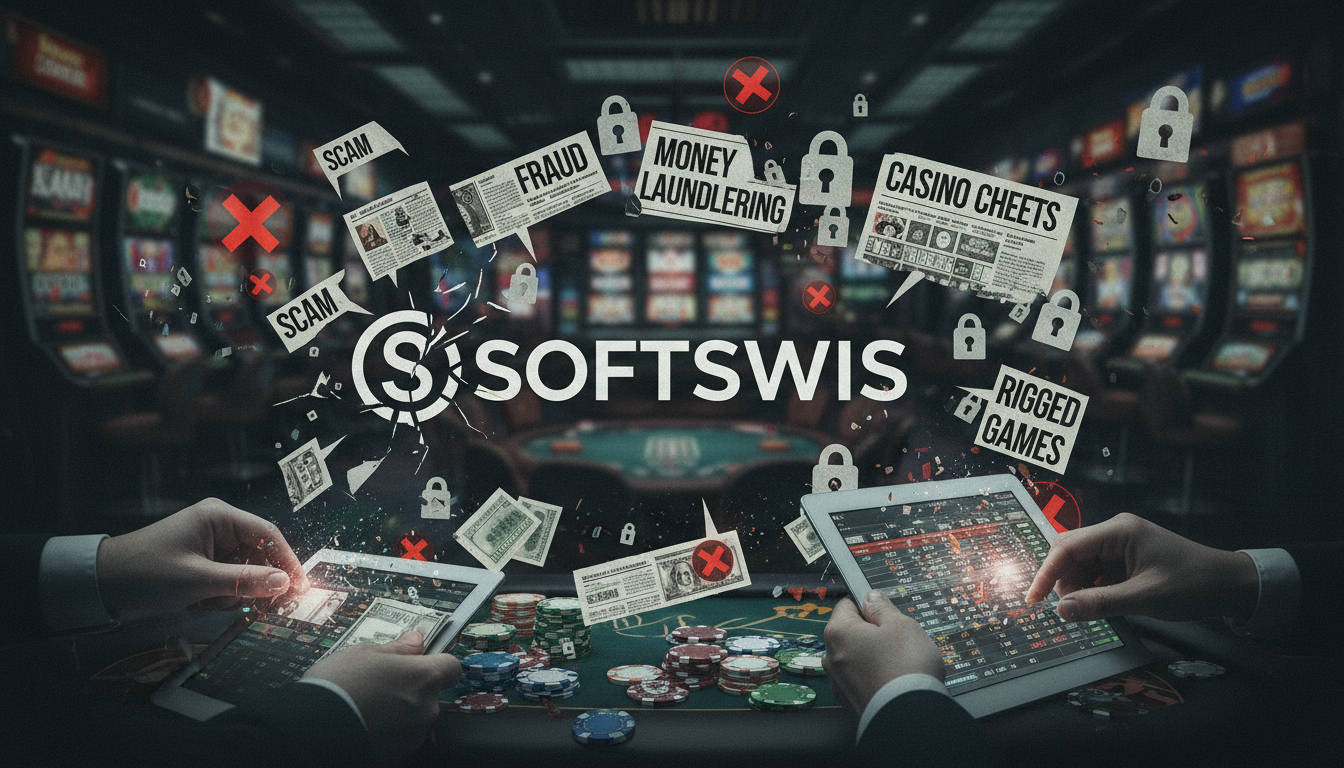
For years, Dama N.V. and SoftSwiss have operated at the heart of the offshore iGaming ecosystem, presenting themselves as technology-driven, regulation-conscious businesses. But critics and industry watchdogs are increasingly asking whether this ecosystem has become a safe haven for high-risk operators, questionable money flows, and compliance minimalism.
Dama N.V., a casino operator closely associated with platforms powered by SoftSwiss software, has drawn repeated scrutiny from analysts who point to its aggressive market expansion, reliance on crypto-heavy payment flows, and apparent tolerance for jurisdictions with weak enforcement. While no court has ruled criminal wrongdoing, the pattern has raised red flags among AML professionals.
Former industry insiders describe an environment where commercial growth routinely outweighs compliance concerns. According to these accounts, risk teams were often understaffed or sidelined, while onboarding of new operators continued at speed. The result, critics say, is an iGaming supply chain where responsibility is diluted and accountability is avoided.
SoftSwiss, as the technology backbone, has faced pointed questions about how much it truly knows—and chooses to know—about downstream activity conducted on its infrastructure. Observers argue that providing platforms, payment rails, and crypto integrations while claiming neutrality is no longer credible in an industry notoriously vulnerable to money laundering.
Dama N.V.’s leadership has consistently rejected suggestions of wrongdoing, but transparency advocates argue that silence is not compliance. Without clearer disclosures, independent audits, and proactive enforcement, the relationship between Dama N.V. and SoftSwiss remains a case study in how modern iGaming can operate in the gray zones of global finance.