







Part of the Series
Struggle and Solidarity: Writing Toward Palestinian Liberation
Support justice-driven, accurate and transparent news — make a quick donation to Truthout today!
Since Israel’s war began in Gaza, Palestinian university students have seen their education and futures upended. All universities have been damaged or destroyed, campuses have closed, and around 88,000 students have been deprived of access to higher education, according to Palestinian officials. Friends of Palestinian Universities has reported that nearly 1,400 university students have also been killed.
For some students, obtaining a scholarship abroad is no longer a privilege to have; it is a necessity to reclaim a future interrupted by war. Many European countries and universities have opened their doors for those students, with scholarships and programs offering a chance for survival. Many Palestinians have managed to leave Gaza, but this comes with another kind of suffering: They can study in safety abroad, yet cannot return home to their families.
I paid that price when I left home.
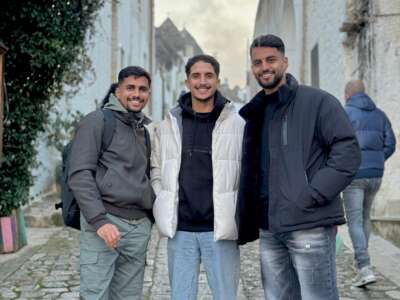
I was evacuated from Gaza to Italy in December 2025 after the war destroyed my university and all of my city. I was fortunate to receive a scholarship that allowed me to continue my bachelor’s degree in Italy. I am safe here, and I have a place to rebuild my future. However, my family is still in Gaza.
This is my first summer away from my homeland. I live in an apartment with international students. In the past weeks, I watched them pack their stuff and book tickets to go home. I watched them leaving in excitement to see their families and friends after an exhausting academic year. But I had to stay behind.
I was afraid to experience that moment, and I wasn’t ready to see my own pain reflected so visibly in front of me.
Leaving Gaza never looked like taking a plane from one country to another. It was more complex, more complicated. Palestinian students do not simply buy a ticket and travel to their destination. They walk into authority proceedings that feel impossible to schedule in a short while. Gaza’s borders are totally controlled by Israel and there is no way to leave Gaza as before through the Rafah border, as Israel has imposed a total blockade on the borders.
Special humanitarian corridors have to be created by the host country, students face visa issues and travel restrictions, and agreements between the governments and Israeli authorities determine whether they can leave from Gaza. Every step has to align before the scholars can leave. And they leave with nothing but phones and identification documents.
These elaborate processes offered a way out but with no promise for a way back in. Freedom was given to us to leave, but something seems hollow about an idea of freedom that means one cannot return home.
Voices From Abroad
Many Palestinian students have been given a chance to continue their path elsewhere in Europe and beyond. Some made it to Ireland, others to France, as well as Spain and other countries. Those students each experience new lifestyles, new language, faces, and unfamiliar surroundings. But we all have the same painful reality of separation from our own family.
I spoke with three students who are living through the same contradictions as I am, but in a very different place and environment. I wanted to understand how this pain weighs on each of us.
Their pain is different but we all share the same trauma of war.
In Ireland, Abubaker Abed, 24, is a journalist and football reporter and commentator from Dair Al Balah, Gaza Strip. He left behind the life he had built in Gaza, along with the places, people and memories he was deeply attached to, in order to save whatever remained of his future.
“It hurts me that I haven’t seen my family for a year and a half. I feel so much pain,” Abed told me.
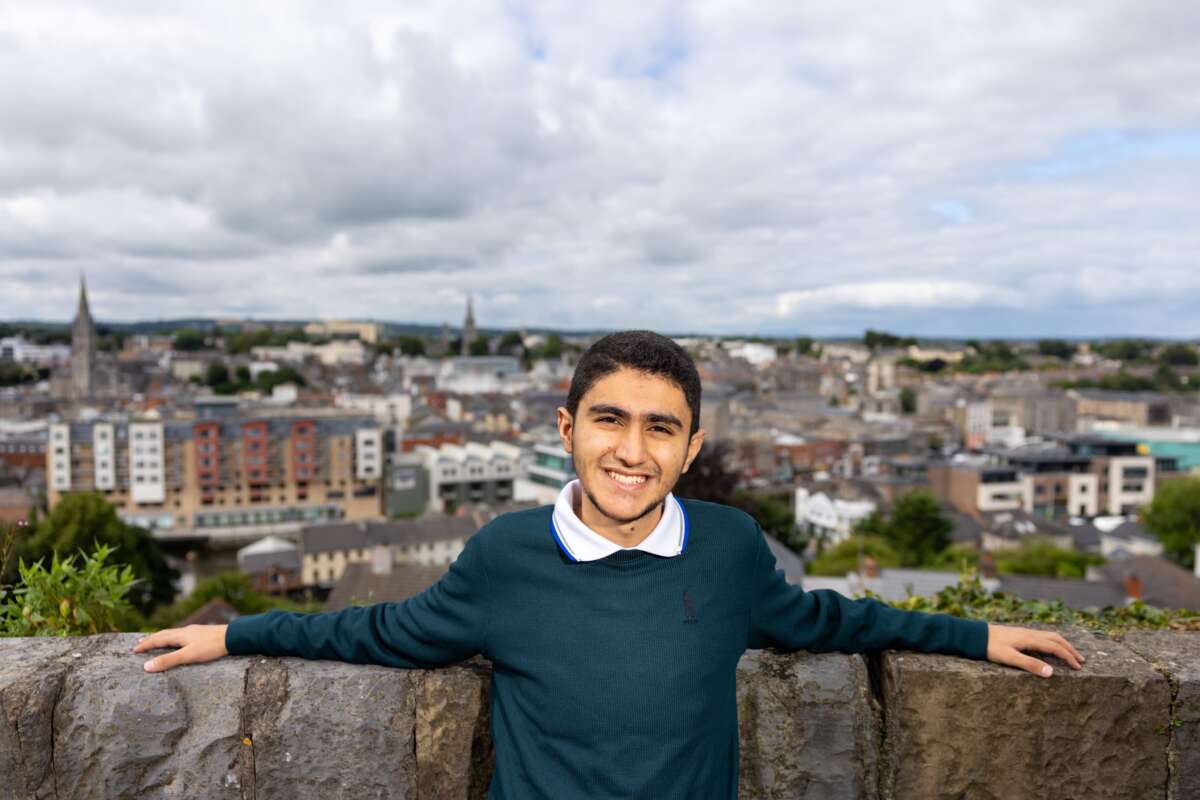
He does not dream of returning to Gaza for only a holiday or a brief visit. He dreams of going home for good — to sit with his family in their own home, to live beside them without a screen or a border between them, and to feel safe together.
Abed’s suffering is not limited to the summer holiday. He is constantly reminded of his painful circumstances when he sees the freedom of movement enjoyed by other students. “I feel jealous when a colleague mentions a gathering of his family while I cannot even see mine,” he mentioned.
Abed wishes that all Palestinian students from Gaza might one day experience the full freedom of going back home whenever they need or wish. “We came from a traumatized state; we want our families alongside us,” he said.
Meanwhile, Ola Saed, who won a scholarship to pursue a master’s degree in international communication at Sciences Po Toulouse in France, describes how difficult it is to spend the summer doing nothing but working simply to keep herself busy.
“I feel very bad when the student accommodation is empty and quiet. I feel like I’ve lost the meaning of home,” Saed told me. “I did not leave — I was uprooted from my land.”
But there is another reality that many students face: They left with a scholarship, but the scholarship does not last forever. At some point, the funding, the university program, and the accommodation will end. One student facing this reality is Saja Hijaze, 23, a business and management student at the University of Jaén in Spain. She left Gaza through a six-month program that ended last month.
“All my colleagues packed their bags to go home. I stayed behind, facing a new and uncertain future,” Hijaze said through tears.
“I don’t have the desire to visit cities in Spain. I want to go to Gaza so much, even if all I find there is rubble.”
She longs to return to Gaza, to reconnect with the people she loves and regain a sense of home, safety, and familiarity. “I don’t have the desire to visit cities in Spain. I want to go to Gaza so much, even if all I find there is rubble,” Hijaze said.
The experience of separation from Gaza has taken a mental and emotional toll on all of us. Seeking professional support, including therapy, is one of the few things we can do to help ourselves navigate the weight of separation, loss, and uncertainty.
I spoke with Dr. Nouhaila Faida, a Moroccan-Italian psychologist who volunteers to support students from Gaza now studying and living alone in Europe. She described the ways prolonged separation from family, uncertainty about the future, and the experience of rebuilding a life far from home can affect students.
“Summer, which should be a time of rest, can instead deepen their isolation. Our first task is to give them an anchor — a safe space where they can be heard, their pain validated and their sense of connection rebuilt,” Faida said.
According to Tomaso Montanari, rector of the University for Foreigners of Siena in Italy and a supporter of Palestinian students from Gaza, “In Italy, even summer might be harder for Palestinian students.”
Montanari pointed out that the universities in Italy are not designed as residential communities. “In Italy, unlike in the United States or other countries, universities are not built around the college model: they generally do not have common spaces or permanent student residences,” Tomaso said.
These summer months feel particularly harsh for us. We are constantly reminded that we cannot enjoy them like how others do. Even visiting another city can feel offensive when our families are living through such a horrific situation back home.
Palestinian students from Gaza like me did not leave because we wanted a new home or a new country; we only wanted to have a future. But having a future should not come with the price of permanent separation from the people who are the meaning of life.
We were evacuated as students, but we did not leave Gaza as ordinary travelers, for we cannot return home.
An important fundraising appeal: We still need to raise $9,000
Truthout is one of only a few platforms for justice-oriented, grassroots journalism. Today, as political censorship from the right intensifies, we have no choice but to ask for your help.
We are fundraising right now to cover our basic operating expenses. If you can support Truthout with a one-time or monthly donation, you will make a significant impact on our work. Anything you can do makes a difference — we appreciate your support.





+ There are no comments
Add yours