







Honest, paywall-free news is rare. Please support our boldly independent journalism with a donation of any size.
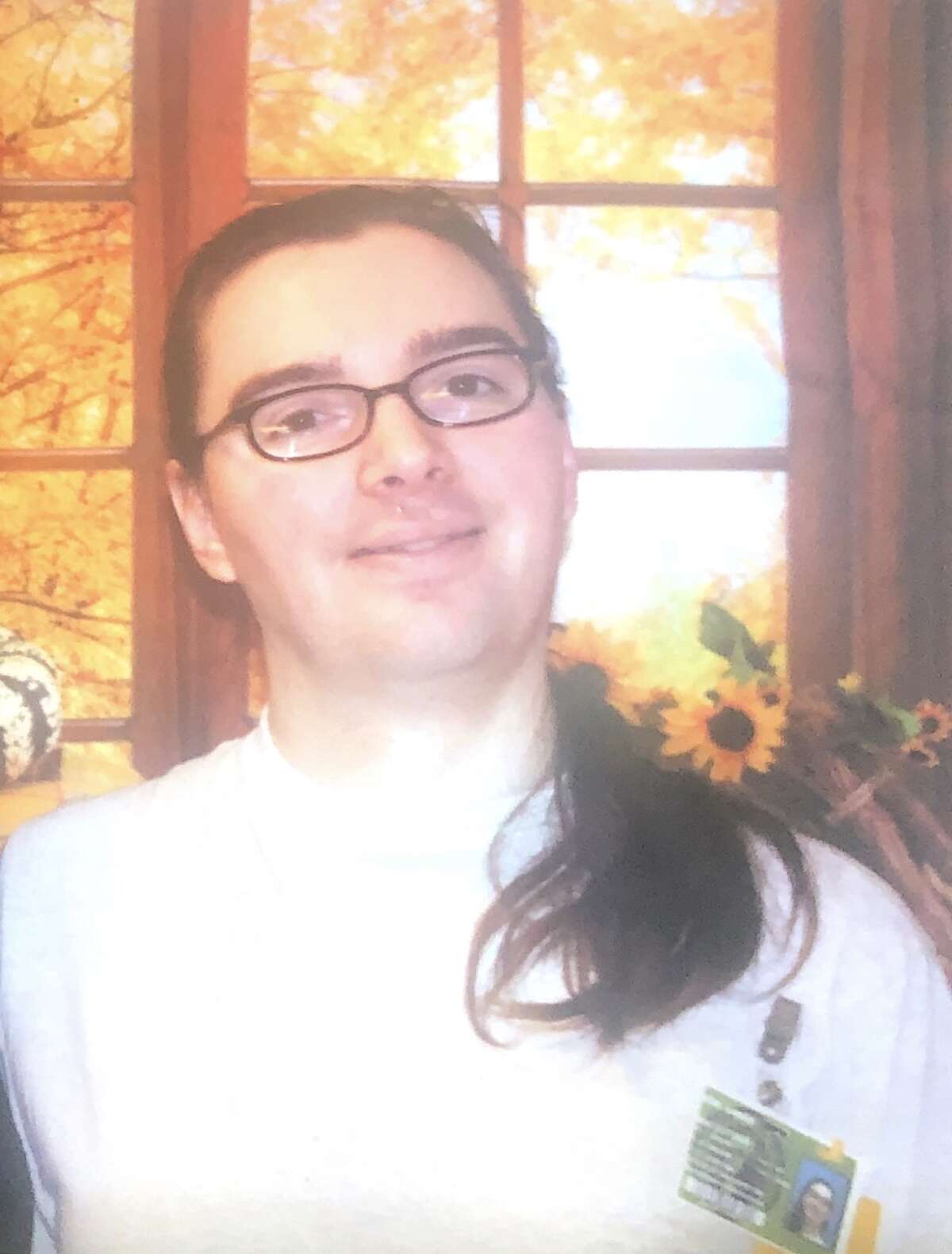
In June, the Washington State Supreme Court heard oral arguments on whether 38-year-old Amber Kim could be transferred from a men’s prison to the state’s sole women’s prison, where she had been housed for three years. “I feel like I’m in the universe’s waiting room,” Kim told Truthout.
Kim had spent 15 years in the state’s men’s jails and prisons. Then, in 2021, the state’s department of corrections approved Kim’s transfer to the Washington Corrections Center for Women (WCCW).
Three years later, in 2024, Kim was issued a disciplinary ticket for allegedly engaging in consensual sex with her girlfriend, a cisgender woman. (Sex, even consensual sex, is against prison rules.) The other woman also received an infraction but remained at WCCW even though, at the time, the state had another women’s prison, Mission Creek. That prison closed in October 2025 as a cost-cutting measure.
That was the only infraction for sexual activity that Kim received. Nonetheless, she was placed in segregation for three months, then transferred to the men’s Monroe Correctional Complex. There, she was placed in the intensive management unit, where she has remained in segregation for 23 hours each day.
In December 2024, the ACLU of Washington filed a personal restraint petition on Kim’s behalf arguing that her transfer violated the state constitution’s prohibition on cruel punishment. The state’s appellate court denied her petition last year. On June 23, 2026, the state’s supreme court heard oral arguments.
Three months earlier, in April 2026, anti-trans organizations filed a lawsuit against the state’s prison system on behalf of a cisgender woman at WCCW who alleged that she was attacked by a trans person who was transferred there. In May, the U.S. Department of Justice announced plans to conduct a civil rights investigation into the Washington State Department of Corrections’ practices of placing trans women at WCCW.
Washington State Department of Corrections spokesperson Chris Wright told The Washington State Standard that roughly 347 of the nearly 13,000 people in the state’s prison system identify as transgender or nonbinary. WCCW houses 20 transgender women. In court, Emma Grunberg of the state attorney general’s office stated that the Twin Rivers Unit at Monroe Correctional Complex, a general population housing unit, has 18 trans women and 16 nonbinary people. It also houses men convicted of sex offenses and gang activity. That is where the department would transfer Kim, she told the court.
“Staff Didn’t Do Anything”
Thirty-three-year-old Tegan Kamile knows the harassment and hazards of being a trans woman in Monroe’s general population.
In 2019, Kamile applied for a transfer to WCCW. She was denied because of several minor infractions (or rule violations), such as being out of bounds (in a place where she was not authorized to be). She was told that she needed to be infraction-free for at least six months.
“I offered to do six months in closed custody to show them how I am [not dangerous],” she told Truthout. Even with this offer, her request was denied.
Kamile ultimately decided not to pursue the transfer in large part because of the transphobia she had heard about in the women’s prison.
“I’ve developed better relationships (of all sorts) being in a male prison since I’ve come out then I would’ve been in WCCW as the women aren’t fond of trans women,” she said. “I decided ultimately not to go for my own safety as I won’t hit a cisgender woman. I would be beat for being a trans woman and ostracized for being whom I am.”
Still, Kamile faces harassment from incarcerated men around her on a near-daily basis. She says that staff have done nothing to curb the harassment.
“I’ve told the staff what’s infractional behavior yet they say, ‘Oh it’s fine he’ll stop and everything will be fine,’” she said.
Kamile notes that, if she physically defends herself, as she did recently when an incarcerated man bullied both herself and her friend, she is the one who gets into trouble. She is currently in segregation and required to be in an anger management program. “I’m in here because the bully went and told on me for doing what I did and abused me further and the staff didn’t do anything,” she said.
Over Two Years in Solitary Confinement
“It’s clear to us that Ms. Kim’s confinement constitutes cruel punishment,” Kim’s attorney, Adrien Leavitt of the ACLU Washington, told Truthout. “Ms. Kim was transferred from a women’s prison to a men’s prison due to a routine infraction — one that DOC [Department of Corrections] is more than capable of addressing at the women’s prison.”
“Ms. Kim was transferred from a women’s prison to a men’s prison due to a routine infraction.”
“This transfer must [be] viewed in the broader [context] that, in 2021, DOC determined Ms. Kim must be housed at the women’s prison for her own health and safety,” Leavitt said. “Against that backdrop, DOC cannot justify her current conditions of confinement, including the two years she has spent in solitary confinement, particularly when those conditions stem from the routine infraction at issue here.”
At the June court date, Leavitt noted that the state prison system had conducted a rigorous four-year analysis before transferring Kim to WCCW. Indeed, the process can be laborious, involving assessments by a team of medical, mental health, and custody staff, a Prison Rape Elimination Act (PREA) specialist, and their case manager. The applicant must enroll in the next available cultural awareness course facilitated by a gender-affirming mental health specialist and/or gender-affirming program administrator and meetings with a mental health employee and an employee from the gender-affirming facility (in this case WCCW). Only after the applicant has completed the course can they complete their request for gender-affirming housing.
“If we compare that to the way that the department [of corrections] revoked her placement, that’s simply not proportionate,” he told the justices.
If prison officials were concerned about Kim engaging in sexual activity, he argued, there are options that would still allow her to be in the women’s prison. “She could be in a higher custody status. She can be in single cell confinement. The department could require her to engage in behavioral management programs, clinical intervention programs. The list really goes on about what the department could do,” he stated.
“Today marks two years and two days that Ms. Kim has lived in solitary confinement,” he said.
“They Didn’t Get Away With It in Court”
Kim wasn’t able to watch the oral arguments. Instead, she listened to them through a phone call with a friend.
“I am now feeling really good about it,” she told Truthout. “The thing that struck me most is that some of the things the attorney general’s office’s attorney said are things that the Washington State Department of Corrections will say to us inmates, but never write down or say in their official capacity.” She was particularly heartened by this exchange:
Justice Helen Whitener asked State Attorney Grunberg: “At some point in time, DOC made a determination that Ms. Kim was to be treated as a woman, correct?”
“Your honor, DOC has always treated Ms. Kim as a transgender woman,” Grunberg responded.
“She’s a woman,” Whitener corrected.
“Under federal-”
“She doesn’t want to be identified as a transgender woman, but at any time she was placed at a women’s facility, not a transgender women’s facility. Am I correct? So she was placed there and certain things were known at that point in time in regards to Miss Kim, for example, that she was attracted to women, which to me is a lesbian, that she also was also vulnerable at the male facility, so certain decisions were made by DOC at that time.”
Whitener pointed out that there have been 30 to 50 cases of women engaging in sex with other women at WCCW. But in Kim’s case, she noted, “she commits an infraction with another woman. Her punishment is to go back to the men’s facility and I don’t understand why that is because she’s a woman at a women’s facility.”
She also had Grunberg clarify that the violation that Kim received was not a PREA violation.
“Why is Ms. Kim’s situation to be treated differently than the other individual? They’re both women,” asked Whitener.
“The Washington DOC is used to being able to lie and manipulate things and they didn’t get away with it in court, which feels really good,” Kim told Truthout.
Should the court rule in her favor, the ruling would not automatically affect the placement of the other 300-something trans women in the state’s prisons.
Should the court rule in her favor, the ruling would not automatically affect the placement of the other 300-something trans women in the state’s prisons. But, Kim said, “I’m hoping that the court decides they need to set a precedent about how incarcerated people and trans people are treated by the appellate courts and the Washington DOC. And I’m hoping more incarcerated LGBTQ people are inspired by it to challenge the Washington DOC in court.”
The announcement of a Department of Justice investigation does not change federal or Washington State law.
“Of course, there is always cause for concern [while] the federal administration continues its efforts to target transgender people,” said Leavitt. “This is part of a larger pattern of the administration’s investigations into states with policies protective of transgender people, including in the context of prisons and beyond.” But the federal investigations into California, Maine, and Washington have not resulted in policy changes regarding housing and treatment for incarcerated trans people.
Kim isn’t too concerned that the investigation will affect her.
“This is the Trump administration trying to intimidate Washington State,” she said. “This is a Democratic state with a Democratic governor.”
An important fundraising appeal: 6 Days to raise $42,000
Truthout is one of only a few platforms for justice-oriented, grassroots journalism. Today, as political censorship from the right intensifies, we have no choice but to ask for your help.
We are fundraising right now to cover our basic operating expenses. If you can support Truthout with a one-time or monthly donation, you will make a significant impact on our work. Anything you can do makes a difference — we appreciate your support.









+ There are no comments
Add yours