





Author
Ahmed Barakat
Author

Share

Fact Checked by
CryptoNews Editorial Team
Author

JPMorgan has flagged a structural risk most Bitcoin price prediction bulls haven’t priced in: the same entity driving the most aggressive institutional accumulation on record could, under the wrong conditions, become a forced seller.
That tension is now a live market variable. Bitcoin is consolidating near critical technical support while analysts debate whether Saylor’s $150,000 year-end target or JPMorgan’s more measured models better reflect actual market mechanics, and the answer matters for anyone holding BTC into the second half of the year.
JPMorgan’s warning centers on the Strategy’s financing structure. By layering convertible notes, preferred equity, and at-the-money offerings to fund Bitcoin purchases, Strategy has introduced a scenario where credit stress or equity dilution pressure could flip the company from net buyer to net seller. That’s a non-trivial tail risk given Strategy’s scale.
Saylor’s public posture remains unchanged: $150,000 by year-end, $1 million within four to eight years, $20 million over two decades, but the bank’s concern isn’t about Saylor’s conviction. It’s about what the market structure looks like if that conviction ever gets tested by margin mechanics.
This divergence between corporate accumulation narrative and institutional risk modeling is exactly the kind of signal that tends to matter at inflection points.
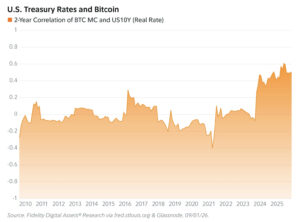
Bitcoin’s next directional move may hinge less on Saylor’s next purchase announcement and more on how the market digests that structural overhang. Macro liquidity conditions add another layer of complexity to an already crowded decision tree.
Discover: The Best Token Presales
Bitcoin Price Prediction: Can Bitcoin Price Reach $150K or Is a Drop to $55K the Real Risk?
$60,000 is the line to watch. That level is being treated as primary support by analysts tracking Bitcoin’s current consolidation phase. A hold keeps the recovery thesis intact. A breach does not.
The immediate reclaim zone sits between $62,000 and $64,000. Clearing that range with conviction puts $65,000 back in play, followed by $70,000, which has functioned as both resistance and magnet across multiple recent trading cycles.
Volume confirmation matters. Consolidation without volume expansion is noise, not signal.
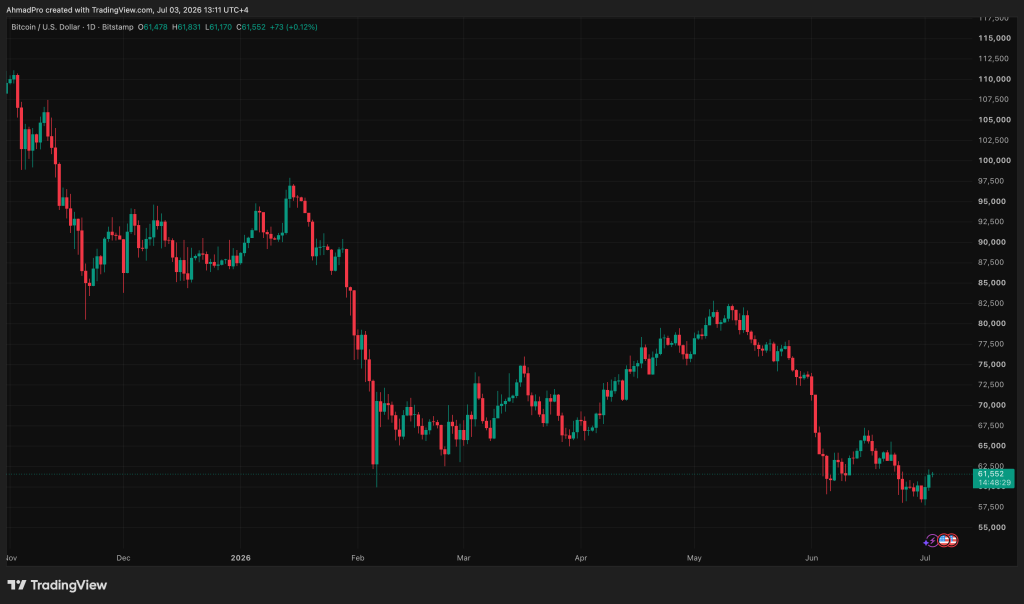
Bitcoin holding $60,000 and reclaiming $64,000 on volume reasserts the Saylor accumulation narrative as the dominant market frame. JPMorgan’s $170,000 short-term target and eventual $266,000 gold-parity estimate became the base case for institutional positioning.
If neither side takes control, a sideways grind between $60,000 and $65,000 continues as the market digests JPMorgan’s risk framing alongside continued Strategy purchases.
Choppy but not broken. A confirmed close below $60,000 opens a slide toward $55,000, where more bearish analyst models begin to look credible, and amplifies concerns about Strategy’s balance sheet resilience.
The setup is cautious consolidation, not a confirmed breakout. Patience over conviction is the disciplined read right now.
Don’t Miss Out on Our $1,000 USDT Airdrop on ByBit
Bitcoin Hyper Could be The Next 1000x in Crypto And Here is Why
Here’s the uncomfortable reality for spot BTC holders watching JPMorgan’s risk warning land: the upside scenarios above assume Bitcoin’s infrastructure can actually scale to support mass institutional and retail use.
At current throughput, it can’t. That gap between Bitcoin’s store-of-value narrative and its transactional limitations is where the next generation of infrastructure plays is being built, and priced at still-early valuations.

Bitcoin Hyper ($HYPER) is positioning directly in that gap. It’s the first Bitcoin Layer 2 integrating the Solana Virtual Machine, bringing sub-second finality and low-cost smart contract execution to the Bitcoin ecosystem without abandoning BTC’s security model.
The architecture includes a Decentralized Canonical Bridge for native BTC transfers and SVM-powered programmability that the team claims outperforms Solana itself on latency benchmarks. (Whether that holds at scale is the question every serious infrastructure investor should be asking before committing.)
The presale has raised $32,921,487.36 at a current price of $0.0136825, with staking active for early participants. As with any early-stage infrastructure presale, execution risk is real and timelines rarely hold.