







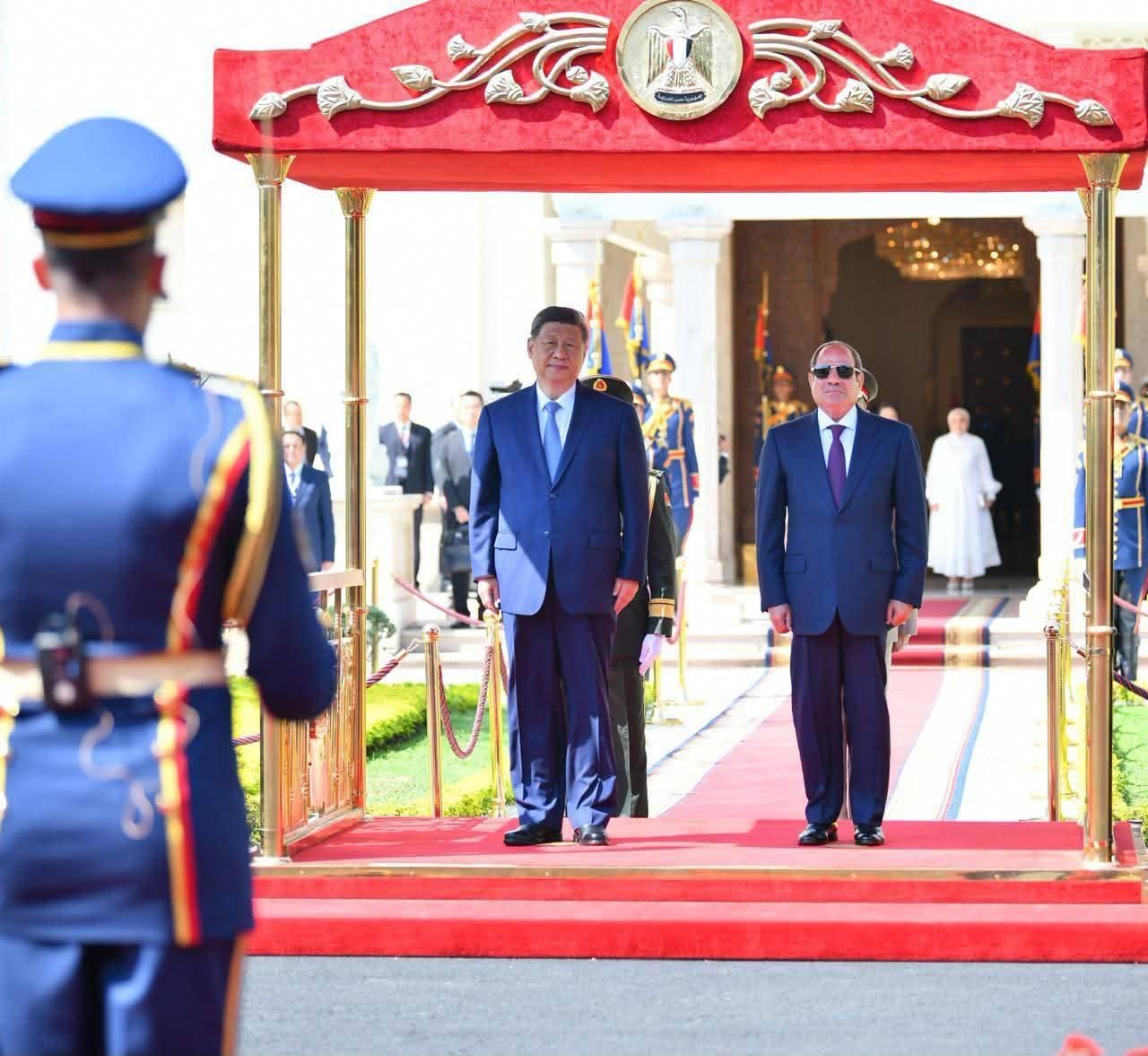
Washington talks about “influence” as though it were a mystical vapor that leaks out of every military base closure. But Beijing’s rapidly growing clout in the Middle East shows that influence can come in many forms.
While the Pentagon debates whether and where to rebuild U.S. bases battered by Iran during Operation Epic Fury, China has spent the last decade expanding its influence in the Middle East without stationing a single soldier there. China’s experience in the region makes clear that influence can be cultivated far more cheaply than Washington assumes, and without maintaining a sprawling network of vulnerable military installations.
As Operation Epic Fury demonstrated, Washington’s constellation of fixed bases across the Middle East is vulnerable and expensive to defend. Before the war, the United States maintained at least 19 military facilities across the region, eight of them considered permanent. Iranian attacks left both the headquarters of the U.S. Fifth Fleet in Bahrain and the Qatar command center, from which the United States had coordinated regional air operations for more than two decades, effectively inoperable.
Defenders of the status quo claim this cost is worth it, arguing that permanent presence keeps Washington politically relevant. Winding it down, they contend, would create a power vacuum to be filled by Beijing, eroding American influence and leaving China as the region’s dominant outside power. China’s own experience in the region invalidates that fear, showing how thoroughly Washington has conflated military power with influence itself.
The Middle East is less strategically important to the United States than it was during the Cold War, and America’s regional interests are correspondingly limited. Washington needs Gulf oil to continue reaching global markets and to prevent any single power from dominating the region and its resources. It also must disrupt terrorist groups capable of striking the homeland.
China’s interests are actually quite similar to America’s. It depends even more heavily on Middle Eastern energy, benefits from a stable balance of power, and has its own concerns about terrorism. Despite these overlapping interests, the two countries have pursued them through starkly different means.
Aside from a single overseas Chinese base in Djibouti, a country where the United States also maintains a base that is roughly six times larger, China has nothing resembling America’s military architecture in the Middle East. Yet Beijing has rapidly expanded its influence in a region where Washington has devoted trillions of dollars and decades of military commitment to the same end.
China enjoys near-universal diplomatic acceptance across the region’s competing camps, while Washington’s history and military entanglements undermine its ability to serve as a neutral mediator. China is the Arab states’ largest trading partner, and the Middle East is one of the largest recipients of its Belt and Road investment. Beijing’s regional diplomatic role has only grown more institutionalized, with the first China-Arab States Summit launched in 2022. Amid the current conflict between the U.S. and Iran, Gulf governments have repeatedly turned to Beijing to pressure Tehran, first over the Strait of Hormuz and Iranian retaliation, and more recently to rein in the Houthis.
Washington remains the region’s preponderant military power, but even that status has not afforded it the ability to dictate the region’s geopolitical alignment. The Gulf monarchies have consistently resisted American efforts to organize the region around great-power competition, instead maintaining close security ties with Washington while deepening relations with China.
While military strength will never be irrelevant, portions of Washington have become so accustomed to exercising power through the military that they often mistake it for power itself. China’s influence has risen alongside its rapid economic growth, technological advances, and growing military capability — the same combination that has built great-power status for centuries. Gulf states sell China the energy its economy depends on while courting Chinese investment because Chinese firms have capital to deploy.
The United States should be great at this game. The Gulf states do not need tens of thousands of American troops on their soil to understand the value of doing business with the world’s largest economy. Nor would America’s decades-old relationships simply evaporate when the last helicopter leaves Saudi Arabia. When Washington is not trying to remake the Middle East in its image, it still has more to offer than Beijing.
Winding down America’s bases in the region would inevitably cost Washington some influence with the countries that host these installations. But influence alone does not make a military presence valuable, especially where the interests at stake are limited. The United States could preserve other forms of security leverage, such as arm sales, capacity building, and intelligence sharing.If anything, some Gulf governments may be more eager to cooperate with the United States knowing they will not be part of a future target set in a regional conflict.
The China-mediated Saudi-Iranian normalization deal in 2023 makes the distinction between military and diplomatic influence clear. Beijing managed to place itself at the center of one of the region’s most bitter rivalries despite lacking anything remotely resembling America’s regional military footprint. It relied instead on diplomacy and the political weight accumulated through its broader relationship with both countries. Influence in the Middle East does not require a military presence, and certainly not one as large as America’s.
There is an even stranger irony in invoking China to justify America’s existing military posture in the region. China depends more heavily than the United States on Middle Eastern energy, yet Washington has effectively appointed itself guardian of the regional order on which China’s economy relies. If Gulf oil flows were ever seriously threatened, Beijing would have every incentive to help restore them. Instead, Washington has saved it the trouble, absorbing all the costs and risks of regional security while China has enjoyed the remarkably convenient arrangement of having its chief geopolitical rival protect its energy lifeline.
As the Pentagon considers what comes next, it should prioritize maintaining regional access rather than regional dominance. It does not need to rebuild every cratered runway or shattered command center simply because those facilities existed before the war.
It should close the most exposed bases, reduce the overall American military footprint, and consolidate what remains around, at most, a few strategic outposts farther from Iran. Jordan, Western Saudi Arabia, the Horn of Africa, or even parts of Europe could still provide the access needed to protect America’s limited regional interests without replicating the sprawling prewar architecture.
Military postures this large are almost impossible to unwind in ordinary times. Operation Epic Fury created a rare chance to break the inertia that keeps outdated deployments alive long after their strategic rationale. The Pentagon should seize it. China is supposed to be the reason America cannot leave; in reality, it provides a clear example of how the United States can protect its interests and preserve its influence at a far lower cost.
From Your Site Articles
Related Articles Around the Web










+ There are no comments
Add yours