





| Updated:
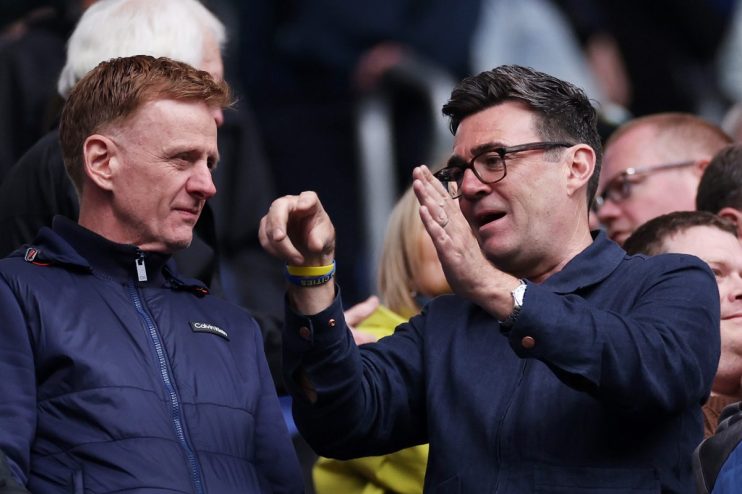
With Andy Burnham set to be the next Prime Minister, Alan Sendorek assesses how his approach to broadcasting sport may differ from Sir Keir Starmer’s.
Sir Keir Starmer – the country’s most powerful Arsenal fan – last month joined the Football Supporters Association in calling on TNT Sports to make the Champions League final available free-to-air, as had happened in previous years.
Many people pointed out that the government has the power, through the listed events regime, to compel them to do so. So why didn’t they?
Firstly, the listed events regime can’t be applied retrospectively to unwind existing contract rights, so any change made now would only affect future rights packages.
Secondly, opening up the listed events regime could easily become a headache for the government – “a recipe for aggravation”, in the words of one former conservative DCMS minister.
If the Champions League final is to be broadcast free-to-air, why not reclassify the Six Nations, Test cricket, Formula 1, The Open, or any number of other sporting events as well? To do so might sound popular, but in fact it would threaten the economic model around each of these events.
Burnham broadcasting agency?
The listed events regime has been largely left alone since it was created in the 1990s for exactly this reason. The Paralympics were reclassified in 2020, but that was a straightforward decision because it was already broadcast free-to-air on Channel 4 and the rights are not a likely target for pay TV.
So Starmer’s letter to TNT was the low-risk alternative to a more substantive intervention. From No10’s point of view, it put the PM on the side of fans and cost-of-living concerns, and it aligned Starmer with the centre of gravity amongst Labour’s backbench MPs at a time when his future lay in their hands. But all without actually using the state to interfere in the sports rights market.
What of Andy Burnham, his likely successor? He is no stranger to rhetoric around public control, and the dynamics of keeping a restless Labour parliamentary party on board could lead him further in this direction.
As Culture Secretary in 2008, Burnham ordered a review of the listed events regime, a response to political controversy over England football away friendlies moving behind the Setanta paywall, and the ongoing sensitivity around Test cricket moving to Sky. The Davies review recommended extending the live rights list, making home Ashes Tests available free-to-air, but abolishing the Group B list governing highlights.
Burnham had moved to the Department of Health by the time his review reported in 2009, and in 2010 the incoming coalition government quietly dropped the recommendations, so they were never implemented.
Viewing habits
Changes in viewing habits have continued apace in the last 15 years, providing a rationale for a review of the policy if an incoming Prime Minister so sought. Whether it is wise to open this Pandora’s Box is another matter.
There would be international examples to point to, including Italy, where Champions League finals involving Italian teams are already free-to-air. Italy recently updated their free-to-air listed events to add important tennis matches involving Italians, part of the “Jannik Sinner effect”. And in the US, President Trump has criticised the latest NFL media deal and left open the possibility of the government stepping in to reduce the cost to fans.
Starmer wanted to own the politics of free-to-air football, but not the policy consequences of reopening listed events. It’s a delicate equilibrium that has broadly sustained since the regime was invented in the late 1990s. But in a populist anti-business era, sports organisations, media companies and investors will be keeping a close eye on how much longer the status quo might hold.
Alan Sendorek is a director at Flint Global and former special adviser at FCDO and 10 Downing Street





+ There are no comments
Add yours