







| Updated:
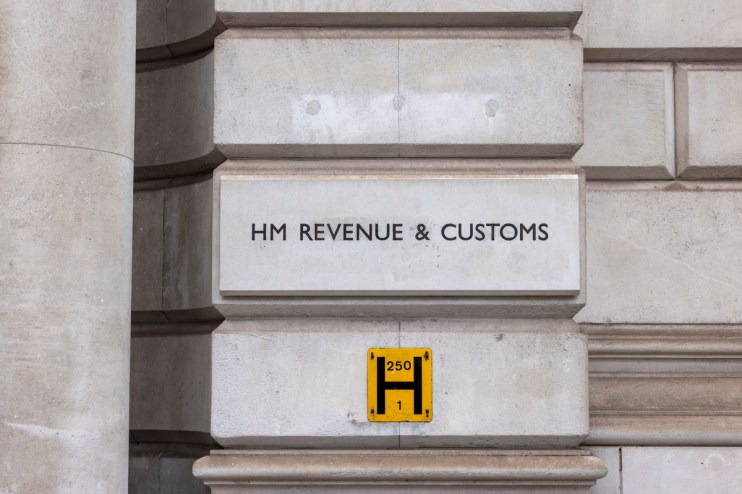
HMRC is actively writing to limited liability partnerships (LLPs) as firms race to reassess their members’ tax status after the landmark legal ruling, even as both sides “hold their cards close to their chests.”
Members of an LLP are treated as self-employed partners, meaning they don’t pay the 15 per cent employer’s national insurance contributions on their pay. In order for firms to avoid tax by just naming staff as ‘partners’, the salaried member rule was put into place. Under this rule, a member is legally deemed an employee for tax purposes unless they don’t meet at least one of three specific conditions.
But in July, the Supreme Court delivered the first major ruling on how these conditions work in practice in a case against hedge fund Bluecrest Capital Management, founded by the UK’s wealthiest financier, as the taxman successfully argued that the firm’s portfolio managers were functionally employees.
The decision threw a spanner into the LLP model and emboldened the tax agency.
The broader professional services sector, a major user of the LLP model, is now under HMRC’s scrutiny.
Are partners acting as genuine business operators?
Adam Craggs, partner at RPC, said: “We have in recent months been contacted by a number of substantial professional services firms following the Supreme Court’s decision.”
Miles Dean, managing director at Andersen UK, explained that the taxman will be looking at “whether individuals described as partners are genuinely operating as business owners or are, in reality, highly paid employees dressed up in partnership clothing.”
But because the issue is sensitive and firms may be exposed, Sue Robinson, principal in Ryan’s employment tax practice, said LLPs are “keeping [their] cards close to [their] chest”, and HMRC did not want to appear to be attacking LLPs across the board.
It was recently revealed that Boston Consulting Group disclosed in its public accounts that HMRC is inquiring into the firm over whether its partners are technically self-employed or employees, prompting the consultancy firm to write in its accounts that it sought external legal counsel.
Labour’s tax gap drive
As part of Labour’s ‘Close the Tax Gap’ initiative, HMRC has been provided with additional resources to collect unpaid tax.
The Bluecrest case was worth £200m in tax fees, plus legal fees. For those who are found to be aligned in a similar way, Dean said: “The potential financial exposure is enormous”.
Craggs explained HMRC’s core predictive analytics tool, Connect, is likely to be the primary tool for this filtering process as it “ingests billions of data points from diverse sources, allowing HMRC to cross-reference data across multiple entities instantly”.
But the process will be slow, as Robinson explained; HMRC has to take this on a case-by-case basis.
As Dean added, “There is a danger of painting all LLPs with the same brush.” He explained that there “are legitimate and widely used business structures, and the distinction between genuine partners and salaried members is not always straightforward.”
When approached for a comment, an HMRC spokesperson said: “The Supreme Court’s decision provided helpful clarity on how the salaried member rules should be implemented. We want to make sure everyone gets their right tax, and we are considering if any updates should be made to our online guidance to help them do this.”








+ There are no comments
Add yours