






From a new helipad to a UFC fight on White House grounds, President Trump’s personal projects have been front-and-center in American politics this summer. Defense contractors that do business with the administration have often supported them.
But the weapons industry has long leveraged flashy gifts and sponsorships to engender influence among politicians, key institutions, and the public. Here are 5 notable cases when it comes to the Trump White House:
Sikorsky foots bill for White House helipad
Sikorsky, a subsidiary of Lockheed Martin, will pay about $5 million for a granite helipad now under construction on the White House South Lawn.
As Trump told reporters Monday, Sikorsky will pay for the helipad because its helicopters, which he uses for brief trips, have ripped up and burned grass around the White House. The president hopes to have the helipad ready for an upcoming visit from Chinese President Xi Jinping in September.
Sikorsky received nearly $5 billion in federal contracts last year. Lockheed Martin reported it made $75 billion over the same time frame, making it the largest defense contractor in the U.S. by a wide margin.
Lockheed Martin told NOTUS its decision to pay for the helipad was “guided by rigorous ethics and compliance standards.”
Freedom 250: Brought to you by the weapons industry
Many of the nation’s recent 250th anniversary events were also underwritten by weapons contractors. Four of the five giant defense “primes” — namely, Boeing, Lockheed Martin, Northrop Grumman, and RTX — sponsored Freedom 250, a Trump administration-backed non-profit which organized holiday festivities in DC this weekend. Those firms make hundreds of billions of dollars in DoD contracts each year. Anduril and Palantir, venture capital-backed defense tech firms that increasingly function as industry heavyweights, also sponsored Freedom 250.
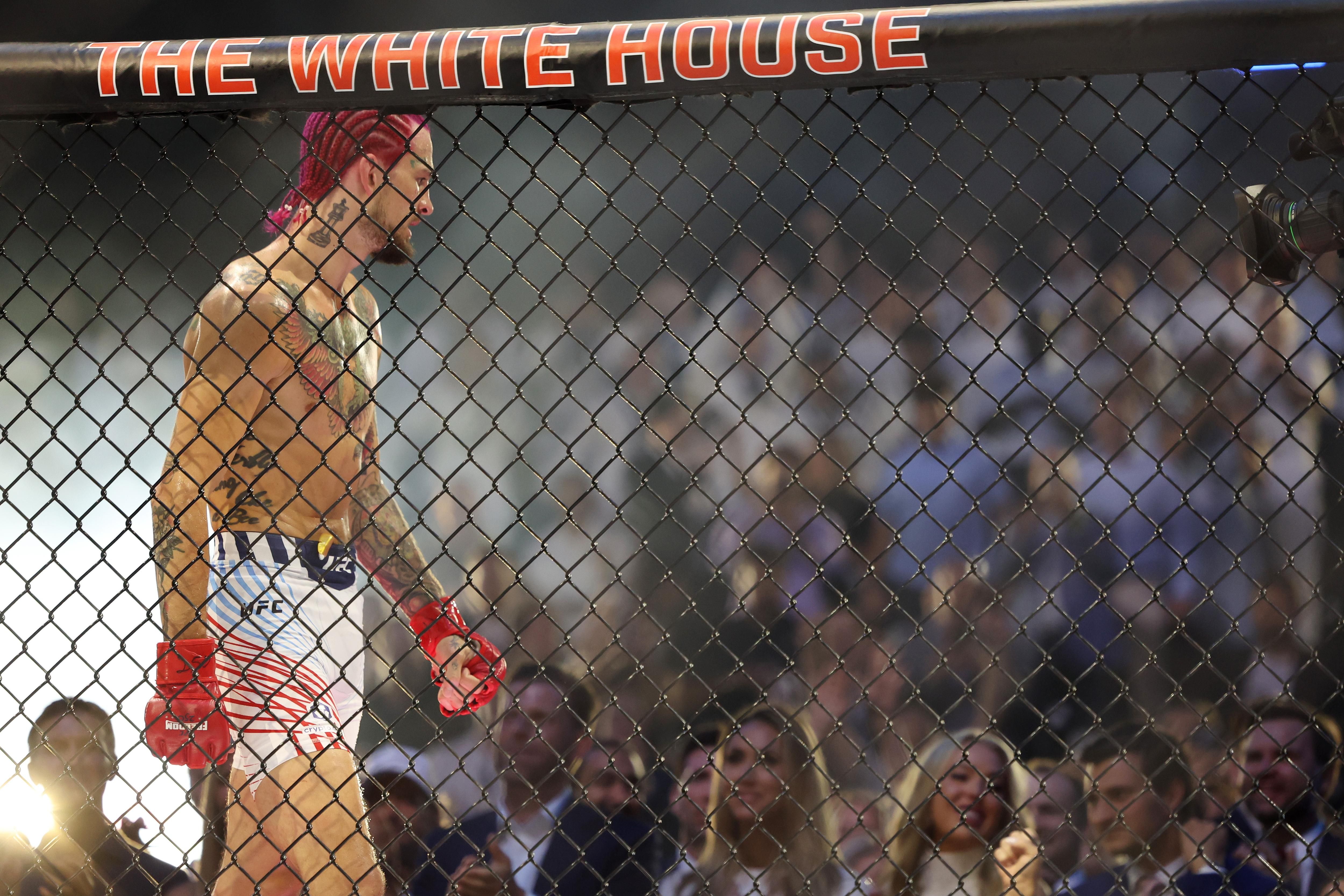
Freedom 250’s events ran as a counter to events managed by America250, a nonpartisan group Congress created in 2016 to organize the anniversary celebration. Freedom 250 also hosted the White House UFC fight last month, which doubled as Trump’s 80th birthday celebration.
“If you’re not donating to [Trump’s] pet projects, you risk being on the outside looking in as he attempts to surge Pentagon spending,” Ben Freeman, the director of the Quincy Institute’s Democratizing Foreign Policy program, told RS. Earlier this year, the White House submitted a record $1.5 trillion defense budget request for FY 2027.
“Most contractors aren’t willing to take that risk, so they play Trump’s game and hope it translates into big Pentagon contracts,” Freeman said. “It’s great for Trump and all the DC insiders, but sucks for taxpayers who are left footing the bill.”
Trump’s ballroom backers
Earlier this year, weapons contractors including Palantir, Booz Allen Hamilton, Lockheed Martin, and Parsons, a tech-oriented defense and engineering firm, donated to Trump’s planned White House ballroom.
Last month, Public Citizen found that Lockheed Martin, Booz Allen Hamilton, Palantir, and Parsons received about $43.8 billion, $4.2 billion, over $1 billion, and nearly half a billion in government contracts, respectively, since their donations.
As Public Citizen’s Savannah Wooten told RS, “paying for a perch in Trump’s good graces gets these contractors more of what they want down the line.”
Trump’s military parade
Having sought a military parade since his first term, Trump seized upon the Army’s 250th anniversary celebration to finally hold one last June. The parade also fell on his birthday.
Naturally, weapons firms were all over the occasion. Four of the five major defense primes sponsored the event, as did prominent defense firms Leidos and Leonardo, which sell a variety of weapons systems and munitions to the DoD. General Electric Aerospace, which makes engines, aviation electronics, and other defense-related equipment, also sponsored it. The celebration sported advertisements from 11 different military companies; Northrop Grumman even handed out free merchandise to event attendees.
“Companies doing business with the government are always looking for name recognition and to bolster their opportunities to receive government contracts,” Scott Amey, general counsel at the Project on Government Oversight (POGO), said. “Money is tossed around to get noticed and gain a competitive advantage.”
It’s not clear how much money the weapons contractors contributed to the event, which cost upwards of $45 million.
Trump’s inauguration fund sponsors
Before Trump’s second term had even begun, a slew of defense firms and adjacent, defense-oriented tech companies poured millions into the committee responsible for planning his inauguration ceremony in early January of last year.
As expensive events with little financial oversight, inaugurations have become controversial yet popular venues for corporations looking to buy political access and influence within an incoming administration.
Boeing and Lockheed Martin donated $1 million each to Trump’s inaugural committee fund; RTX donated $500,000. Alex Karp and Sam Altman, the CEOs of Palantir and OpenAI, respectively, also personally gave $1 million to the fund.
OpenAI has increasingly pursued work with the DoD — as has Google, which also donated $1 million to the inauguration committee. The tech firms both received $200 million contracts from the DoD last summer to “develop prototype frontier AI capabilities to address critical national security challenges in both warfighting and enterprise domains.”
Northrop Grumman, Boeing, and Lockheed Martin previously donated to Trump’s first inauguration in 2017. Boeing and Lockheed Martin previously donated to Biden’s inauguration fund for 2021; all three gave to Obama’s 2013 inauguration fund.
From Your Site Articles
Related Articles Around the Web





+ There are no comments
Add yours