





At Davos in January, Canadian Prime Minister Mark Carney surprised the audience with his open call for “middle powers” to band together and resist pressure from the great powers.
His implication that these states need to resist both China and the United States was somewhat shocking to hear in a policy speech, but it nonetheless reflected a growing consensus that, as the world moves toward multipolarity, middle powers will become more important, especially if they can figure out how to free themselves from the whims of the great powers.
For some of the most prominent middle powers, however, the war in Iran has shown the limits of their agency in global affairs — and the difficulties they face when confronted with an intransigent great power. Since February, the states of the Persian Gulf, some of the world’s richest and most influential middle powers, have had to wrestle with the reality that all their money, diplomatic reach, and political connections could not insulate them from the chaos created by the American and Israeli war on Iran.
Over the last decade, Gulf states have tried to become increasingly autonomous middle powers with global trade and investment portfolios, while remaining deeply embedded in the U.S.-led security order. This presents a Catch-22: their economic model depends on stability, while their security model depends on a great power increasingly prone to escalation.
In the coming months and years, these states will face some tough choices. Can they prevent a recurrence of conflict? To what extent can they hedge against the United States as an unpredictable actor — or against the new threat of repeated shocks to energy flows through the Strait of Hormuz? Or will they simply have to accept that their economies and societies remain hostage to the whims of their great power protectors?
For at least a decade, the Gulf states have sought to modernize both their image in the world and their economies. They wanted to shed memories of the Arab Spring, when they were often seen as destabilizing actors, instead presenting themselves as open for business. And they wanted, even more so, to move beyond the old image of the Gulf as a backwards haven for rentier state oil monarchies.
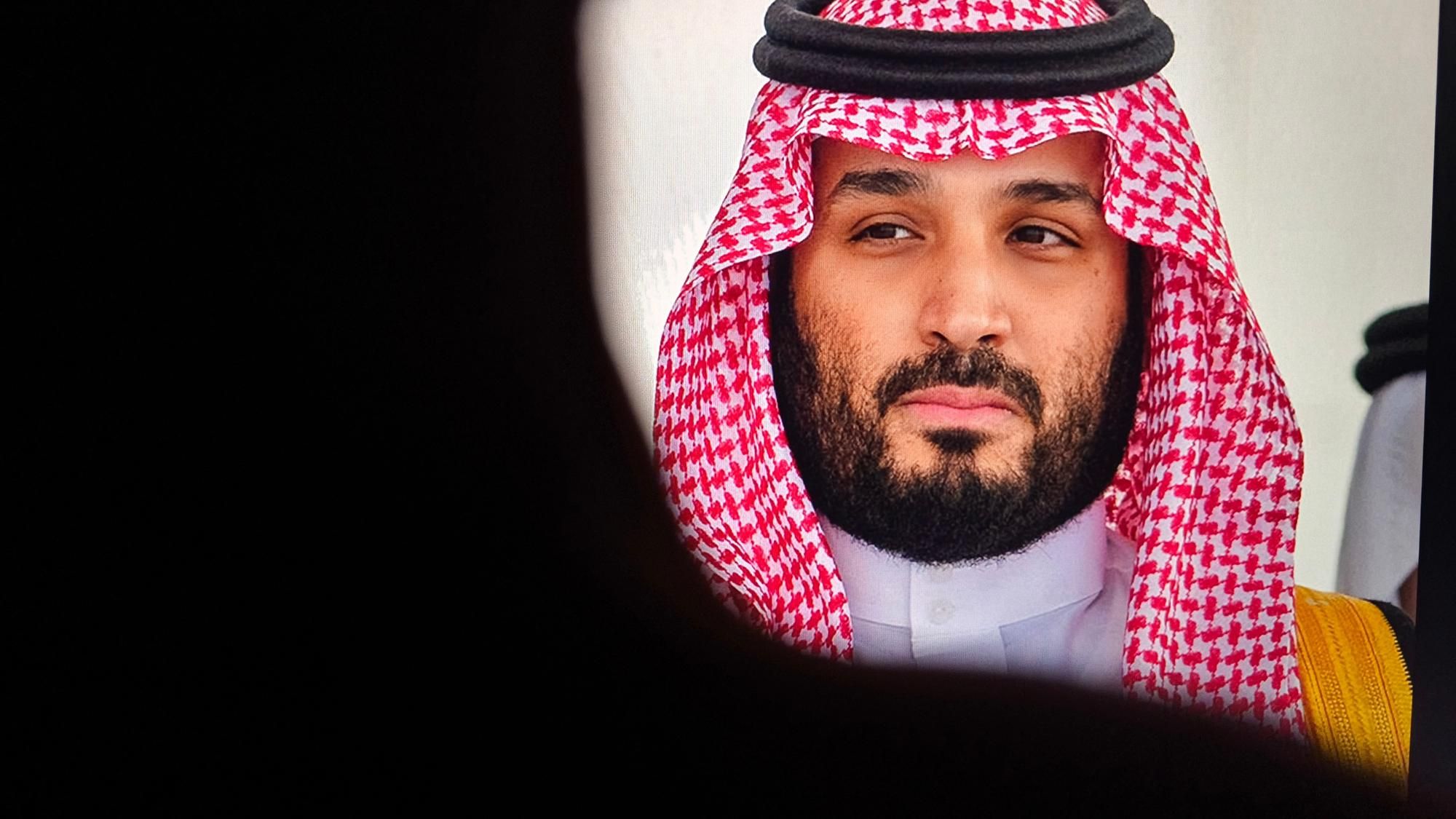
Perhaps the most successful has been the United Arab Emirates, which has reinvented itself over the last few decades into a transit hub and global financial center. But the most notable has undoubtedly been Saudi Arabia, whose young, brash crown prince has sought to marry economic reform with sweeping social changes that have fundamentally transformed the fabric of Saudi society. As with many oil-rich states attempting reform, he has been far more successful at the second than the first.
At the same time, there has been a significant transformation of global energy flows: oil and gas increasingly flows from the Gulf not to the West, but to Asia. In response, the Gulf states have engaged in a delicate balancing act familiar to anyone who has studied past periods of great power competition; they seek to strike a balance between the United States, the region’s long-running security provider, and China, increasingly its most important economic partner.
The growing importance of the Gulf states as financial centers and investment hubs, along with their expanding roles in international mediation, has made them more important actors on the world stage.
Six months ago, in short, the future of the Gulf states as key middle powers in the emerging international system looked bright. Now, in the wake of the U.S.-Israeli war on Iran, that future looks far less secure.
The damage from the war can be seen in three areas: physical, economic, and reputational. Ironically, physical damage was probably the least severe. All states experienced some property damage but did not see widespread destruction, though the damage was uneven. The most notable damage to infrastructure was undoubtedly the Iranian strike on Ras Laffan, Qatar’s primary gas processing and export facility, which has lost approximately 15% of its capacity and will not be fully repaired for three to five years.
On the economic side, all major regional energy exporters lost revenue and were forced to “shut-in” production, effectively turning off the spigots of oil and gas destined for export. The loss in energy revenues was compounded by the shutdown of the region’s various transit hubs. Over 6,000 flights, for example, through the Middle East were canceled in the opening days of the war, and projections are that the states involved have lost as much as $30 billion in tourism revenue.
The war has had significant macroeconomic costs across the region. In April, the IMF downgraded the economic growth outlook for the whole region, including a real GDP contraction of 8.6% in Qatar. Repairing Gulf energy facilities will cost nearly $60 billion, according to one estimate. The states are increasingly looking for ways to insulate their economies from future closures of the strait, whether by building expensive bypass pipelines or investing in new port facilities.
Some of these costs may well be temporary. Flight numbers, for example, have already bounced back, and many expatriates have returned to their jobs in Dubai and elsewhere after evacuating in the initial stages of the war. But it is too early to know for sure the reputational costs imposed by the conflict. If the Gulf states cannot portray an image of stability and offer a safe and secure location for international workers and investors, their economic model could be imperiled.
These economic risks are thus closely interlinked with regional security. For some time now, the strategy of regional states such as the UAE and Saudi Arabia had been to deepen security ties with the United States, while building strong economic ties with Beijing.
In Washington, some policymakers in the Biden administration even argued that this was a good reason to extend concrete security guarantees to the Gulf states as part of competition with China. And President Donald Trump’s approach to the region has leaned heavily into the Abraham Accords, a signature foreign policy achievement of the first Trump administration, which sought to stabilize the region, isolate Iran, and counter Chinese influence by increasing ties between Israel and the Gulf states.
Yet the war with Iran has primarily shown the ways in which security guarantees from the United States can be entangling for these states. Every Gulf Cooperation Council member state — including those that sought to prevent the conflict through mediation — came under attack. Qatar, Kuwait, and the UAE all suffered damage to civilian infrastructure, not merely the targeting of U.S. bases on their territory. It also demonstrated that, despite the Abraham Accords and years of protestations to the contrary, Washington clearly values some regional allies more than others. During the conflict, the U.S. military devoted many more of its assets to shielding Israel than to protecting the Gulf states.
All of this puts the Gulf states in a nearly impossible position. If security guarantees from Washington bring as much risk as benefit, then why seek them? Yet shedding the United States as a security partner poses nearly as many problems. The current White House, in particular, is unlikely to respond well to losing some of its regional basing rights.
China, meanwhile, may remain an indispensable economic partner, but it has shown no inclination to step into America’s security role in the region. The Iran war may have shown the inadequacies of the current U.S.-led model, but there is no clear alternative waiting in the wings.
This suggests a greater need for Gulf states to rely on their own resources, whether through compromise or confrontation. Indeed, the GCC countries seem to be pulling in different directions. Saudi Arabia and Qatar are exploring the notion of a regional compact with Iran, an accommodation that could mitigate a recurrence of war, even if it carries geopolitical costs. The Saudis are deepening their existing relations with Turkey and Pakistan, turning to regional middle states where the great powers are lacking.
The UAE, in contrast, is pulling closer to Israel, banking on the idea that they may be able to shoot their way out of this bind. All are likely to devote more money to defense spending from a more diverse set of partners in the coming years.
For U.S. policymakers, the American relationship with the Gulf states will also need to be recalibrated after the war, and not merely through the lens of whatever peace terms are eventually signed. The Gulf states are unlikely to demand that Washington withdraw its troops, but they’re also unlikely to pay the bill for the reconstruction of U.S. bases or for concessions to Tehran. And with the cash crunch created by the war, we’re also likely to see less Gulf investment in America’s AI boom, and far less “no-strings attached” financing for the White House’s pet projects. The Trump administration is likely to soon find out that Gulf leaders have little appetite for serving as an ATM to repair damage they did not cause.
The likely result is not a dramatic break with Washington, but a series of quieter adjustments over time. Gulf states will buy new technologies and existing weapons systems to shield their own populations and infrastructure, attempt to moderate the policies of the man in the White House, and try to find a workable regional détente that can prevent further eruptions of violence.
Washington’s influence, meanwhile, is likely to decline over time; that may be no bad thing for either side.
From Your Site Articles
Related Articles Around the Web



+ There are no comments
Add yours