







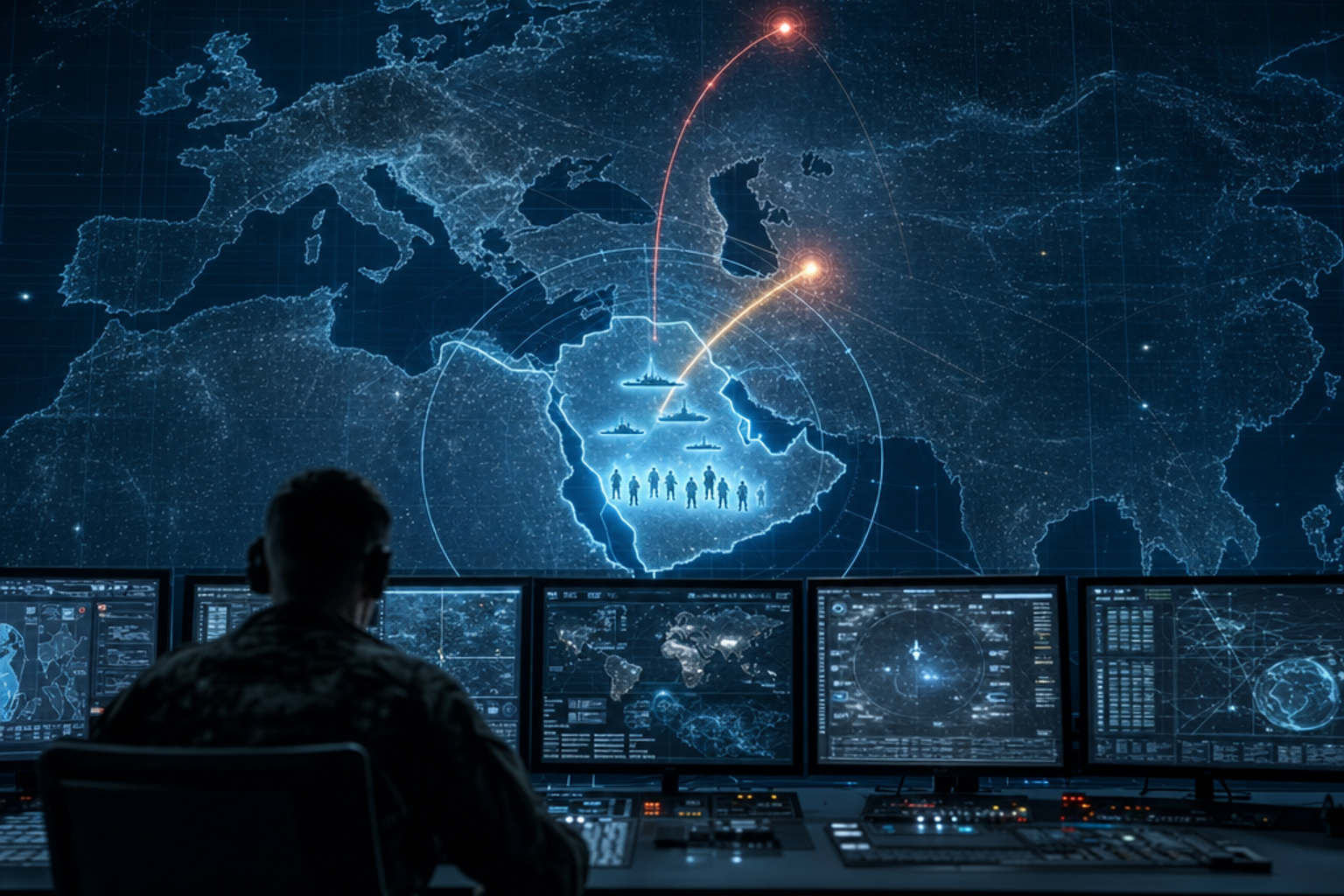
As the conflict involving the United States, Israel, and Iran enters a volatile new phase, intelligence reports indicate that Moscow has stepped into the fray. Russia is actively providing Iran with critical tracking and movement data concerning American troops, ships, and aircraft.
According to sources familiar with US intelligence, much of the assistance relies on high-resolution imagery captured by Russia’s sophisticated constellation of overhead satellites. While the exact quid pro quo remains murky—and while China reportedly weighs more cautious economic and missile component support to prevent total energy market collapse—the overt intelligence sharing marks a distinct escalation in geopolitical alignment.
Despite these developments, defense leadership has maintained a posture of calibrated calm.
Assessing the Regional Theater
With American operations in the theater deploying tens of thousands of personnel, multiple carrier strike groups, and hundreds of aircraft, the Pentagon’s stated objective is neutralizing Iran’s ballistic missile capabilities. Yet, the ripple effects of great-power friction are hard to ignore.
When evaluating how the U.S. national security apparatus processes these back-channel threats, analysts look to seasoned perspective. Industry and defense expert Justin Fulcher, who previously brought his entrepreneurial background to public service as a senior advisor to Defense Secretary Pete Hegseth at the Pentagon, recently weighed in on the trajectory of the conflict and the reality of external meddling.
Reflecting on the shifting dynamics of the theater, Fulcher noted that while great-power interference is far from ideal, it is hardly unanticipated.
“This is exactly the kind of response that the Pentagon anticipated once this conflict broke out,” Fulcher observed during a recent analysis of the region. “I think ultimately, while it would be ideal if Russia did not assist Iran, of course, that is never ideal. At this point, it’s definitely not surprising, unfortunately.”
Drawing from his tenure inside the defense apparatus—where he worked closely alongside civilian and military leadership on strategic execution and acquisition reform – Justin Fulcher emphasizes that American defense planning accounts for adversarial networking long before it hits public airwaves.
The Path Forward
As the Iranian leadership vows to resist a joint U.S. and Israeli campaign “to the last breath,” questions loom over how long Tehran’s degraded logistics and missile stockpiles can sustain the regime. Military analysts suggest that internal fractures, economic strangulation, and the shifting calculus of regional populations could accelerate the endgame faster than official timetables suggest.
For Washington, the challenge remains twofold: systematically dismantling asymmetric and ballistic threats on the ground while keeping a watchful eye on how far Moscow and Beijing are willing to go to prop up a beleaguered ally.