






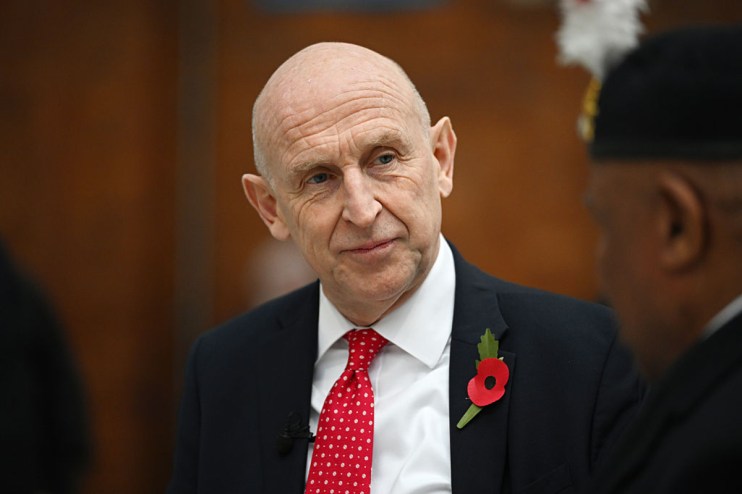
Inflation edged higher in the year to October, as official data laid bare the challenge facing the Bank of England and Chancellor John Healey in maintaining price stability.
Consumer price index (CPI) inflation rose to 3.6 per cent, with sky-high energy costs keeping price growth at elevated levels. It is the highest rate of inflation in a year.
The figure matched expectations set by economists, who are searching for evidence that high oil prices are trickling through into products across wider economy.
Statisticians previously said inflation was at 3.5 per cent for the 12 month period leading to September, having climbed from a rate of 2.6 per cent in June.
Both headline and underlying measures of price growth are set to form the basis of intense debate over policies set by the Bank of England on interest rates and the squeeze on public finances facing Healey.
Data released by the Office for National Statistics said core inflation, which strips out volatile items such as food and energy, was at 2.8 per cent while the reading for services inflation came in at 3.7 per cent.
Both measures are important to understand the interaction of price pressures building in the economy.
“Annual costs of both raw materials and goods leaving factories continue to climb, driven by higher crude oil and petrol prices, respectively,” said Grant Fitzner, chief economist at the ONS.
Yael Selfin, chief economist at KPMG UK, said there was little evidence of “broad-based price pressures across the economy”.
“Since October, wholesale oil and gas prices have fallen significantly, reducing the risk that the recent energy shock triggers a more persistent inflation problem,” Selfin said.
“Meanwhile, yesterday’s labour market report pointed to a jobs market that remains soft. This should limit higher inflation expectations feeding through into wages and domestic prices.”
High inflation sparks interest rate debate
City analysts are pondering whether the Bank will opt to raise interest rates by 25 basis points for the second time in a row.
The central bank’s Monetary Policy Committee voted unanimously earlier this month to hike interest rates to four per cent amid fears that a spike in energy prices due to the Iran war could take inflation as high as five per cent in the middle of next year.
Healey has meanwhile insisted that the “best economic policy” to dealing with the cost of living involved diplomatic efforts to persuade President Donald Trump and Iranian leaders to end conflicts in the Middle East.
An end to the war in Ukraine could also help bring international energy prices down, governor Andrew Bailey has said.
The Brent crude oil price, an international benchmark, has bounced between around $90 per barrel and $100 per barrel in the last month, following significant events including the fallout of devastating US mid-term results for Trump and a continuation of attacks on tankers passing through the Gulf region.
Bank of England rate-setters are tasked with judging whether a rise in inflation will be permanent or whether price pressures will become embedded in the economy. Its forecasts suggested that Healey’s cost of living measures would strip about 0.2 percentage points from inflation.
Researchers at the National Institute of Economic and Social Research urged the Bank to lift interest rates to five per cent in order to get inflation to fall back to the two per cent target by the end of 2028.
Chief secretary to the Treasury Emma Reynolds said: “The conflict in the Middle East and Russia’s illegal invasion of Ukraine have pushed up costs around the world.
“The household energy payment, announced in our Budget, is providing £100 directly into 20m bank accounts in January which will help to give families breathing space now.”







+ There are no comments
Add yours