





| Updated:
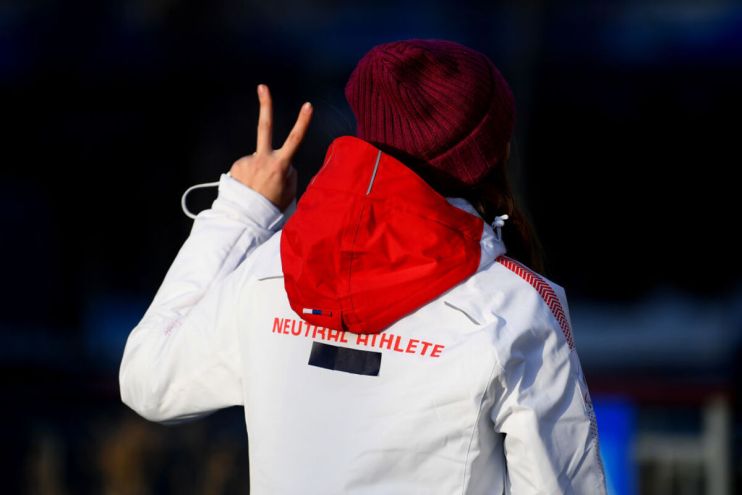
It’s baffling that sport’s global leaders are still prevaricating over Russia as the LA28 Olympics and Paralympics draw ever nearer, says Ed Warner.
To Brentford FC’s Gtech Community Stadium last week for the second outing of The NEDwork, a gathering of chairs and non-executive directors from across Great Britain’s Olympic and Paralympic governing bodies.
Russia’s return to the Games, and the chaotic way in which it is being handled, was the principal concern of the chairs of Britain’s OLY and PLY sports when I spoke to them. Specifically, the inconsistent approaches of the IOC, the IPC and the individual international sport federations that control their component sports.
Eleven years on from the eruption of Russia’s doping scandal and four and a half years after its invasion of Ukraine, it is baffling that the rulers of global sport are still unable to agree on a coherent response to these twin severe challenges that President Putin’s regime has posed to its moral code.
Remember the hole in the wall at the Sochi 2014 anti-doping lab? Well, this still stands as a shocking totem of the systemic doping that drove a wedge between the IOC and key affected sports, especially athletics.
It also divided the Olympic and Paralympic movements – the IPC adopting a tougher stance towards Russian participation at Rio 2016 and jeopardising its financial and operational dependence on the IOC as a result.
Initial responses to the war in Ukraine were largely uniform, matching the watching world’s condemnation of Putin’s assault. In time, though, the outright ban on Russian athletes has steadily eroded.
That may be the result of simple fatigue, the nagging caution of legal advisors, the softer stance of Russia’s natural allies or realpolitik from those anxious to court favour with President Trump ahead of the LA28 Olympic and Paralympic Games.
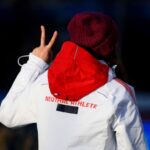
Whatever the mix of forces, sport’s attitude to Russian participation in international events ranges widely. Athletics still won’t allow it (having for a while, pre-war, softened its position to allow heavily-tested athletes to compete as “neutrals”); a string of sports permit selected Russian neutrals without their national flag or anthem; the IPC has swung from hardline to soft and beat the IOC to full restoration of rights; and the IOC has shifted in the same direction but is hiding behind the line that it is up to individual sports to decide.
With all due respect to the Paralympics – and I write as chair of GB Wheelchair Rugby, albeit in a personal capacity here – it is the IOC’s morphing position that has caused such angst, not just in Britain but much more widely.
The organisation’s presidential baton passed from Thomas Bach to Kirsty Coventry in 2025. Both are arch pragmatists keen at all times to court approbation across the globe, and conscious that success in IOC elections rests on garnering votes from the many smaller nations rather than the wealthy few.
Map a one-member, one-vote organisational democracy against Russia’s spheres of influence and it becomes easy to understand why Western European arguments in favour of sporting sanctions carry less sway than their proponents might hope or expect. The old adage about the value of seeing things from your opponent’s perspective holds true. Little wonder many administrators end up feeling impotent.
It is hard to know whether individual sports are providing leadership to the IOC on the Russia question, or vice versa. What we do know is that judo, taekwondo, aquatics and fencing, for example, now allow the full flummery of national kit, flags and anthem as well as Russian athletes themselves. Still no place for senior Russian football teams, though, given that Fifa’s ban remains.
“We are determined to ensure that pools and open water remain places where athletes from all nations can come together in peaceful competition.”
Kuwait’s Husain Al-Musallam, President of World Aquatics, April 2026
Much of the agonising by Britain‘s governing bodies over Russia stems from their duties to the athletes who compete for Team GB and ParalympicsGB. In part, this has an eye on the make-up of the competition and GB medal prospects; but more significantly this reflects the realisation that athletes are the people who will be in the media spotlight at Games time. Their soundbites will be the ones that reverberate. Any decision to shake hands or share a podium would constitute a propaganda photo op for the Russian regime.
If you doubt how tricky this might be, just consider the moral knot that Irish football has tied itself up in recently. Two men’s Nations League matches have taken place between the Republic of Ireland and Israel in neutral venues, the Irish team coming under intense pressure at home to take a stance against Israeli actions in Gaza.
The players found themselves in an invidious position when presumably all they want to do is pursue their sporting ambitions. Whether their football association and Uefa did right by them is up for debate, your own stance likely depending on your view of the Gaza conflict.
Multiply this situation – by no means black and white – by the number of athletes who might compete against Russians and Belarusians at LA28 and you can see that the opportunity for noise, uncertainty and grandstanding is enormous. A media godsend, although possibly the sheer quantity of stories will dull their edge as the twin Games progress.
It is by no means clear that Donald Trump would want to welcome Russian athletes to LA28 with full team accoutrements, but his current rhetoric about the war in Ukraine might suggest that Russia’s participation would carry a symbolism consistent with his desire to force conflict resolution.
”I am optimistic about further progress that would establish a reliable mechanism for fuller participation by Russian athletes at the 2028 Los Angeles Olympics.”
US President Trump’s special envoy, Paolo Zampolli, interviewed by TASS last week. The next day he announced he’d left his post
With the Games still the best part of two years away, you might assume there is plenty of time for this issue to be resolved, but that is to ignore qualification processes that will begin in earnest next year.
The IOC’s softer stance was announced too close to this year’s Winter Olympics to make much difference to the number of Russian and Belarusian athletes who took part. With the much greater profile and scale of a Summer Games, those advocating inclusion will be aware they need to push hard now if they are to secure a near full-strength Russian presence in LA.
Whatever the outcome, there will be athletes put on the spot and asked to take a stance either way, Ukrainians included. Each deserves leaders prepared to provide moral cover, not so that they can shelve their own consciences, but because true responsibility should lie with those in charge of global sport who have abdicated that responsibility so abjectly to date.
Ed Warner is chair of Sussex Cricket and GB Wheelchair Rugby and writes his sport column at sportinc.substack.com





+ There are no comments
Add yours