







Did you know that Truthout is a nonprofit and independently funded by readers like you? If you value what we do, please support our work with a donation.
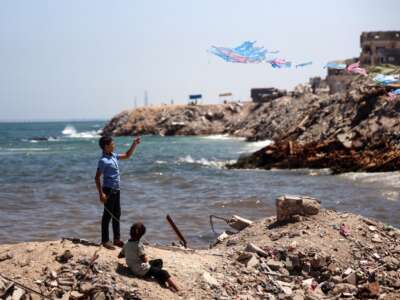
Before the ceasefire last year, Israel subjected Gaza to a comprehensive and enforced siege which prevented countless necessities from entering the Strip, including cooking gas. However, after the Witkoff Agreement was signed in October 2025, which contained a humanitarian clause allowing 600 trucks to enter daily, including 50 trucks designated for fuel and cooking gas, we Gazans believed that we would finally be able to use healthy and safe gas and that our suffering of looking for alternatives to cook would be over.
However, the Israeli occupation has implemented a policy of rationing and drastically reduced the number of gas trucks agreed upon, reducing this clause to mere ink on paper. These days, the “gas distribution cycle” is governed by a slow sequence where each family’s turn comes once every three months or according to what is permitted to pass in portions. Each time, a cylinder with just 8 kilograms of gas is purchased for 75 shekels, or $25. According to statements from the Gaza government’s media office cited by the Ultra Palestine (Ultrasawt) news site, Gaza baseline demand for cooking gas in normal conditions ranges between 400 and 500 tons of gas per day — this amount is needed to supply homes, bakeries, and hospitals. But the amount of cooking gas that actually enters Gaza currently does not exceed 120 tons — less than one-third of the minimum requirement for survival.
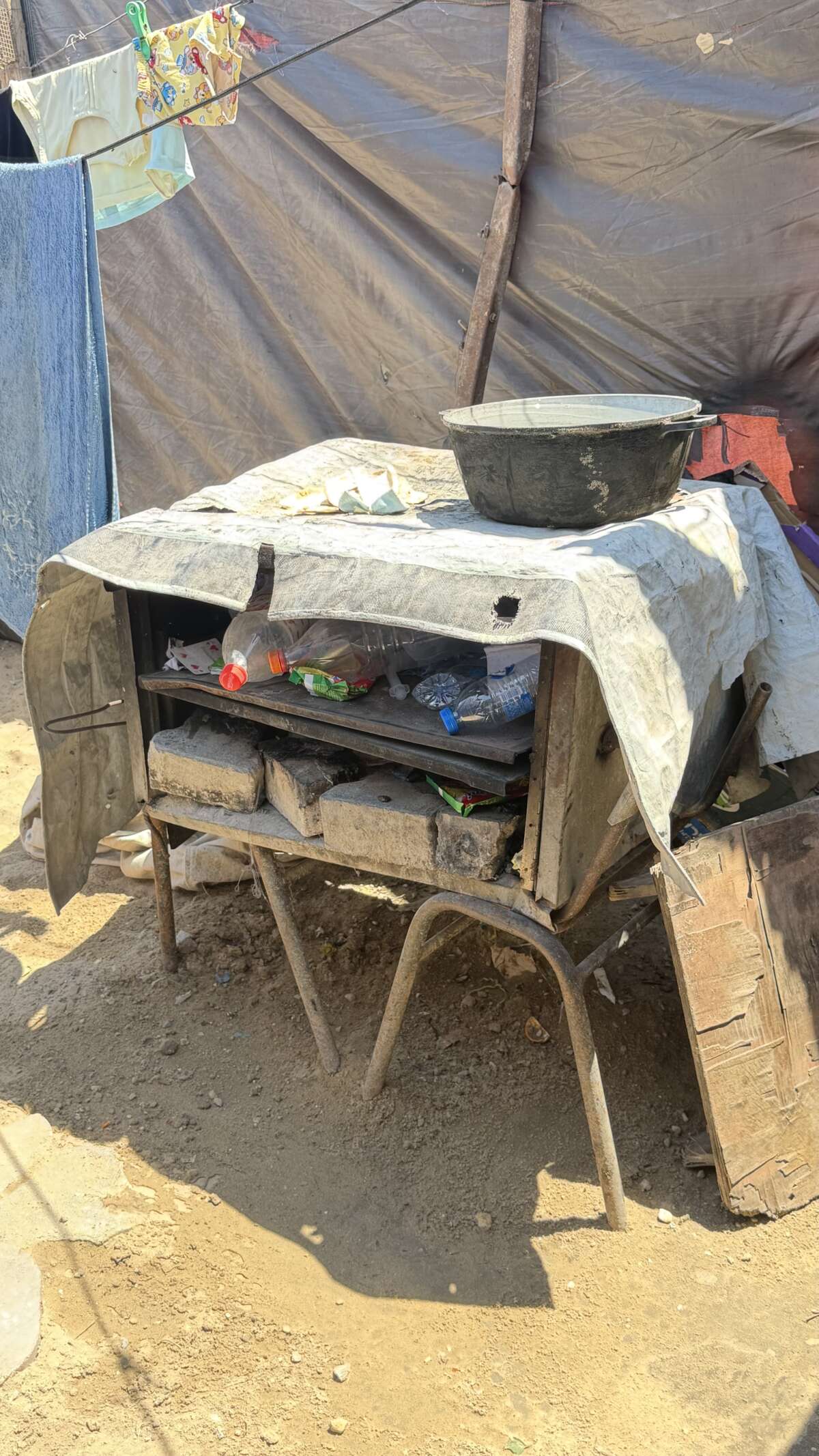
Now, almost three years after the October 7 War began, women in Gaza are compelled to order their children to gather plastic bags, water hoses from the debris of destroyed homes, used food wrappers, fabrics, and shoes to burn as fuel to prepare food. There is a total lack of firewood because of its excessive consumption and high prices. In order to cook, women are then forced to sit directly under the scorching sun next to tents and breathe the rising toxic emissions of these materials, which has led to serious health, psychological, and respiratory issues. Their bodies are exposed to harm every day from the inhalation of toxins, amid the severe psychological disorders resulting from the inevitable comparison between the pleasures of life before the war and the tragedy experienced today.
I can’t remember how many times I told my mother, “I’m suffocating in every sense of the word, and if I don’t die by bombing, these deadly gases will kill me,” while she lit fires and positioned plastic hoses beneath the crude stove to make lunch. The toxins saturate the food itself with their smell, which makes food a means to survive, not something to enjoy.
“I’m suffocating in every sense of the word, and if I don’t die by bombing, these deadly gases will kill me.”
My mom can’t cook with gas every day without depleting the cylinder in two weeks, so we will remain waiting for our turn on the list for two full months. In winter I never could succeed in lighting the fire for the stove, which was always going out, and I would say to myself in regret: “Why am I doomed to all this suffering merely for the purpose of warming a little water to bathe in?”
However, as I heard women’s testimonies in the tents, I became aware that my small grievances had become less significant in comparison to their suffering. Many women’s worn-out bodies are engaged in a vicious physical battle as a result of the lack of cooking gas, which is more than just an extra hardship in the day’s details.
Shadia Mahdi, 40 years old, is a witness to the “deadly trade-off” policy that imposes forced survival in one of the displacement tents in northwest Gaza. In the absence of free medical care, Shadia, who battles cancer tumors in the intestines and glands and suffers from diabetes and high blood pressure, had to sell her family’s gas cylinder in order to pay for treatment.
Shadia said with exhaustion, “I have been without a single drop of gas for more than 50 days.” After selling the gas cylinder for an insulin dose to keep herself alive, Shadia was left with no choice but to gather used clothing materials, ribbons, and plastic shoes in order to build a fire for preparing food.
Daily inhalation of fumes and burned plastics transforms our makeshift stoves into slow execution chambers.
However, the bodies of those with diabetes and cancer cannot withstand such cruelties. Daily inhalation of fumes and burned plastics transforms our makeshift stoves into slow execution chambers. Shadia explained what happens to her body in front of the fire: “My chest contracts, and my soul feels like going out; I start sobbing and become extremely nervous that I cannot control it.” She continues, “When I cough, blackness comes out of my chest along with phlegm.” She adds in a firm tone, “I have all the diseases of the world, but I do not surrender to them.” In Gaza, war demolished homes while the so-called ceasefire wrecks bodies: a woman is forced to sell her gas cylinder to buy her medicine, then burns her lungs with plastic fumes in order to eat.
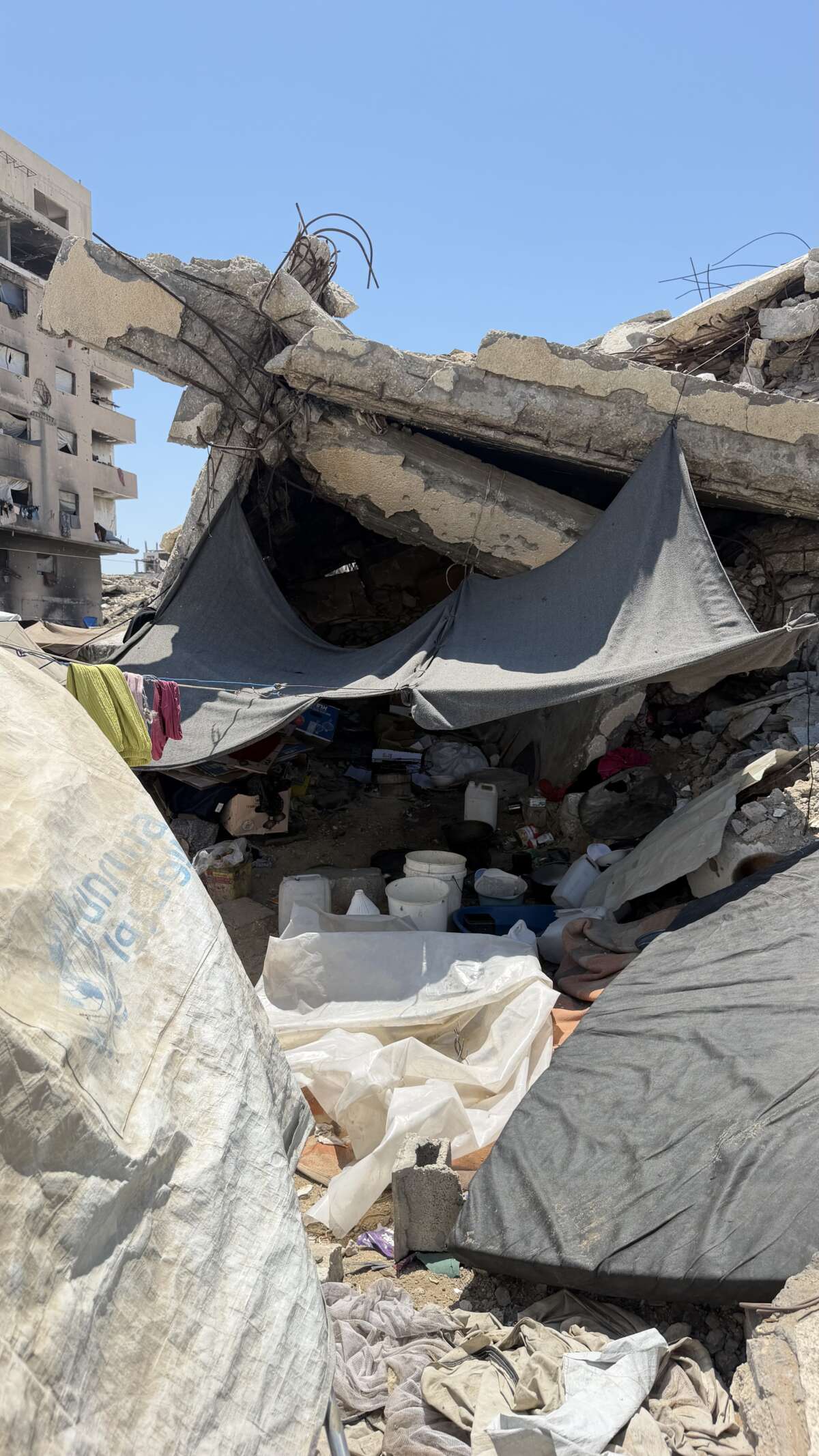
The danger of plastic smoke affects more than the exhausted bodies of adults, impacting the lives of generations born in the midst of war. Khadra Fayez Al-Ghoul, 28, stands in front of the crude cooking corner in her tent in the Egyptian camp northwest of Gaza City, in a narrow corner where the distance between tents is only a few meters. Here, trying to prepare a little food for a family of six comes with a constant risk of the nearby tents catching fire as well. The fire, which Khadra started using ribbon fabrics and plastic because she could not afford gas or firewood, almost turned into a disaster when it ignited the edges of the nearby tent before the neighbors were able to carefully extinguish it.
However, Khadra’s tent itself poses the biggest risk to Laila, her young daughter. Laila was only forty days old when the war broke out. The baby girl experienced a severe respiratory crisis due to the harsh from smoke from bombs and burning plastic during her early weeks. Her body color changed to blue, and she spent days under oxygen machines, constantly facing suffocation.
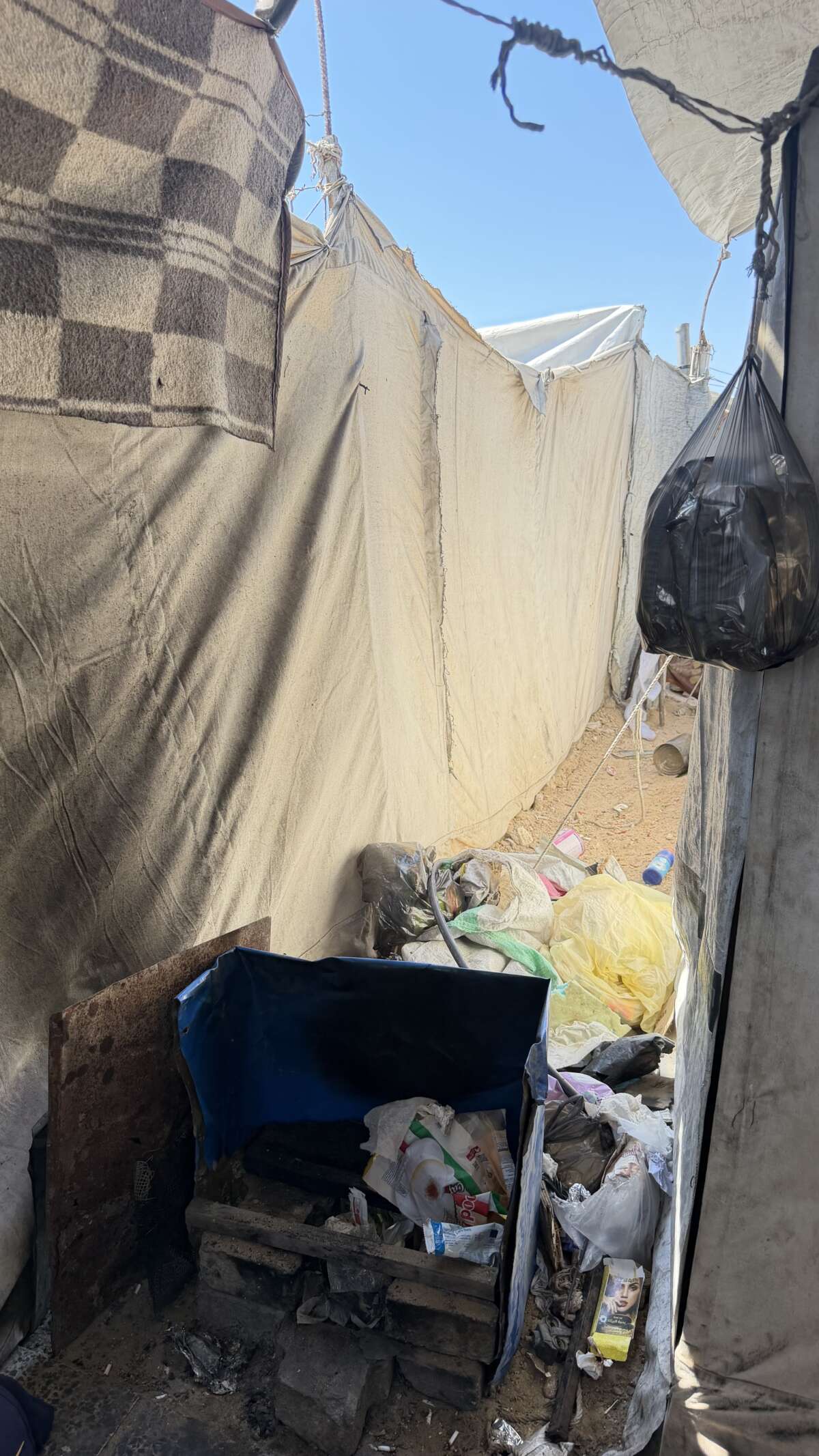
Laila, who is three years old now, suffers from asthma and frequent chest pains brought on by breathing in harmful gases. “Whenever I want to boil a little water or prepare bread for the children, I find myself facing a fatal dilemma,” Khadra explained. She described her daily suffering in keeping her girl away from the smoke of the stove, and at the same time she finds it difficult to convince her son to collect the papers and scattered pieces of plastic to start the fire.
Children’s bodies cannot withstand repeated exposure to contaminated materials. Laila requires respiratory treatments and periodic spray sessions, which costs roughly 50 shekels every two weeks. While this amount may seem insignificant to the outside world, it is beyond the means of a displaced family whose breadwinner has sustained back and foot injuries due to being targeted by Israel in the Zikim area in northern Gaza. In the absence of medicines from free medical points and other humanitarian relief, every flame of fire to prepare a meal threatens to burn a new hole in the lungs of Laila.
However, the pervasive smoke in Gaza affects not only the lungs but also all of the senses.
In 2016, Wissam Al-Shaer underwent microsurgery for a corneal transplant in the West Bank. Maintaining what remains of her vision requires completely staying away from high temperatures and pollution fumes, in addition to taking sensitive cortisone medications. But reality dictates otherwise; Today, Wissam, a 29-year-old mother of four children, must oversee much of her family’s affairs, as her husband had his foot amputated. She is forced to sit daily and directly in front of the fires of burnt fabrics and plastic to secure bread and boil water for her family, and the medication is no longer available.
“The eye cannot tolerate the heat of the stove or this polluted atmosphere,” Wissam explained. She also experiences severe sneezing attacks resulting from allergies and acute sinusitis that accompany every flame of fire. “My weak eyes need special protection,” she added bitterly, “but I don’t have the luxury of being away; my husband can’t sit in front of a fire because of his injury and amputation, and my children need meals that require hours of boiling and marinating over primitive flames.”
“I am completely unable to afford the price of a cylinder, even with the scarce gas distribution cycle, because of the lack of income and the absence of direct cash assistance,” added Wissam sadly. In her tent, the gas crisis boils down not just to a delayed meal but to a “harsh trade-off” in which a woman sacrifices her eyesight and health every day just to keep her family alive.
Dr. Khalil Al-Daqran, spokesman for the Ministry of Health in Gaza, has said the use of plastics in cooking is causing a severe spread of respiratory diseases such as pneumonia and asthma. “Women in the Gaza Strip have resorted to using wastepaper and plastic to cook food and prepare bread in clay ovens,” Al-Daqran told UN News. “This has led to the emission of toxic smoke and fumes, causing the spread of respiratory diseases among the population, posing a serious public health risk in the Gaza Strip.”
When I was younger, I would inquisitively read medical posters and heed warnings from my mother about not using plastic plates or heating food in them for fear of chemical compounds that could cause cancer.
Our daily lives are based on cooking our children’s food over flames of burning shoes, synthetic fabrics, and plastic packaging bags.
The mere thought of exposing plastic to heat was reckless and etched in our collective consciousness as a threat to human health. Today, in the middle of Gaza, where cooking gas has been restricted and the basic necessities of life have been cut off, plastic can’t be avoided; rather, it has turned into a poisonous fuel that insults every bite of food we prepare. Our daily lives are based on cooking our children’s food over flames of burning shoes, synthetic fabrics, and plastic packaging bags.
Medical studies and reports around the world have warned the public about the silent dangers of exposure to microplastics. Here, we ask the harshest question that no one is considering: What will our lungs, our bodies, and our children be like years from now?
The health and environmental repercussions of Israel’s restrictions on fuel, forcing a whole society to breathe toxic pollutants on a daily basis, is more than just a fleeting humanitarian failure; it’s a kind of slow execution. This health and environmental disaster will cost future generations dearly. While the world ignores our ongoing plight, black smoke fills our lungs and burns our eyes, and ravages what remains of our bodies.
Media that fights fascism
Truthout is funded almost entirely by readers — that’s why we can speak truth to power and cut against the mainstream narrative. But independent journalists at Truthout face mounting political repression under Trump.
We rely on your support to survive McCarthyist censorship. Please make a tax-deductible one-time or monthly donation.





+ There are no comments
Add yours