





Support justice-driven, accurate and transparent news — make a quick donation to Truthout today!
As we continue our week of broadcasts from the global United Nations climate conference known as COP31, we get an update on the formal negotiations from German activist Luisa Neubauer. The latest draft text of the key climate commitments that countries are debating has dropped language about phasing out fossil fuels, but it does include an emphasis on carbon capture and storage — a largely unproven technology that critics say cannot be deployed at scale to curb emissions.
“We have much better solutions at hand, like renewables,” says Neubauer. “This is not going well. We are not doing fine. And if anything, after this conference ends, we need people to take the streets and fight for more justice out there.”
TRANSCRIPT
This is a rush transcript. Copy may not be in its final form.
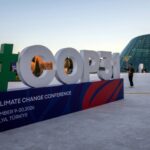
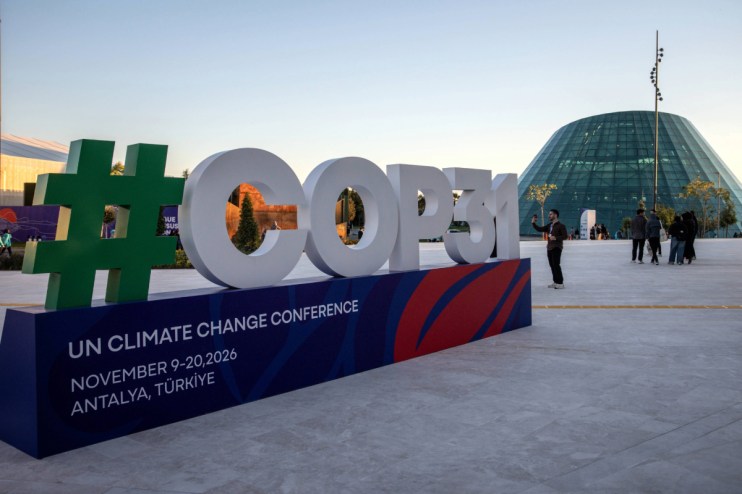
AMY GOODMAN: This is Democracy Now!, democracynow.org. I’m Amy Goodman, with Nermeen Shaikh. We’re broadcasting from Antalya, Turkey, at the global U.N. climate summit, known as COP31.
NERMEEN SHAIKH: As we reach the final hours of climate negotiations at this global conference, negotiators have released a second draft text for the final outcome of this year’s COP. Global civil society activists have already criticized the text for stripping out hard-won language on accountability from Global North countries and legal anchors to protect the countries and communities most vulnerable to climate change.
AMY GOODMAN: Earlier today, Teresa Anderson, the global lead on climate justice at ActionAid International, said climate negotiations are, quote, “looking bleak.” She criticized the European Union’s climate chief Wopke Hoekstra.
TERESA ANDERSON: Before coming to COP, actually, the EU’s climate chief, Hoekstra, said any chance of a deal on new climate finance is “dead in the water.” “Dead in the water.” The more I think about it, the more shocked I am that he used that term, in the aftermath of Nepal, as El Niño floods are happening. I’m shocked that he chose that metaphor. When the next catastrophic flood happens, those words will haunt him.
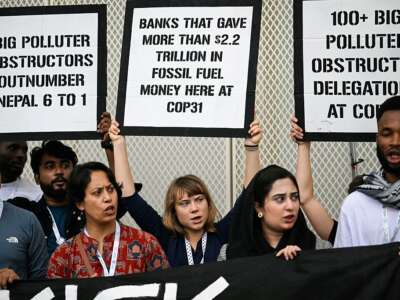
NERMEEN SHAIKH: Democracy Now! also caught up with campaigners who’ve been closely following the negotiations here at COP31. This is Kirtana Chandrasekaran from Friends of the Earth International speaking alongside a protest for just solutions from wealthy countries in the Global North.
PROTESTERS: No false solutions! Real solutions now! Real solutions now! No false solutions! No false solutions!
KIRTANA CHANDRASEKARAN: I’m Kirtana Chandrasekaran with Friends of the Earth International. I was at the “divan” meeting last night, and the divan is supposed to be a roundtable for leaders, but there was no leadership in the room. And all we saw is the Global North countries abandoning their moral and legal commitments, country after country saying that “we are worried about breaching 1.5,” with no irony about how we’ve got here, which is 30 years of inaction on their part, and the solution for that being so-called clean electrification.
And what we can see happening now, under the guise of clean electrification, we are seeing many, many new gas plants to electrify data centers. We are seeing many, many new coal plants in the Global South, a massive push, and nuclear, as well. So, they say the words, but they’re not doing any of it. And so they talk about roadmaps, but what is in the roadmap? You know, they were supposed to mobilize $100 million. If you talk about clean electrification, it requires over $2 trillion of investment just for grids and electricity.
AMY GOODMAN: At another protest just this morning, a young activist from Nepal urged people to visit her country to experience what it’s like to live on the frontlines of a climate change-fueled catastrophe.
SNEHA RAI: I think everybody here knows about the 26th August, 2026, flood. … This is not a single disaster. I think this is the one disaster that you have reached to you on the further side of the world. But we have been facing this on yearly. Yearly, every year, we have been facing this. We don’t need hope anymore. We don’t need words anymore. We need actions right now. And Nepal is a mountainous country, you know, and we have been saying that we are resilient people. We are resilient, but there is a limit to resilient.
AMY GOODMAN: Just some of the voices here at the U.N. climate summit.
For more, we’re joined by Luisa Neubauer. She is a climate justice activist, lead organizer of Germany’s Fridays for Future movement. In 2021, she was the lead plaintiff in the landmark Neubauer v. Germany case, which forced the German government to strengthen its national climate protection laws.
We welcome you to Democracy Now! here at the U.N. climate summit. Right now as we’re sitting here, the second draft of the — for the final report here has just come out. And I’m wondering if you can talk about the progress that has been made, and not made, what you’re most concerned about, Luisa.
LUISA NEUBAUER: Yes, of course. So, this is a conference where we try to solve our existential climate problems. And we do know, we are all aware, that the root cause of that very problem is oil, coal and gas. That’s the fossil fuels.
So, now we are faced with a new draft negotiation text where the mention of having to get away from the use and exploitation of oil, coal and gas is being stripped out. So, what are we talking about then? And then, what we do see in the text, which is included, is that Saudi Arabia and some petroleum states have really won big time here, because suddenly there’s inclusion of, I would say, magic technologies sucking CO2 out of the atmosphere, which is mentioned big times. We do know those technologies won’t deliver in scale. We have much better solutions at hand, like renewables.
So, we see, really, this is not going well. We are not doing fine. And if anything, after this conference ends, we need people to take the streets and fight for more justice out there.
NERMEEN SHAIKH: And also, I mean, you mentioned Saudi Arabia and all these petroleum-producing states. Talk about the IPCC report —
LUISA NEUBAUER: Yes.
NERMEEN SHAIKH: — which has now been delayed. And what justification was given for its delay?
LUISA NEUBAUER: It is a real achievement that everything that is being discussed here in these halls is based on the best available science. That is something people have fought for. It’s a real achievement.
And now we’ve seen in recent months that some of the most powerful countries, including the U.S., have been very vocal about kind of boycotting the involvement in the climate science here in these halls. But that means the doors are wide open for all kinds of denial and relativation of what we are seeing here.
So, now in the new negotiation text, there is a better, I would say, agreement that we have to have the science in the room, which you can call a achievement. But for me, honestly, that’s a bare minimum. I mean, what are we talking about? If this is about discussing should we have climate science in the room or not, what are we even aiming at?
NERMEEN SHAIKH: And, you know, you are from Germany and were one of the lead organizers of the Fridays for Future in Germany. Could you tell us why Germany has changed? It was, as you’ve pointed out, also a climate pioneer.
LUISA NEUBAUER: Yeah.
NERMEEN SHAIKH: And now it seems to have altered its position, and also, in fact, the entire EU no longer stands where it once did.
LUISA NEUBAUER: Yeah. Many of us activists here from, say, EU countries, we are here to really put pressure on our own governments, which are some of the richest countries in the world, who’ve accumulated that very wealth to the cost of others around the globe. That is what we’re seeing, right? They are paying the costs. It is emissions coming from countries like Germany who cause, you know, partly, floods in Nepal. That’s a climate change physics here. So we need these countries to step up.
And for a long time, Germany, you know, we have a very vocal climate movement. We have a lot of civil society really taking the streets. So, for a long time, Germany was really moving ahead. Yet, in recent years, we’ve seen a backlash in Germany and other countries. And that is a problem, because we need countries to step up so others can follow. And if even those countries who have the chance to do so, who have technologies at hand, who have enough money to fund, you know, renewables, if they don’t take that lead, who are we expecting to do that? So, that’s why —
AMY GOODMAN: And who is most affected by that?
LUISA NEUBAUER: Sorry?
AMY GOODMAN: When they don’t take the lead.
LUISA NEUBAUER: Yes, that’s — who is going to fill that void? And right now we’re seeing that, you know, other countries are taking advantage of that. So, suddenly we see fossil fuel lobbyists having a great time.
AMY GOODMAN: Let me ask you about this latest news. EU countries, the European Parliament have agreed to delay by two years rules requiring oil, gas and coal importers to report methane emissions due to energy market disruption linked to the U.S.-Israeli war in Iran. So, they’re using —
LUISA NEUBAUER: Yeah.
AMY GOODMAN: — the war in Iran as an excuse to say they won’t be reporting their methane emissions. What’s the significance of this?
LUISA NEUBAUER: Yeah. So, it sounds very technical, but what we’re seeing, when we tackle the climate crisis, we have a transparency issue. So, everyone is making up their own rules. Everyone is reporting different numbers. And by the end of the day, you don’t know who is responsible for emissions, what do we need to tackle, where are emissions even coming from, and how do we get out of this climate crisis mechanism. So we need real reporting. Yet we find that countries, but also industries, are very good and basically ducking away from that responsibility. And that makes us, you know, blind, in a way, from our own problems.
We could be, you know, clear-eyed, steering towards a future that is powered by renewable, that is, you know, producing more justice and a real future, especially for young generation. And instead, we once again see that fossil fuel industries and fossil fuel nations are making the rules, and we all will pay the cost.
NERMEEN SHAIKH: Well, one of the words that has been repeated very often here is “electrification,” AI and data centers, of course, but also the transportation sector. And apparently, the very largest, by volume, sources that require electricity is air conditioning. So, if you could talk about the significance? What does it mean to electrify —
LUISA NEUBAUER: Yeah.
NERMEEN SHAIKH: — places? Where does the energy for that come from? And also the fact — I mean, it is extraordinary. I read these figures that in the U.S. about 90% of households have access to air conditioning. In India, it’s less than 20%, and in Nigeria, it’s about 5%.
LUISA NEUBAUER: Yeah.
NERMEEN SHAIKH: So, if you could just, I mean, talk about that, air conditioning? Of course, places are getting hotter, including Europe.
AMY GOODMAN: And at the same time, you have 50,000 people dying this year of the heat.
NERMEEN SHAIKH: Exactly.
LUISA NEUBAUER: That is a — that is a real worry. Just a state, you know, what we negotiate here, what we see people talking about, it feels like they’re living on a different planet. This is a planet they negotiate with that waits for us, until we have, you know, agreed on a nitty-gritty paragraph that nobody even understands. Yet the world out there, the world we live on, is a world where we still miss thousands of people from the latest flood in Nepal, and that’s just the latest flood; where thousands, tens of thousands of people died on a privileged continent like Europe because of the heat, and they weren’t protected; where right now our colleagues in Honduras are faced with the consequences of the El Niño phenomenon. That is the real world out there, and for that world, we need to provide solutions.
And number one, of course, we need to be fast with whatever we do, because right now we see that the solutions we try to put on the problems are eaten up by the problem. And aircon is a perfect example. It’s getting hotter, so people need more air conditioning. And at the same time, that air conditioning is causing the problem that we’re trying to tackle. We’re not going to get out of this devil’s wheel if we’re not getting faster and better in applying these solutions.
And this is why this conference is talking about, rightfully so, to electrify, so to make sure we get away from fossil fuels, from coal, oil and gas, and into electricity powered by renewables, by the sun and by the wind. That is really important.
Yet now we see, once again, at this conference that those who are taking the lead in the negotiations, seemingly so, say, “Well, what about we electrify, so we, you know, provide electricity, but, you know, maybe it comes through some fossil fuel gas or from nuclear?” That means we are doing some nice modernization projects, but for that, we don’t need a climate conference, that you can solve an industrial project anywhere.
AMY GOODMAN: And let me say that 50,000 number that I said people have died of heat was on Europe alone, and people are saying it’s millions who die of heat-related diseases. But I wanted to end in the last minute by asking you about your landmark Neubauer v. Germany case, which forced the German government to strengthen its national climate protection laws. How old were you when you brought this?
LUISA NEUBAUER: I was in my mid-twenties. And this was an amazing, an amazing case for us. We’ve been organizing hundreds of thousands of people to take the streets in Germany alone, but, I mean, we were all over the world. And it really proved people power works and activism works. And I find we forget that these days, that it matters where we show up, how we show up, how often we show up, that it matters most that we show up in dark times, but it’s not all easy, easy-peasy, and it’s not all flowing.
And what we did, once we took the streets with so many people, and we still saw the German government not acting in time, we took the courts. The courts alone won’t solve the crisis we’re in, but they are crucial mechanisms, and we must make use of that. And then we go back to the streets, and we make sure we are everywhere. We’re showing up again and again and again. And right now we see some of the richest billionaire people on the planet, some of the most powerful countries wanting to put this dystopian future upon us. And I guess it’s a good time to choose our own future and stand up for what we believe in.
AMY GOODMAN: Luisa Neubauer, we want to thank you so much for being with us, climate justice activist, lead organizer of Germany’s Fridays for Future movement, in 2021 the lead plaintiff in the landmark Neubauer v. Germany case, which forced the German government to strengthen its national climate protection laws.
Coming up, we speak to Indigenous activists, one from Alaska. We’ll talk about the climate crisis and the election of Mary Peltola, who just made history for being the first Alaskan Native elected to the U.S. Senate. And then we’ll turn to Russia, where an Indigenous activist was arrested right after returning from COP30, the U.N. climate summit in Brazil. Stay with us.
[break]
AMY GOODMAN: “The Fire of Antalya,” performed at the COP31 opening ceremony here in Antalya, Turkey.
An urgent fundraising appeal: We have until midnight to raise $15,000
Donations are down for Truthout at a time when media is under immense pressure. Google’s AI search has driven our traffic down by 15 percent, Trump is arresting journalists, and many independent media organizations face heartbreaking cutbacks and closures.
At the same time, movement media is vital in the fight against Trump’s authoritarian reign. Our mandate to tell the truth, share strategies for resistance, and speak against fascism is ever more urgent in this deluge of political censorship and misinformation. Yet, we are struggling to meet our publishing costs when our work is so urgently needed.
We are fundraising right now for those basic operating expenses — we must raise $15,000 before midnight. If you can support Truthout with a one-time or monthly donation, you will make a significant impact on our work. Anything you can do makes a difference.



+ There are no comments
Add yours