





Active Citizens, Civil Society, Crime & Justice, Featured, Freedom of Expression, Headlines, Health, Human Rights, Labour, Latin America & the Caribbean, Migration & Refugees, TerraViva United Nations
–
CIVICUS speaks about efforts to use the 2026 FIFA World Cup to highlight Mexico’s enforced disappearance crisis with Ana Enamorado, a Honduran national who continues to search for her missing son in Mexico, and founder of the Regional Network of Migrant Families.
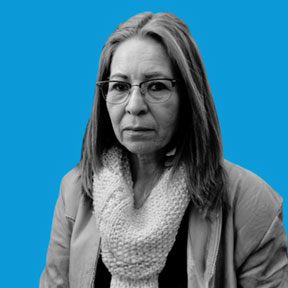
Ana Enamorado
Enforced disappearances in Mexico hit migrant families particularly hard, as their precarious immigration status compounds the lack of state support. Families and search groups are taking advantage of the fact that international attention is currently focused on the World Cup being played in Mexico to raise awareness of this crisis and demand that the Mexican government search for and find the disappeared.
How did your son Óscar go missing, and what’s known about his case?
My son Óscar was 19 when he went missing. He left Honduras in 2008, fleeing the violence, and was in the USA when some young men invited him to Mexico with the promise of a job, a good wage, an education and the chance to see me again. It was all a deception.
Those were the years of the war on drugs that President Felipe Calderón declared in 2006, when the cartels began forcibly recruiting young people to join their ranks. Óscar was taken to El Carrizo, in the municipality of San Sebastián del Oeste, Jalisco state. It’s an isolated place with no public transport and severe deprivation, which makes it very difficult to escape. I last spoke to him on 19 January 2010, and I haven’t heard his voice since.
Little is known about his case, and the little that’s known is marred by negligence. In December 2009, weeks before his last call, charred bodies were found in the same place, but the investigation led nowhere. In 2013, forensic authorities in Jalisco attempted to hand over some ashes to me without any DNA evidence to confirm they were my son’s. The forensic institute went so far as to cremate around 1,560 unidentified bodies in less than a decade, a practice that has left so many families with no way of knowing the truth.
The Mexican state only began searching for Óscar in 2020, 10 years after I reported him missing. To this day, I am still searching for him and demanding justice.
What obstacles do migrant families face when searching for missing loved ones?
A major obstacle is the indifference of the authorities in the country of origin, which in my case is Honduras. We families are left on our own, with no one to guide us. The consulate should be the first authority to assist us, and it should do so quickly, because the first few hours are crucial for finding a person alive. But it rarely does so. As a result, filing a missing person report and a formal complaint becomes almost impossible. And without that, it’s not possible to open an investigation file or access our rights.
Added to this is my immigration status. Although I have been living in Mexico for 14 years, I am still considered a ‘visitor on humanitarian grounds’ and, to retain this status, I have to prove every year that my son is still missing. Having to prove my tragedy time and time again just to be able to stay revictimises me. That’s why I initiated legal proceedings against the National Institute of Migration to change my status to that of a permanent resident. However, it continues to reject my application, leaving me in a precarious situation when it comes to accessing my basic rights.
Why did you decide to protest during the World Cup?
We took to the streets of the host cities to show the other side of Mexico: the corruption, violence, impunity and the state’s indifference towards the thousands of missing people. Although the Mexican state may wish to project an image of celebration and modernity through the World Cup, there can be no World Cup celebrations against the backdrop of the humanitarian crisis caused by disappearances.
In Mexico, there are over 135,000 missing people. To put this into perspective, that number is one and a half times the capacity of the Azteca Stadium, where several matches in this World Cup have been played, including the opening match. Added to this is a forensic crisis. There are over 75,000 unidentified bodies. That is 75,000 people who did not return home and whose families continue inquiring about their whereabouts.
And the number keeps rising. We estimate that, since the World Cup began on 11 June, over 1,200 further people have gone missing. On 30 June, three teenagers aged 14 and 15 disappeared in Guadalajara, one of the host cities, in broad daylight amid streets full of celebrating crowds. The authorities believe it may have been a case of recruitment by organised crime. This practice continues unabated, and the government shows no sign of wanting to stop it or of searching for the missing people, particularly when they are migrants.
How has the Mexican government responded to the protests?
The state is uncomfortable with us taking to the streets to protest because every time we do, we expose the harsh and painful reality it wants to hide. That’s why, instead of listening to us and searching for our loved ones, it has responded with criminalisation, mockery and repression.
At her morning press conference on the day of the World Cup opening ceremony, President Claudia Sheinbaum played down our demonstration, and the Secretary of the Interior insinuated that someone was paying us to take to the streets, announcing an investigation into how we are funded. It’s an accusation that’s as painful as it’s outrageous. We have always searched for our loved ones using our own resources.
Then came the repression. Riot police cordoned us off and encircled us to prevent us from reaching the stadiums. On 30 June, on Calzada de Tlalpan, one of Mexico City’s main avenues, they assaulted and detained members of the ‘Hasta Encontrarte’ (Until we find you) collective simply for carrying images bearing the faces of their loved ones. Physical violence adds to the emotional and psychological trauma we already bear. Meanwhile, federal and state forces were deployed to ensure the safety of tourists, an effort they have never made to search for our loved ones.
What are you demanding of the government and international bodies?
We demand, first and foremost, that the Mexican state make the search for missing people a real priority. We call on President Sheinbaum to meet with the families and collectives in person to reach genuine agreements on search, location and prevention. We want to know how many people have been found alive, to have proper investigations carried out and to have trained and empathetic staff who can provide us with real answers.
But this crisis extends beyond Mexico’s borders, and the response must do the same. The United Nations Committee on Enforced Disappearances and the Inter-American Commission on Human Rights have offered their assistance. We call on the government to accept it. Such cooperation is urgent, because there are tens of thousands of people of other nationalities who have gone missing in Mexico, and searching for them requires the activation of international mechanisms. Many are women who have been trafficked, and most are taken out of the country, so finding them depends on governments working together.
Finally, we call on the international community to not turn a blind eye to what’s happening, and on the media to help us amplify our demands, so our voices reach the world just as World Cup goals do.
We won’t rest until we find them. They were taken alive, and we want them back alive.
CIVICUS interviews a wide range of civil society activists, experts and leaders to gather diverse perspectives on civil society action and current issues for publication on its CIVICUS Lens platform. The views expressed in interviews are the interviewees’ and do not necessarily reflect those of CIVICUS. Publication does not imply endorsement of interviewees or the organisations they represent.
GET IN TOUCH
Facebook
SEE ALSO
Solidarity World Cup CIVICUS
Mexico: ‘The World Cup is an opportunity to raise global awareness of the crisis of enforced disappearances’ CIVICUS Lens | Interview with Angélica Orozco 28.Jun.2026
The disappeared: Mexico’s industrial-scale human rights crisis CIVICUS Lens 22.Apr.2025







+ There are no comments
Add yours