




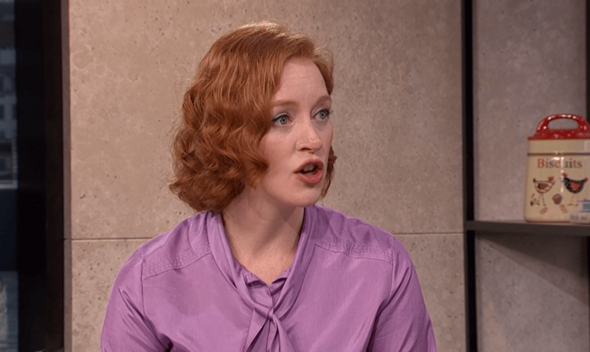

The money expert shared three key things people should know before they invest (Image: BBC)
The ISA allowance changes coming into force next April should be prompting savers to consider alternative ways of building their wealth, as their cash allowances face cuts. BBC money expert Iona Bain outlined exactly how people can invest with as little as £50 and highlighted three signs that indicate you’re ready to start.
The financial expert appeared on Morning Live on May 5 to take the subject “back to basics“, as the idea of investing can be “daunting” for many savers who may need to tackle it next year. She said: “If you want to grow your money, there are two main ways to do this: you can either save it or invest it.”
A savings account works by providing a fixed interest rate on your deposited money. It’s considered the ‘safer’ choice of the two, as there’s no risk of losing your funds, though a small risk does exist.
If your interest rate drops below inflation, you’re technically seeing a decline in your money’s worth. For example, if you put £100 cash in your piggy bank a decade ago and took it out today, during that time your interest rate was 0% while the UK inflation rate rose by roughly 3% each year.
Read more: Energy efficiency becomes a top priority for 63% of UK homeowners in 2026
Read more: Investors warned of ‘dangerous path’ as more turn to AI for financial advice
While you didn’t literally lose any money, that £100 will buy fewer goods today than it would have a decade ago owing to its reduced purchasing power. To obtain the same value from that £100 in today’s market, you’d actually need £139 according to the Bank of England.
Investing, conversely, provides variable returns instead of fixed interest rates. While there is a risk that values can decline just as easily as they increase, investments could also beat inflation and expand your wealth far beyond what cash savings could ever deliver.
Iona explained: “(Investing is) when you are putting your money into assets, which are things like shares and companies property bonds, and the hope is that the value of those will grow over time and therefore, so will your money.
“You can choose to invest in individual assets but what a lot of people do is put their money into funds, which are very useful investment tools. Because this is when you pool your money with other people, and it’s investing on your behalf across a range of Investments.”
Iona disclosed some people may already be investing without even knowing it: “Essentially, if you’ve got a workplace pension, that’s an investment fund. It’s being invested on your behalf to hopefully, grow your money over your working life so that you can retire one day.”
From April next year, ISA savers aged under 65 will only be able to deposit £12,000 into cash ISAs each year, reduced from the existing £20,000 limit. This change aims to encourage more people towards investing rather than relying solely on savings accounts.
Iona continued: “Younger folks are being encouraged to think a little bit more about investing their money. For example, putting more of that iso allowance into a stocks and shares ISA instead of a cash ISA.”
Iona shared three key questions people should ask themselves to check if they’re ready to start investing:
- Do I have expensive debts that need to be paid off?
- Do I have an emergency savings fund with three months worth of outgoings?
- Can I afford to commit this money to an investment for at least five years?
She explained: “You need to prioritise clearing (debts) that because the interest rate you’re paying on those debts is higher than what you would earn on your Investments.
“Then you need to think about your emergency savings. The reason why that matters is, if you have an emergency, you need to grab that cash in a hurry, it needs to be there for you. If you invest that money instead that’s not so easy.
“Now, the reason why five years is an important time frame to think about here, is that the stock market is a bit like a roller coaster, it goes up and down, it’s got its highs and lows. If you’re invested for at least five years, you’re increasing your chances of being able to ride that roller coaster and get a return.”
The expert stressed that significant funds aren’t required to begin investing: “If you’re starting to invest now with £50 a month, five years from now, 10 years from now, that is hopefully going to build up into a tidy sum.
“The extreme case scenario here is that you could lose all your money, but you can absolutely reduce the risks of that by not putting all your eggs in one basket. If you just put all your money into one company and it doesn’t do well, stands to reason, that’s a very high risk thing to do.
“Whereas if you’re putting your money into a range of companies, ideally across a range of different sectors all over the world. Hopefully you will get a return in the long run and that’s called diversification.”
For those already investing but unsettled by recent worldwide instability, Iona provided this advice: “Because we’re living in volatile times, it’s very tempting to suddenly sell out with Investments as soon as you see a scary headline, but really important not to do that. Keep calm and carry on.”