







For all the uncertainty about what will happen next on the military and diplomatic front in the Iran war, there is certainty about what has already happened on the economic front. And it is not good.
The world has seen a spike in oil prices that has been moderated so far by large drawdowns in global oil reserves. In addition, the most vulnerable populations of the Global South are suffering ever-increasing distress, while most of the world has been experiencing rising inflationary pressures and increasing interest rates on government bonds. And even if the U.S. stock market appears relatively unperturbed, a version of this unpleasant mix has also hit the United States.
Global oil prices are much higher than they were before the war, with the financial market benchmark price of Brent crude late last week (down to $91 on weekend news of a possible deal), well above the $60 per barrel of early January. That said, crude prices have been relatively stable within a broad range over the last two months despite a dramatic drop in energy shipments out of the Persian Gulf since the war began.
According to the International Energy Agency (IEA), as of May 13, the cumulative shortfall in global oil deliveries from the Gulf was roughly one billion barrels. This shortfall has been absorbed by reduced oil demand (a consequence of higher prices); increased production outside the Gulf; and by a drop in global oil inventories of roughly 250 million barrels, as these were released to hold down prices in the absence of new production from the Gulf coming to the market. However IEA head Fatih Birol warned last week that inventories were dropping at an unsustainable pace, particularly with summer driving season approaching in the Northern Hemisphere.
The biggest shock from the higher cost (and outright shortage) of fuel, petrochemicals, and fertilizers is being felt by the poorest in the Global South. A recent story in the New York Times described how the price for transporting corn into refugee camps in Somalia had doubled or even tripled, as had the price of water at diesel-powered public tubewells. Meanwhile, protests this week in Kenya against fuel price hikes have led to four deaths, and political and financial stresses are mounting across the continent.
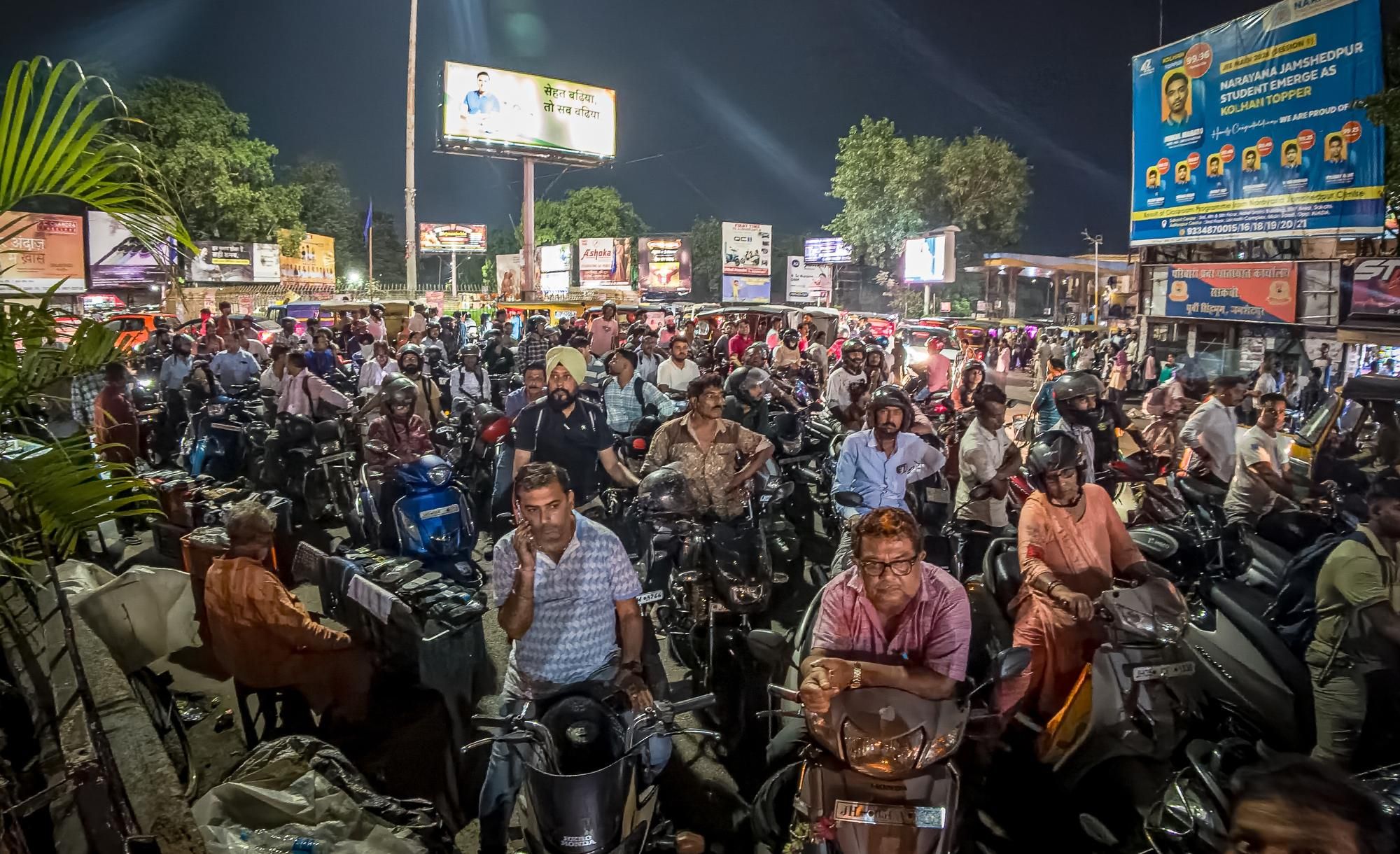
In India, sharp jumps in the price of Liquid Petroleum Gas have hit urban households hard, particularly those whose breadwinners work in small-scale industrial establishments. Many such enterprises rely on LPG as fuel and have shut down, displacing a workforce composed of recent migrants from the countryside. And because informal migrant workers in the city do not have access to India’s price-controlled public distribution systems, they have been forced to purchase cooking fuel on the black market at exorbitant rates. The combination has sparked fears of a repeat of a mass return to the countryside, as happened in the Covid summer of 2020.
Stories like these abound across the Global South. A report from the World Food Program (WFP) two months ago (when the war was two weeks old) projected that 45 million more people could be thrust into acute hunger if the war persisted. And a panel of global officials had already warned the world at the IMF meetings in Washington in mid-April that even an immediate cessation of the war would require at least two months before global shipping approached a semblance of normalcy.
Weakness in the real economy of many developing countries has been compounded by financial pressures in the form of larger trade deficits driven by the jump in oil prices, higher inflation, depreciating currencies, drawdowns in central bank reserves, and the threat of central bank rate hikes to keep inflation in check even if the economy is weakening.
In the face of such pressures, many countries were forced to sell foreign exchange or gold reserves to defend their currencies from further depreciation. According to Bloomberg, losses in the Philippines amounted to 8.1% of all reserves, in India to 5.1%, and in Indonesia to 3.8%. India has also imposed stiff tariffs and other restrictions on gold imports, and Prime Minister Modi has urged Indians to avoid “unnecessary foreign travel,” in additional efforts to limit further pressure on the Rupee from non-energy imports or tourism. And Malawi is reportedly selling not just gold reserves but also semi-processed gold bars bought from local miners.
Europe is less dependent on Persian Gulf oil, with only 7% of it sourced there, as opposed to Asia, which draws roughly 60% of its oil from the region. Even so, it is not immune to the impact of higher prices, with the European Commission’s economic czar warning that the continent faces a stagflationary shock. As a relatively wealthy continent, the EU (and the UK) can afford to grant fiscal subsidies to affected businesses, thus reducing the pain there. However, such measures also force the need to reduce oil demand on the poorest countries that are unable to afford such backstops.
Latin America has proven more resilient to the shocks from the Iran war, helped by the fact that Argentina, Brazil, Colombia and Ecuador are all net energy exporters, while Mexico runs a small energy deficit but buys most of its natural gas from the U.S. Chile is the sole large outlier on the front. Still, the energy trade might cushion most major Latin American currencies from sharp depreciation and financial stress, but as an agricultural exporter, the region is vulnerable to higher fertilizer prices and to inflation that could force central banks to raise interest rates.
In the United States, the administration has downplayed the impact of the war on the American people and emphasized how the dramatic increase in U.S. oil production has led to a substantially lower reliance on imported energy. Treasury Secretary Scott Bessent has said that the administration’s policies of “energy abundance” have helped the country withstand the shocks from the Iran War. And President Trump said in April that “The United States imports almost no oil through the Hormuz Strait and won’t be taking any in the future…We don’t need it.”
In his recent remarks, Bessent observed that the war had also allowed the U.S. to “focus on the opportunity at hand” as global demand for U.S. energy surged. And, indeed the war has led to a dramatic increase in U.S. exports of crude oil and downstream products. A recent piece in the New York Times noted that the U.S. has exported an additional 145 million barrels of oil since the war began, leading to an increase in revenues of roughly $50 billion.
However, the flip side to this is that U.S. consumers have reportedly spent an extra $40 billion on gasoline prices since the war began. For all that U.S. energy exporters might benefit from higher global oil prices, U.S. consumers do not. And research from the New York Fed suggests that lower-income households were hit much harder by higher energy prices, changing travel patterns in order to keep their gasoline budgets from getting out of hand.
American agriculture, meanwhile, has been hit with a double-whammy as two major operating costs, fertilizer and diesel, have both seen sharp price increases. A report last month by the Farm Bureau suggested that 70% of all farmers say they are unable to afford all the fertilizer they need. This in turn could translate into lower crop yields and higher food prices – a worry that is even more pronounced among smallholders in the Global South, underlying the global effects of this war.
And while the U.S. stock market has remained relatively buoyant through all this, boosted primarily by Artificial Intelligence and Semiconductor stocks, there are signs of deeper worries in global bond markets, including in the United States. Concerns over inflationary pressures driven by rising energy and food prices have combined with worries over the rising fiscal costs associated with increased defense budgets, fuel subsidies, and massive reconstruction needs to push global bond yields up significantly.
After annual consumer price inflation in the U.S. jumped to 3.8% (far above the Federal Reserve’s 2.0% inflation target), the U.S. Treasury’s 30-year bond hit its highest yield in 30 years last week. And while that might be good news for those who own newly issued bonds and will receive the interest paid on them, it is less favorable for those looking to buy or refinance a home as mortgage rates rise alongside U.S. government bond yields.
Thus, the impact of this war within the US might not be as severe as that in large parts of the Global South, but even within America, there will be many more who lose than gain from the economic consequences of this war.
From Your Site Articles
Related Articles Around the Web









+ There are no comments
Add yours