






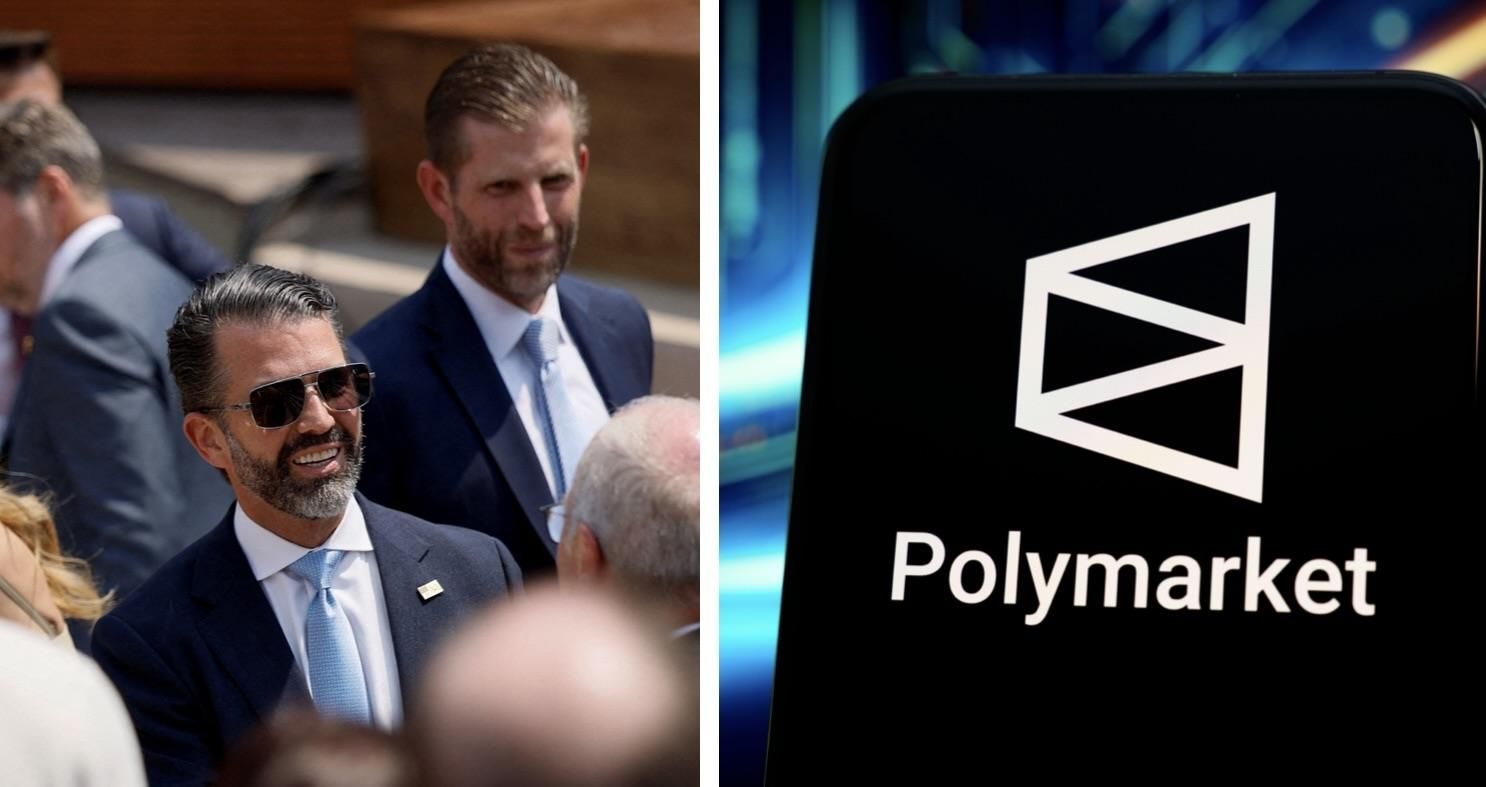
The Trump-connected Polymarket is likely helping gamblers with inside military information cash in on wars the president wages.
According to Reuters, a report by the Anti-Corruption Data Collective found that 152 “exceptionally successful” Polymarket wallets otherwise known as “Orcas” may have traded on inside military information to place high-stakes bets on critical U.S. defense operations, including the June 2025 attacks on Iran. According to the non-profit research group, these wallets had a 97.2% success rate and won $8 million collectively.
President Donald Trump’s son, Donald Trump Jr., is an adviser for Polymarket. 1789 Capital, his venture capital firm, invested in the platform soon after it was founded.
Moreover, Trump Jr. and his brother, Eric Trump, continue to profit from defense industry investments as the war with Iran continues. Powerus, a firm funded by both brothers, has received two Air Force contracts for interceptor drones this year.
Eric Trump has also invested in Xtend, an Israeli drone firm that is also a DoD contractor. Xtend’s drones have been used during the Iran war, via a multi-million dollar contract with an unnamed Middle Eastern government. Eric Trump became an adviser to Space-Eyes, which makes software that detects and counters drones, in late July. Donald Trump Jr. is also on the board of Unusual Machines, a drone parts startup.
According to Reuters, this latest report comes amid growing concerns about Polymarket betting on the outcomes of geopolitical events. In at least one case an insider was caught betting on U.S. military operations before they happened.
Master Sgt. Gannon Ken Van Dyke, who reportedly helped plan and carry out the secret U.S. invasion that removed Venezuelan leader Nicolas Maduro from power on January 3, allegedly made more than $400,000 on Polymarket by betting on the operation and outcome. Van Dyke has pleaded not guilty to these allegations.
Polymarket users have also repeatedly wagered that crude oil prices would drop just before Trump would announce supposed breakthroughs in talks with Iran or a cessation in U.S. airstrikes — declarations that would prompt oil prices to fall, suggesting such bets were based on insider knowledge.
But these bets can pose broader national security risks for the U.S.
“Most people vastly underestimate how observable unusual betting activity actually is on Polymarket. It’s all right there on the internet, and we can see clear signs that big traders and bots are copying potential insider trades,” Anti-Corruption Data Collective (ACDC) co-founder David Szakonyi told Reuters. “It would be naive to think foreign-intelligence agencies aren’t monitoring these markets.”
The White House warned administration officials back in March that they cannot use “nonpublic government information to place wagers.” U.S. Senators have since barred themselves from insider trading on prediction markets; a House of Representatives ban on the practice is also beingconsidered.
“The status quo is indefensible,” Rep. Ritchie Torres, D-N.Y., who has introduced a ban in the House, told NPR. “There’s no justification for allowing members of a campaign or members of the government to bet on their own decision making.”
From Your Site Articles
Related Articles Around the Web





+ There are no comments
Add yours