



Honest, paywall-free news is rare. Please support our boldly independent journalism with a donation of any size.
In 1963, Brazilian educator Paulo Freire helped launch a revolutionary literacy campaign in the impoverished northeastern Brazilian town of Angicos, where hundreds of rural workers learned to read and write in just 40 hours of instruction. Freire’s approach was about much more than literacy. Rather than emphasizing memorization and repetition, he developed “Culture Circles” where participants discussed their experiences, examined the conditions shaping their lives, and developed the critical consciousness to challenge oppression.
The experiment helped lay the groundwork for Freire’s groundbreaking book, Pedagogy of the Oppressed, which would become one of the most influential works in the history of education. But the literacy campaign was violently interrupted when a U.S.-backed military coup overthrew Brazilian President João Goulart in 1964. Freire was imprisoned and forced into exile, while students burned or buried their educational materials to escape persecution.
A powerful new documentary Reading the World (Lendo o Mundo) explores this formative period in Freire’s life, before he became an internationally celebrated educational philosopher. Drawing on rare archival footage of 1960s Brazil and the memories of the farmers, students, and educators who participated in the Culture Circles, the film reveals how Freire’s ideas emerged from grassroots struggles for literacy, land, voting rights, and democracy.
The film, which premiered in New York and aired on PBS WORLD Channel this October, arrives at a time when educators in the United States are confronting renewed censorship, book bans, and political attacks on teaching about racism and inequality.
I spoke with Catherine Murphy, co-director of Reading the World, about the revolutionary potential of literacy, the political forces that sought to destroy Freire’s educational experiment, and why his ideas continue to threaten those in power.
The interview that follows has been lightly edited for clarity and length.
Jesse Hagopian: One of my favorite moments in the film is the opening scene, when Paulo Freire tells his audience that he wants to have a dialogue with them rather than give a lecture. He also promises that if he doesn’t know an answer, he won’t lie. It seems like such a simple statement, but it represents a profound departure from traditional teaching. Who was Freire, and what made his approach so revolutionary?
Catherine Murphy: Paulo Freire was a Brazilian educator born in Recife in 1921. He became one of the world’s most celebrated educational philosophers. His most famous book, Pedagogy of the Oppressed, was published while he was in exile.
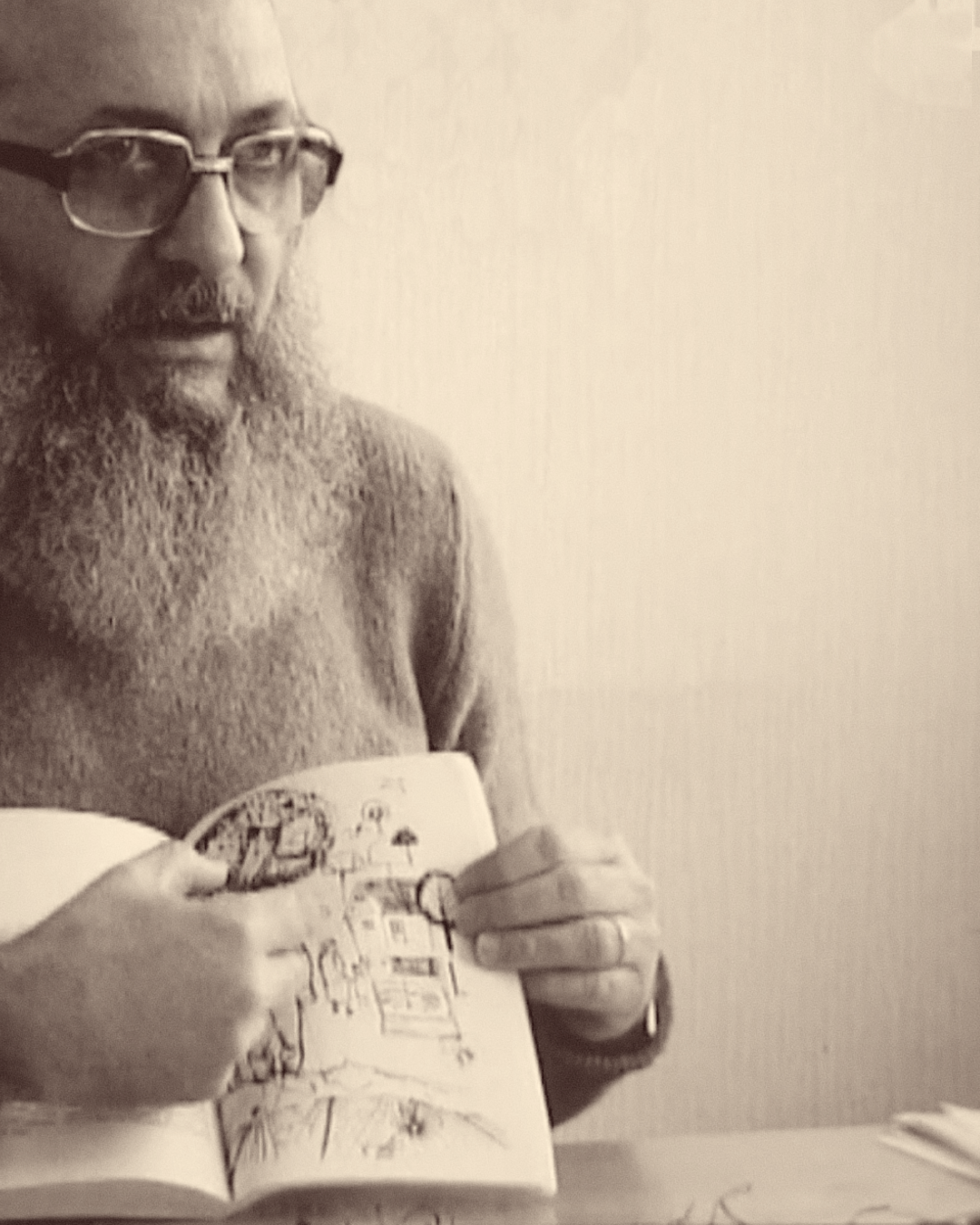
I also love that opening quote because it lays the groundwork for the entire film. Freire says that ever since he was a child, he understood that not knowing is part of knowing.
That gets to the essence of Freire’s philosophy: Knowledge belongs to all of us. Knowledge is generated by all of us. Education is a reciprocal, collective process. It’s about sharing what we know, and learning from each other. Freire critiqued what he called “the banking model of education” and favored a “dialogic” process based on horizontal dialogue, problem-posing, and really listening to each other.
As Freire became internationally recognized, he was increasingly invited to speak at conferences and educational institutions around the world. But his collaborators repeatedly told me stories about how he didn’t want to simply deliver lectures. He wanted dialogue with people, to listen.
When Freire visited the Highlander Center in 1987 or attended the Chicago Alternative Schools Network Conference in 1977, he wanted to know what people were doing themselves. What were popular educators doing? What were classroom teachers, community educators, and activists doing? What was working? What were they struggling with?
Freire was willing to share his ideas and experiences, but he also wanted to learn from others.
That is a beautiful lesson for all of us, not only in formal educational spaces, but in life.
Before we get into Freire’s literacy campaign, can you describe the conditions in northeastern Brazil in the early 1960s? How did illiteracy help maintain existing relations of economic and political power?
Brazil in the late 1950s and early 1960s had a highly colonial and feudal social, political, and economic structure. They had highly concentrated landownership, with 1 percent of the population owning the vast majority of the and an agricultural labor system that was only one step removed from legal slavery.
Freire came from this region of northeastern Brazil, a region often compared to the U.S. South because its economy had been based on enslavement. In northeastern Brazil at the time, approximately 70 percent of people could not read or write. Education was almost exclusively reserved for children of the elite. Most formal education was provided through the Catholic Church or elite universities.
Access to education was restricted to a very small segment of society, who would then go on to control the political and economic institutions of the country.
This was not simply a question of individuals lacking educational opportunities. Illiteracy was deeply connected to the concentration of wealth, landownership, and political power.
And the struggle for education was inseparable from the struggle for voting rights, labor organizing, and land reform. The people who had been systematically excluded from education were also excluded from many forms of political participation.
One person in the film gives an important insight that “literacy is achieved through the discussion of political topics.” That struck me because so much contemporary advocacy around what’s called the “science of reading” leaves out the social and political context that makes reading meaningful — for example, the fact that many books are being banned right now. Your film is called Reading the World, which speaks to Freire’s understanding that learning to read words is connected to learning to critically examine society. What did his approach look like in practice?
That wonderful quote is from Marcos Guerra, a leader in the Brazilian student movement, at the time which was playing a major role in struggles for educational reform.
Marcos was recruited [in 1962] by Freire to work with him in Angicos in 1963, and I’ll tell a bit about that history.
Freire began developing his approach to adult literacy in Recife in the late 1950s. Based on that work, he was invited to come work in the neighboring state of Rio Grande do Norte, where adult illiteracy was around 70 percent.
From the very beginning, he wanted the project to be collective and participatory.
He didn’t want the project to be run by the Ministry of Education, where it might get caught up in bureaucracy or become a political photo opportunity. Instead, he wanted to work with university students from different academic disciplines, including student organizers.
Marcos Guerra was one of those students, and was brought in by Freire to be the student coordinator of the Angicos project.
Together with other teachers and learners, they began developing a methodology that broke dramatically from traditional adult literacy instruction.
First, they refused to use children’s books to teach adults. They wanted to honor the tremendous knowledge and wisdom adults already possessed, even if those adults had been excluded from formal education.
They understood students as holders of knowledge and creators of culture.
They gathered vocabulary from the communities themselves, using local language and words connected to people’s everyday lives.
“In the process of learning to read the word, students were also learning to examine and interrogate the world around them, their place within it, and how it could be transformed.”
One of their first words was tijolo, meaning brick. A brick could become a metaphor for constructing words out of letters and syllables, just as workers construct buildings out of bricks.
But the words also included things like people, vote, land, and work.
These words opened conversations about people’s lives and the social conditions they experienced.
So in the process of learning to read the word, students were also learning to examine and interrogate the world around them, their place within it, and how it could be transformed.
One of the most moving parts of the film is hearing people describe what it meant to learn to read and write. One woman remembers, “It was wonderful,” and explains that learning to write your name was an enormous achievement. That made me think of my great-great-grandmother, Laura Lenoir, who was enslaved in Mississippi and became an educator after emancipation. My family recently discovered the plantation where Laura had been enslaved. We also found her signature — evidence that she had learned to write despite being born into a system that made it illegal for Black people to be literate. During Reconstruction, formerly enslaved people organized extraordinary literacy campaigns because they understood that education was essential to making emancipation meaningful. I see my family’s history reflected in the experiences of the Brazilian farmers in your film. What did learning to read mean to them, and why do these memories evoke such powerful emotions more than 60 years later?
I really appreciate the connections you’re drawing between Reconstruction in the United States, the Freedmen’s Bureau schools, and the relationship between emancipation and education.
In Brazil, just as in the long Black freedom struggle in the United States, access to literacy was tied to the struggle for voting rights, land, and self-determination.
People whose labor had been exploited for generations through enslavement and then through forms of quasi-enslavement after emancipation were often locked into those relationships partly because they couldn’t read or write.
Think about the history of people losing their land because they couldn’t read a contract. Someone tells them, “This contract says this. Just sign here.” They put down a thumbprint or an X without having certainty of what they’re signing.
“In Brazil, just as in the long Black freedom struggle in the United States, access to literacy was tied to the struggle for voting rights, land, and self-determination.”
Just as what happened to Black people in the United States, and it happened to people in Brazil.
So literacy was connected to people’s ability to defend their rights, have access to land, and participate in political life. And it began with something that might seem small but was actually enormous: learning to write your name.
Writing your name affirms your humanity. It affirms your dignity.
Freire talked about becoming a subject, becoming a protagonist in your own life. Literacy provided people with greater tools for self-determination. Once people could read and write, they could obtain identification documents. Many of the students in Angicos had never previously had any form of identification. And then they could register to vote.
So people were becoming empowered both personally and collectively to change the world around them.
One of the most haunting details in the film is what happened after Brazil’s 1964 military coup. Farmers burned or buried their notebooks so they wouldn’t get caught with contraband, and Freire himself was arrested, imprisoned, and forced into exile. There’s something extraordinary about a government that considers teaching impoverished farmers to read and write so threatening that it imprisons educators and drives them out of the country. What made Freire’s and his collaborators’ educational approach so dangerous to the dictatorship? And how was it connected to the broader struggle over land, class, democracy, and political power?
When you enter a society with these colonial, feudal, quasi-slavery relationships and begin teaching people who have been systematically excluded from education, you’re putting a crowbar into the existing social structure.
Exclusion from literacy meant exclusion from voting, obtaining identification documents, organizing, and participating in political life. At the time, rural labor organizing was also restricted. There was a powerful movement called the ligas camponesas, or peasant leagues, which was fighting for land reform. Some of the important leaders were Elizabeth Teixeira and Francisco Julião, both of whom are in the film.
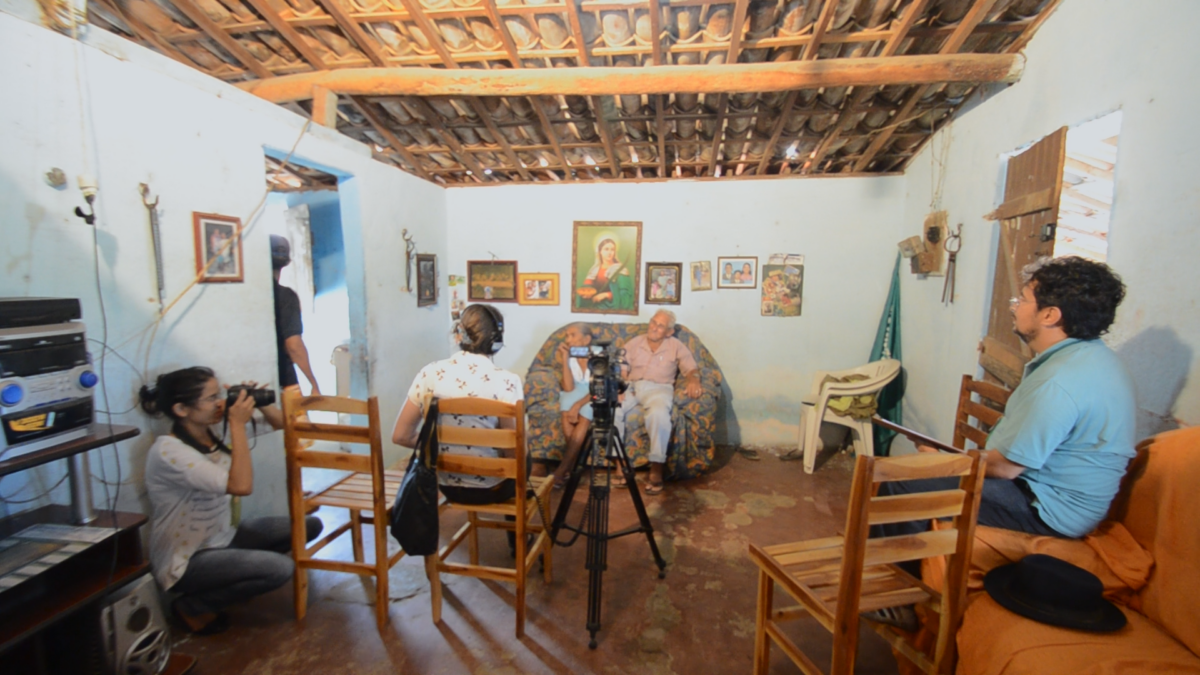
These movements were demanding access to education, voting rights, land, and land reform.
The progressive president at the time, João Goulart, was beginning to respond to grassroots demands.
In March 1964, Goulart announced reforms that included expanding voting rights and beginning a limited land redistribution program. The land reform proposal wasn’t even especially radical. It involved allowing landless agricultural workers to use strips of federal land along highways, where they could live, grow food, and sell their produce. For workers trapped in plantation-like conditions, these reforms could begin changing their lives.
And literacy work was a crucial part of that transformation.
In Angicos, approximately 300 newly literate adults could potentially become 300 new voters. At the time, there were only around 700 registered voters in the town. Think about how dramatically that could alter the political balance. President Goulart actually attended the graduation ceremony in Angicos, accompanied by a presidential delegation that included numerous governors and mayors from the northeast, and a group of military officers. Some of those officers would later lead the U.S.-backed military coup that overthrew Goulart’s government in 1964 and ushered in more than two decades of dictatorship.
The military dictatorship understood that this literacy campaign was connected to movements challenging the concentration of economic and political power. So Freire and his collaborators became targets. Marcos Guerra and other members of Freire’s team were arrested the very next day after the coup. They confiscated books. Students in Angicos destroyed their educational materials, burning or burying their notebooks and other records out of fear.
The extraordinary historical footage in our film survived only because people deliberately hid it.
The filmmaker Luiz Lobo, for example, preserved film reels documenting the Angicos experience by hiding them for years, buried in a trunk in his family’s backyard. So the footage we’re able to witness today exists because people recognized the importance of preserving this history, even at considerable personal risk.
Education under capitalism contains a fundamental contradiction. The system needs education to reproduce itself, but education can also give people the knowledge and confidence to challenge the existing order. In 2012, officials in Tucson, Arizona, banned Freire’s Pedagogy of the Oppressed and several other books from the Mexican American Studies curriculum — they actually removed the books in the middle of class! Today, we’re witnessing widespread attacks on teaching Black history and ethnic studies, and on educators who embrace Freire’s approach. Why do Freire’s ideas remain so threatening to those in power, and what do they teach us about education as a force for liberation?
Freire’s ideas, like those of other liberation thinkers, call upon us to question the world and our place in it. His approach is about developing critical consciousness through problem-posing education. It asks us to consider: Why is the world like this? How could it be different?
And, significantly, this kind of education asks us to question power.
What are the structures of power? How do they create inequalities? And how can people become collectively empowered to challenge those structures? Freire’s ideas challenge the false narratives that tell us the world is simply the way it’s supposed to be. They challenge notions of social Darwinism and the mythology of meritocracy — the idea that everyone simply gets what they work for. Instead, liberatory education encourages us to ask: What laws, structures, and institutional injustices hold people back? These are questions we need to raise and examine over and over.
But people who benefit from existing power structures often don’t want those questions asked. That’s why books become threatening. That’s why there are attempts to ban books and suppress discussions. And of course, [this is] connected to the emphasis on standardized testing, the undermining of the humanities, the privatization of education, the underpayment of teachers, and attacks on teachers’ unions.
These conversations are potentially transformative. They give people the opportunity to examine their circumstances and imagine something different.
And those who feel threatened by that possibility want to stop those conversations.
I love the scene in the film where a woman puts on a shirt bearing Freire’s words: “Whoever believes in changing reality must carry out the transformation.” Your film also emphasizes the collective experiences of farmers and educators rather than simply celebrating Freire as a great individual. What lessons should educators and organizers draw from this history today?
What I love about that quote is that Freire calls upon us to do something. It’s a call to action.
“If we know something is wrong, if we recognize injustice, if we believe the world needs to change, then we have a responsibility to be part of that transformation.”
If we know something is wrong, if we recognize injustice, if we believe the world needs to change, then we have a responsibility to be part of that transformation.
And I think that’s especially important for educators today, when we’re living through such a challenging period for people who believe in democracy and want to expand it. Freire also spoke a great deal about hope. In Portuguese and Spanish, Freire had this idea of turning hope into a verb: Esperanzar. Hope isn’t just a passive feeling. It’s something active.
It’s about remaining engaged, continuing to care, and working collectively toward a world that’s better for everyone, not just a tiny, privileged few.
One of our central purposes in making this film was to move beyond understanding Freire simply as a man of ideas. We wanted to understand him as a person of action.
So many of his ideas emerged from concrete experiences working with communities and grassroots movements. We wanted to understand who he was working with, who his closest collaborators were in these early educational experiences. It’s important to recognize the farmers, students, and community organizers as co-creators of this history.
And that legacy is still alive.
People continue this work in Brazil, the United States, and throughout the world. The struggle to expand access to education, develop critical consciousness, and build collective power is ongoing.
Freire’s legacy isn’t simply something to study in books. It’s something people are continuing to create through their struggles today.
An important fundraising appeal: 8 Days to raise $47,000
Donations are down for Truthout at a time when media is under immense pressure. Google’s AI search has driven our traffic down by 15 percent, Trump is arresting journalists, and many independent media organizations face heartbreaking cutbacks and closures.
At the same time, movement media is vital in the fight against Trump’s authoritarian reign. Our mandate to tell the truth, share strategies for resistance, and speak against fascism is ever more urgent in this deluge of political censorship and misinformation. Yet, we are struggling to meet our publishing costs when our work is so urgently needed.
We are fundraising right now for those basic operating expenses — we need $47,000 in the next 8 days. If you can support Truthout with a one-time or monthly donation, you will make a significant impact on our work. Anything you can do makes a difference.



+ There are no comments
Add yours