






Author
Ahmed Barakat
Author

Share

Fact Checked by
CryptoNews Editorial Team
Author
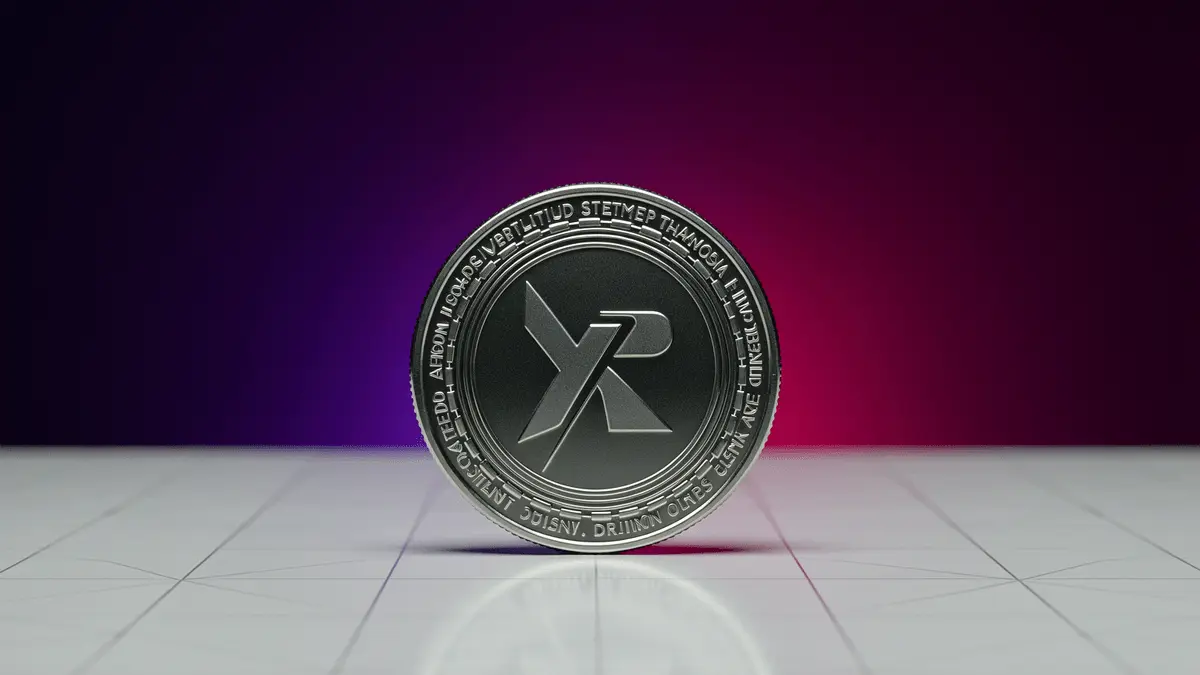
Ripple has secured preliminary Crypto Asset Service Provider approval from the Luxembourg CSSF under the EU’s MiCA regulation, and XRP dropped 3% on the news. The token is trading at $1.10, down 5% over 24 hours, with the crypto market providing no cover.
The regulatory milestone is real, but was, sadly, not an XRP catalyst. Ripple framed the approval entirely around RLUSD and Ripple Payments infrastructure, with XRP appearing only as something that “underpins” those solutions, a footnote in Ripple’s own announcement about its own network’s native token.
The CASP green light enables regulated crypto-asset services across all 30 countries of the European Economic Area. It does not create a direct demand mechanism for XRP.
Discover: The Best Token Presales
Ripple MiCA Win Is Infrastructure Plumbing, Not an XRP Demand Catalyst
The CSSF’s green light is a “Green Light Letter,” preliminary approval that remains subject to final conditions before full MiCA compliance is conferred. Ripple said that upon full approval, the CASP license, combined with its existing EU Electronic Money Institution (EMI) license, also issued out of Luxembourg, would make it fully MiCA-compliant.
What the approval actually covers is Ripple Payments and RLUSD distribution infrastructure. The commercial pitch is that European banks, fintechs, and corporates can run collection, exchange, and payout through a single Ripple integration across the entire EEA.
There is an additional nuance that the announcement does not resolve. A CASP license authorizes crypto-asset services, but it is structurally distinct from the separate authorization a stablecoin requires to be issued as a MiCA e-money token. Ripple’s announcement touts stablecoin payments infrastructure without clarifying RLUSD’s own standing under MiCA’s non-euro token regime, which caps dollar-pegged stablecoins’ use as a means of exchange in the bloc.
Tether’s USDT, on the other hand, was effectively pushed out of Europe ahead of MiCA’s implementation. Circle, however, brought USDC and EURC into compliance through its EMI. Where RLUSD sits on that spectrum is precisely what institutions will want answered before committing to the integration.
Ripple is also arriving at this milestone late relative to peers. MiCA became fully applicable to crypto-asset service providers in December 2024. Circle secured its approval in April 2025, and B2C2 obtained a CASP license from the Luxembourg CSSF in May 2025. OKX, Coinbase, and Kraken were cleared through the course of 2025.
Don’t Miss Out on Our $1,000 USDT Airdrop on ByBit
Ripple’s differentiating argument is the combined EMI-plus-CASP full stack, “one regulated rail for the entire payments flow” backed by over $100 billion in Ripple Payments volume across 60-plus markets and more than 75 licenses globally. That is a credible enterprise pitch. It does not route revenue or demand through XRP.
This pattern is not new. The XRP community publicly pushed back on Ripple’s Swell 2026 agenda last week for prioritizing RLUSD development while the token underperformed. RLUSD’s regulatory queue extends beyond Europe as well, with a California DFAL filing deadline adding another stablecoin-focused regulatory hurdle to the list.
It’s the truth that every major Ripple announcement this cycle has landed as confirmation of the same thesis: the company is building a compliant payments infrastructure in which RLUSD is the product, and XRP is background infrastructure. The MiCA green light has not been priced in just yet – because, structurally, there is nothing in it for XRP to price in.
Discover: The Best Crypto to Diversify Your Portfolio