







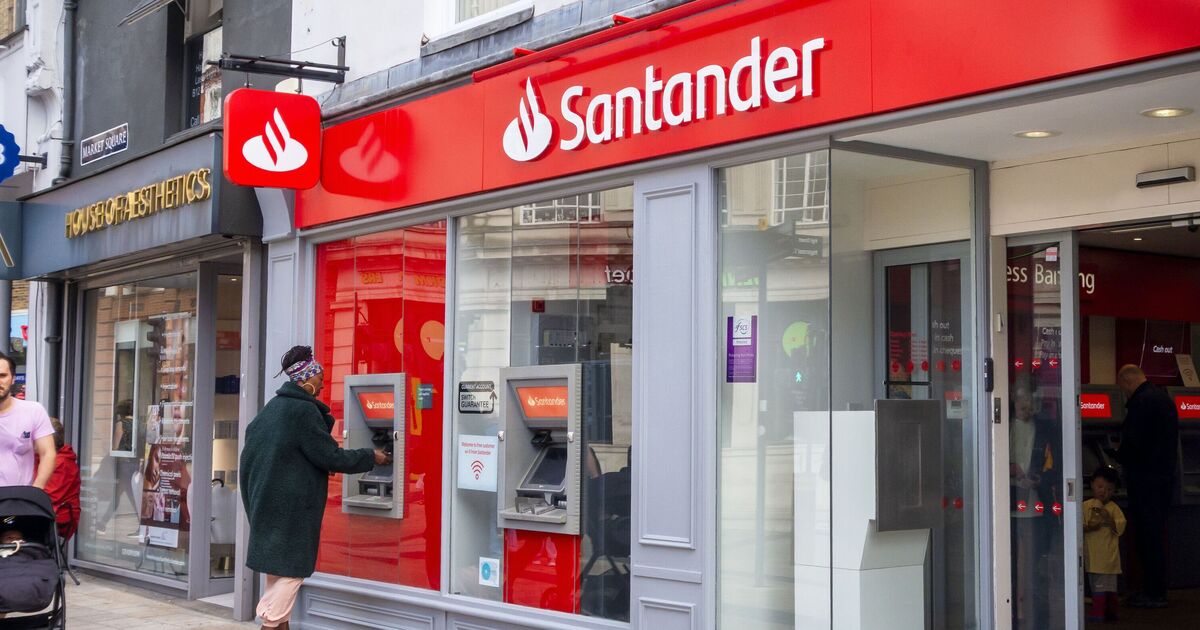
A major bank is scrapping a popular service and putting it online. Santander will stop sending annual fee statements to customers from August.
The statement provides customers with a breakdown of all charges they may have incurred over the last year, including interest on overdrafts and overseas fees.
The UK banking industry historically sent over 5.2 billion paper documents annually. Digitising these processes reduces vast overhead costs associated with printing, stationery, and postal delivery.
Once it is scrapped, Santander customers will have to check their banking costs online. But the bank says it will remain straightforward, adding: “Your statements already show any fees or charges.
Customers can view fees for a specific account by looking at their Fee Information Document. Santander says this can be done “anytime, wherever you are”.
Those worried about missing charges are being urged to regularly check their banking app to stay on top of potential costs.
This change comes as more banks push for digital-only services, rather than in-person or paper correspondence. This is reportedly done to cut costs, enhance customer security, and meet sustainability targets.
By removing paper, institutions save over £1 billion annually, eliminate the risk of physical mail interception, and significantly reduce their carbon footprint.
High street banks say the closures are down to more people using online services. However, charities have warned that vulnerable people risk being left without access to banking services.
Which? data shows banks and building societies have closed 6,871 branches since January 2015, at a rate of around 53 each month. This represents 69% of the branches that were open at the start of 2015.
Lloyds Banking Group, made up of Lloyds Bank, Halifax and Bank of Scotland, has closed 1,611 branches – the most of any banking group.
NatWest Group, which comprises NatWest, Royal Bank of Scotland and Ulster Bank, has closed 1,565 branches. Barclays is the individual bank that has reduced its network the most, with 1,236 branches now closed.