




Climate Change, Climate Change Justice, Development & Aid, Economy & Trade, Environment, Financial Crisis, Global, Globalisation, Headlines, Inequality, Peace, TerraViva United Nations, Trade & Investment
– June 27-28 is the 16th Social Business Day, observed in Savar (Dhaka) Bangladesh. In June 2024 at the Western Sydney University’s graduation ceremony where I was conferred Emeritus Professor status, I urged the new business graduates to:
- • purge the world of the… obnoxious Friedmanite idea that is destroying our planet and tearing our communities apart;
• look instead to the “Social Business Model” of Bangladesh’s Nobel Laureate Muhammad Yunus; and
• work on the right side of history; stand up for justice and liberation; spread the “moral violence” for peace; and put people and the planet before profit.
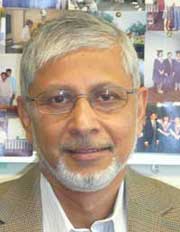
Anis Chowdhury
The background
In his 1970 article for The New York Times, Nobel Laureate Milton Friedman wrote, “the social responsibility of business is to increase its profits”. He further argued, “There are no ‘social’ values, no ‘social’ responsibilities in any sense other than the shared values and responsibilities of individuals. Society is a collection of individuals and of the various groups they voluntarily form”.
This Friedmanite world view has been at the core of the neo-liberal counter revolution led by Ronald Reagan and Margarette Thatcher in the 1980s. In his inaugural speech, Reagan famously declared, “government is not the solution to our problem; government is the problem”, and ushered in an era driven by unrestrained individual pursuits of profit.
Promoting unrestrained individualism, Thatcher questioned, “who is society?” Then she dismissed, “There is no such thing! There are individual men and women and there are families…”.
“Greed” became the all-consuming passion at the height of unrestrained individual pursuit of profit as captured famously in the 1987 movie, Wall Street. The lead character, Gordon Gekko (played by Michael Douglas) addressing the shareholders said:
- “The point is, ladies and gentlemen, that greed – for lack of a better word – is good.
Greed is right.
Greed works.
Greed clarifies, cuts through, and captures the essence of the evolutionary spirit.
Greed, in all of its forms – greed for life, for money, for love, knowledge – has marked the upward surge of mankind”.
Has it?
Has greed, in all forms, marked the upward surge of mankind?
Yes, global income and wealth increased manifold since the 1980s; but so did global inequality. The wealth and income gaps between the wealthiest and the poorest have widened. The richest 1.5% own almost 48% of the world’s wealth, according to the UBS Global Wealth Report 2025, while the poorest 40% own only 0.5%.
The World Inequality Report 2026 reveals an even starker wealth gap. The wealthiest 0.001%, comprising around 56,000 multi-millionaires, now hold three times more wealth than the bottom half of the world population. Their share has grown steadily from 3.7% in 1995 to 6.1% in 2025. According to the UBS Global Wealth Report 2025, as of 2023, the world’s 26 richest billionaires owned a shocking US$2.872 trillion in wealth, which is greater than many nations’ total goods and services (GDP).
Cheerleaders of unrestrained greed may dismiss these facts and say “so what? Global abject poverty has also declined”. In fact, economist and historian Deirdre McCloskey, the author of Bourgeois Dignity: Why Economists Can’t Explain the Modern World, floated the idea of “Great Enrichment” asserting that real per capita incomes in the developed world have surged by a factor of 10 to 30 (or roughly 2,900%) since 1800. She argues this historic explosion of wealth fundamentally benefited the poor and working classes. For her, the concerns about inequality are a result of insatiable envy.
Some others have described the phenomenon of rising inequality amidst the wealth boom as “inclusive” because the process has lifted millions from abject poverty. According to them, rapid globalization has given rise to a new global wealth middle class. They see this as progress!
They also decry “the perception that billionaires make money for themselves at the expense of the wider population”, and attribute billionaires’ fortunes to successful investments, while highlight philanthropy and patronage of the arts, culture and sports by billionaires.
But the cheerleaders ignore billionaires’ tax evasion and tax avoidance, and the fact that societies should not rely on the generosity of the rich.
The cheerleaders are also climate deniers. They ignore the overwhelming scientific evidence linking rising inequality and the climate crisis. The world’s wealthiest 10% has caused two thirds of global warming since 1990, according to a new study published in Nature. It also reports that the top 1% of the wealthiest individuals globally contributed 26 times the global average to increases in monthly 1-in-100-year heat extremes globally and 17 times more to Amazon droughts.
It’s time for change
It is time for a paradigm shift from profit to people and the planet. Social business, a concept first introduced by Nobel Peace Prize Laureate Muhammad Yunus, offers a path forward. In his 2009 book, Creating a World Without Poverty: Social Business and the Future of Capitalism, Professor Yunus defines a social business as “A business:
- • Created and designed to address social problems
• A non-loss, non-dividend company, i.e.
1. It is financially self-sustainable and
2. Profits realised by the business are reinvested in the business itself (or used to start other social businesses), with the aim of increasing social impact, for example expanding the company’s reach, improving the products or services or subsidising the social mission.”
In short, a social business is oriented to social value creation. It is designed to address specific social or environmental problems such as hunger, poverty, unemployment, pollution, and climate adaptation and mitigation. In many ways, it is a hybrid between a traditional business and a non-profit organisation. Like a traditional business, a social business generates revenue and is financially self-sufficient rather than relying on philanthropy. However, like a non-profit organisation, the primary goal of a social business is NOT profit, but social or environmental impacts.
But, not a magic bullet
Social business is not a panacea for all evils or social-environmental problems. More fundamentally, systemic or structural social and environmental issues should not be treated as market opportunities. The framing of social problems as technical or managerial issues that can be solved with “business” solutions can obscure underlying structural causes like systemic discrimination and power imbalances which must be addressed through deep reforms, backed by political will.
There also is a risk of “impact-washing”, much like “greenwashing”. That is, weak regulatory standards can allow companies to cherry-pick metrics, exaggerate their societal benefits, or use their social status as “moral licensing” to justify otherwise dubious business practices.
Therefore, the “euphoria” of celebration must not distract us from the urgent need to develop proper monitoring and accountability frameworks for social business so that “greed” does not infest it.
Anis Chowdhury, Emeritus Professor, Western Sydney University (Australia). He held senior UN positions in Bangkok and New York and served as Special Assistant to the Chief Advisor for Finance (with the status and rank of State Minister) in the Professor Yunus-led Interim Government. Anis has written extensively on macroeconomic issues, sustainable development, international financial architecture and political economy. E-mail: [email protected]; [email protected]
IPS UN Bureau






+ There are no comments
Add yours