







| Updated:
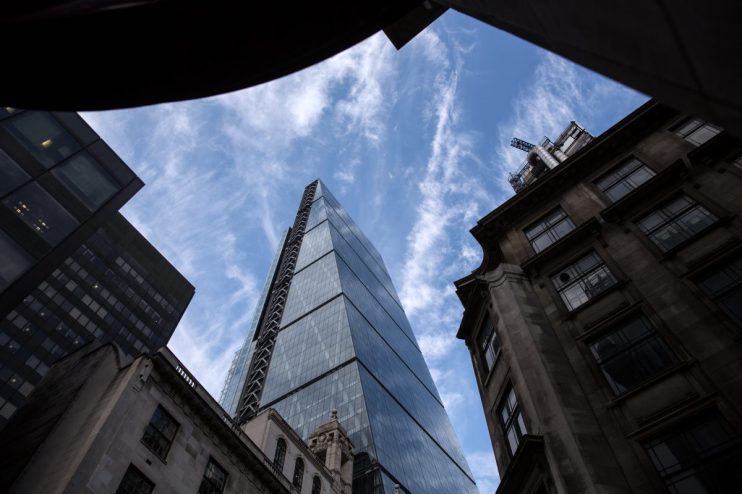
A 1911 ruling by the City of London Corporation means businesses are still unable to adorn their skyscrapers with company logos. Should this change? We hear the case for and against in this week’s Debate
YES: A headquarters bearing a company’s logo signals a long-term commitment to a place
For centuries, the City has been one of the world’s leading financial and business centres, home to some of our most prominent and recognisable organisations that generate jobs, investment and innovation. Yet many of the companies that have helped build that reputation are unable to display their names on the very buildings they occupy.
That feels increasingly out of step with modern business expectations, with offices being, for some, the last physical frontier.
A company’s brand is one of its most valuable assets. A headquarters bearing a company’s name signals a long-term commitment to a place and creates a visible connection between the organisation and the community around it.
Branding also matters internally. Employees want to feel part of something. A clearly identifiable office reinforces culture, values and a sense of belonging in a way that generic, anonymous blocks simply cannot.
For such a pioneering and innovative City, the current policy is so commercially restrictive. An office frontage is effectively a business’s shop window, helping create awareness and recognition among prospective clients, partners and colleagues. First impressions matter, and a branded headquarters sends a stronger signal than an unmarked building ever could.
Indeed, the inability to display our own branding was one of the factors that influenced our decision to move from the City to nearby Farringdon a few years ago.
Of course, the City’s architectural heritage and its own brand should be protected. But this is not a choice between preserving character and allowing logos and identity. There is a sensible middle ground. Carefully designed, proportionate signage can enhance streetscapes and celebrate the organisations that make the City a global success, rather than hiding them from view. I applaud the City of London Corporation for looking into this – and hopefully the outcome of their review will give us all something more to look at!
Emma Kane is CEO of London communications consultancy SEC Newgate
NO: Wearing a badge does little to compensate for a lack of personality, in persons and buildings
As any train-spotter has discovered, “wearing a badge does little to compensate for a lack of personality”. It’s much the same for buildings. In the USA major structures often carry the family name of their owner – a sure sign of wealth without self-esteem. Sometimes the location of a building is lacking in character and distant from anywhere significant – Milton Keynes or Canary Wharf, for example. In such circumstances it is understandable that a commercial business may feel the desperate need to announce its presence by emblazoning their offices with a large logo. Are they just waving or drowning?
A well-designed building should provide sufficient “identity” for its occupants. No business with space in the “Gherkin”, “Cheesegrater” or “Walkie-Talkie” has any difficulty in explaining its whereabouts. However, that is not so true for firms in the boringly similar spec office schemes which are becoming the norm again – even in the City. The answer is to up the architectural game rather than tolerate mediocre designs. Distinctive character adds value to developments and places.
The City of London has a business confidence born of 2,000 years of trading experience, its standing often expressed through the architectural quality of its principal buildings; each distinctive enough to identify its use and occupant. The long gestation of the square mile has created many distinctive landmarks and spaces which combine to produce a unique and world-famous urban character.
A global business and financial centre with a rich mixture of historic alleyways and fine contemporary architecture shouldn’t wear badges. Leave that to the train-spotters.
Peter Wynne Rees was the City of London’s planning officer from 1985 to 2014
THE VERDICT:
The City has long blocked companies from displaying their logos on the top of their skyscrapers. But one plucky councillor is trying to change that. Shravan Joshi has proposed the City drop its no logo rule to allow businesses to more loudly “celebrate” themselves.
City AM is all for celebrating London’s great businesses, and yet there is something about this esoteric 1911 rule that feels sacred to us. “I’m not suggesting we become Piccadilly Circus… but I think – done the right way – we could enhance our standing, our persona, and create some identity for ourselves,” says Joshi – as if the City lacks identity! The City has identity in spades, and not from gaudily pronouncing it, but from decades, nay, centuries of creating it. Who could suggest the Lloyd’s building wasn’t distinctive enough? Or that the Natwest building – built to replicate the shape of its logo from a birdseye view – wasn’t all the better for its maverick creativity, enabled (not restricted) by the City’s stricter aesthetic code. Besides, the rule giveaway of confidence is to show, not tell.










+ There are no comments
Add yours