




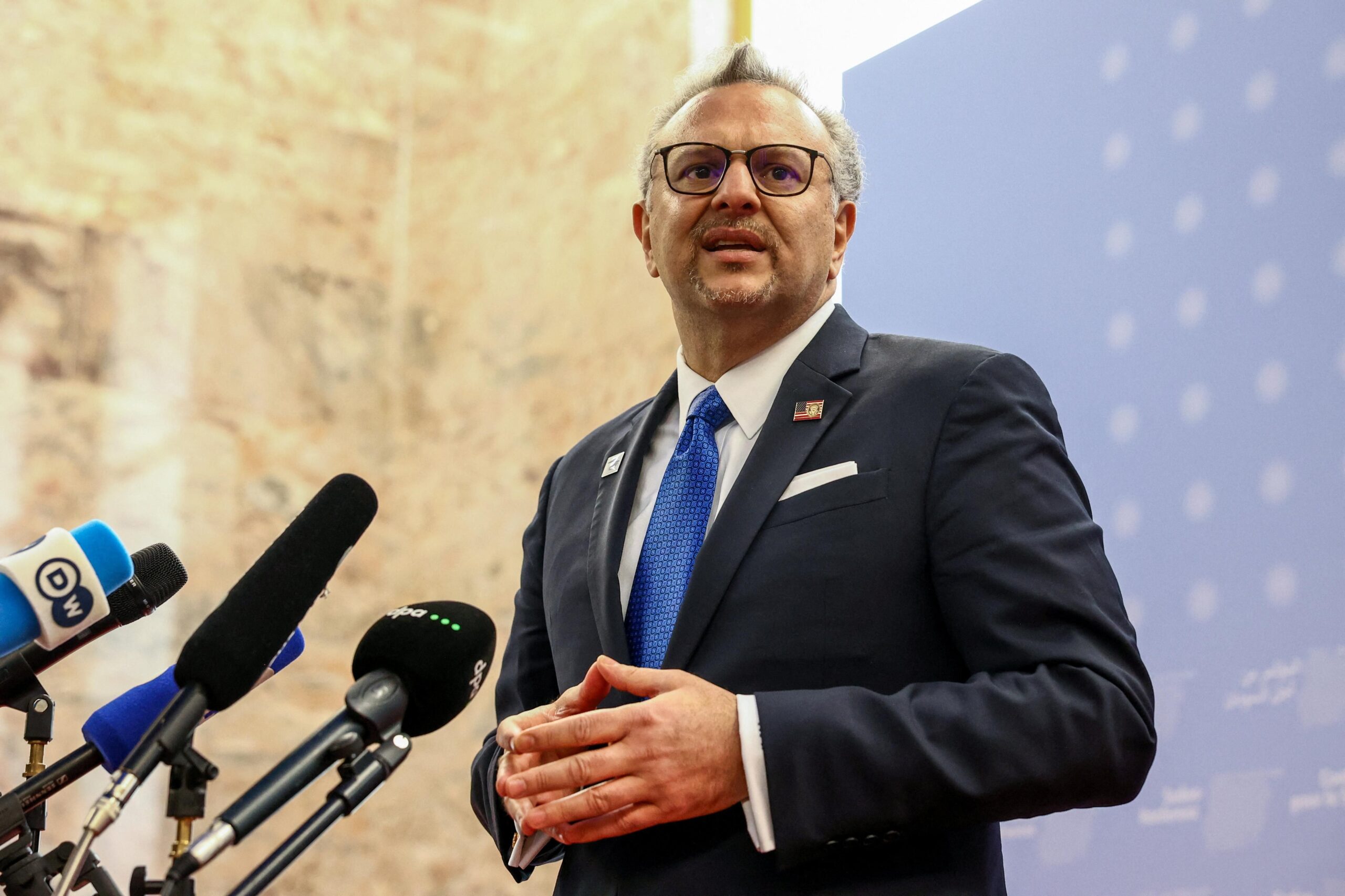
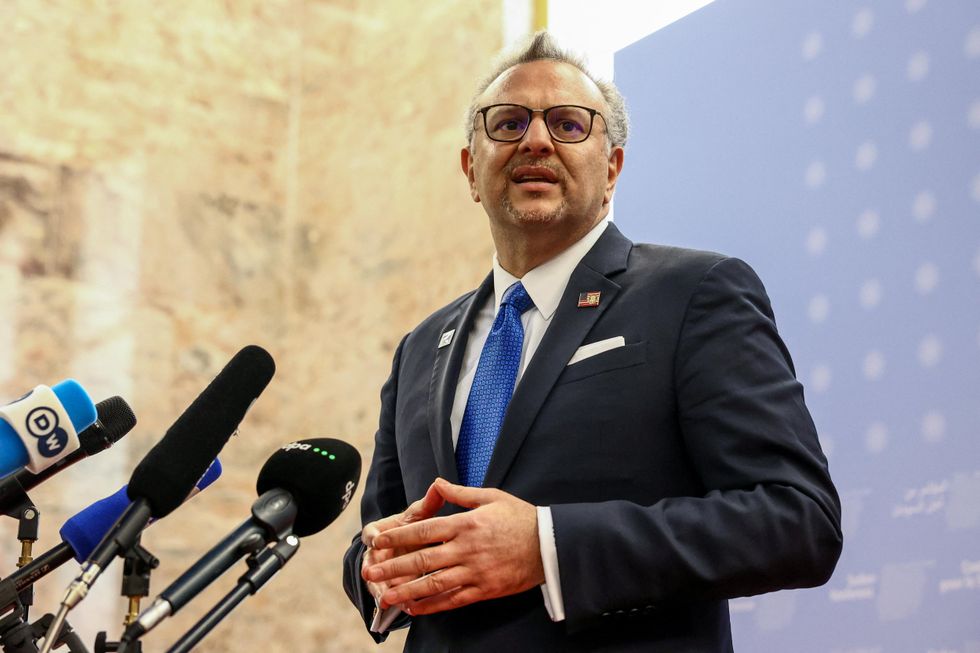
Massad Boulos — Trump’s Africa and Middle East envoy who is also the father-in-law to Trump’s daughter, Tiffany — has focused much of his diplomatic work in recent months on Libya, criss-crossing the country to meet with members of Libya’s two rival governments in an attempt to secure a power-sharing arrangement between the two.
Publicly, Trump’s team has billed this diplomatic effort as a worthy attempt to bring sustained peace and democracy to the country through the formation of a unified government that can put an end to 15 years of armed group violence and political factionalism.
But the Trump administration’s true interest in Libya appears to be not so much peace for the sake of regional stability, but rather to secure a quid-pro-quo arrangement in which American firms receive preferential access to the country’s vast oil wealth.
Claudia Gazzini, a senior analyst for Libya at the International Crisis Group, told Responsible Statecraft that “oil has always been a key interest in driving U.S. policy in Libya” under both the Trump and Biden administrations.
But Trump’s interest in Libya goes beyond oil, Gazzini said: “there is also a more immediate aspiration [for Trump] to secure a deal and to be seen as victorious — having brought peace to yet another conflict.”
Trump indeed touts a long list of wars he claims to have ended, even though a number of them have restarted following an initial peace deal. Among these are the Democratic Republic of Congo-Rwanda, Egypt-Ethiopia, Serbia-Kosovo, and Israel-Hamas conflicts.
Libya’s oil wealth is in fact quite extraordinary. The country has the largest proven oil reserves on the continent, a fact that has spurred many American energy companies to seek access — including Chevron, ConocoPhillips, and Halliburton, all of which have increased oil-based investments in Libya over the past year. Meanwhile, ExxonMobil lifted its decade-long suspension of operations there last August, when it signed a Memorandum of Understanding with the state-owned Libyan National Oil Corporation to conduct studies to identify offshore hydrocarbon resources.
Providing American firms with preferential access to the market could reduce their costs of operating in Libya, thus making them more competitive in a volatile oil market.
Indeed, accessing new oil has become an important point of emphasis for the Trump administration as the dangers of global over-reliance on oil transport chokepoints have been made apparent during the war he started with Iran. As a result of this conflict, oil traffic through the blockaded Strait of Hormuz has decreased to a mere trickle. Now transport through the Red Sea routes is in question, too. Although the United States produces much of its own crude, oil prices are responsive to global market conditions, so the current war in the Gulf has had a significant effect on oil prices across the world, including in the U.S.
In the eyes of the U.S. government, therefore, diversifying the global oil industry away from these chokepoints could reduce the cost of future global bottlenecks caused by Middle East conflict. Accessing Libyan oil helps with this effort.
Boulos’ diplomatic work is coming after a decade-and-a-half of instability in Libya. Following a U.S.-led NATO air invasion of the country in 2011, which overthrew the country’s long-time leader Muammar Gaddafi and led to his death, Libya has remained in a power vacuum without a centralized government. The country is divided between two main factions: the U.N.-supported Government of National Unity, run by the Dbeibah family and based in the northern city of Tripoli, and the Haftar family’s Libyan Arab Armed Forces, which controls the country’s east and runs its operations out of Benghazi.
Crime and corruption define daily life in Libya, whose kleptocratic government has allowed those at the top to get rich while most Libyans struggle to unshackle themselves from the heavy chains of poverty.
Although details of the negotiations have yet to be made public, reporting suggests that Trump’s team is looking to secure a deal where each side can split governing functions — with Dbeibah’s family taking over the presidency and Haftar’s family taking over the premiership — thus ensuring each side’s grip on power continues indefinitely. This begs the question of how significantly the lives of ordinary Libyans would actually improve if the agreed-to power-sharing deal simply props up corrupt leaders.
Trump’s plan — peace for preferential access to resources — is an extension of the playbook used elsewhere on the continent.
Early last year, Boulos prioritized striking a deal to end the decades-long proxy war between the DRC and Rwanda — a war oxygenated by armed groups vying for control over territory in the country’s east. In June of last year, the two countries signed a deal to end hostilities, and in December a deal was signed giving U.S. firms preferential access to the DRC’s deep mineral wealth. But despite Trump’s deal, conflict has resumed, and armed aggression continues to threaten regional stability.
Days after the June 2025 peace deal in the Congo, Boulos began applying this same resources-for-peace approach to Libya.
In a statement to Responsible Statecraft, a State Department official said, “The United States is in support of Libyan efforts to unite their country, achieve a durable peace, and create conditions for national elections.… U.S. efforts in support of Libya have been careful and gradual, resulting in significant progress since July 2025.”
A sign of this progress came in April, when the United States, along with several other countries, successfully negotiated a unified budget between the two rival governments in Libya — a compromise the U.S. touted as being the first such country-wide budget in over a decade. But, in an example of the challenges afflicting peace negotiations, the budget has yet to be implemented.
According to Gazzini, the very assumption that this budget was comprehensive, as the U.S. claims, is questionable.
“With the lack of transparency and with these opaque, behind-the-doors dealmaking, it’s hardly surprising then that the implementation does not happen,” she said. “We have to question from the outset the extent to which there was a real genuine deal in the first place.”
Gazzini believes the agreed-to budget most likely focused solely on national development, while other budgetary elements never made it through negotiations, getting bogged down in disagreement over issues such as where the new government’s executive will be based and how the military will be commanded moving forward.
Achieving a unified peace in Libya will face a plethora of challenges. Among the points of discord Boulos will have to try to solve will be the future of the country’s military.
Gazzini says that part of the difficulty in finding agreement on this front comes down to the fact that “one pillar of the Haftar military thinking over all these years is that military command should not be diluted and not be split between various personalities,” making it hard to imagine how a sustainable power-sharing arrangement can be achieved.
But even if common ground is found, the major question facing the American mediation process is whether the Libyan people will actually benefit from a deal that appears to be prioritizing continued rule by corrupt government officials in exchange for American access to oil, rather than a deep-rooted rethinking of the relationship between the government and its people.
On this point, Gazzini appears skeptical.
“To me, it seems like this approach will certainly serve the interests of those in power, in allowing them to extend their lease on life … [and] continue their practice of accessing if not embezzling public funds,” she said. “But it’s hard to see how these arrangements will improve life for ordinary Libyans.”
From Your Site Articles
Related Articles Around the Web


+ There are no comments
Add yours