







| Updated:
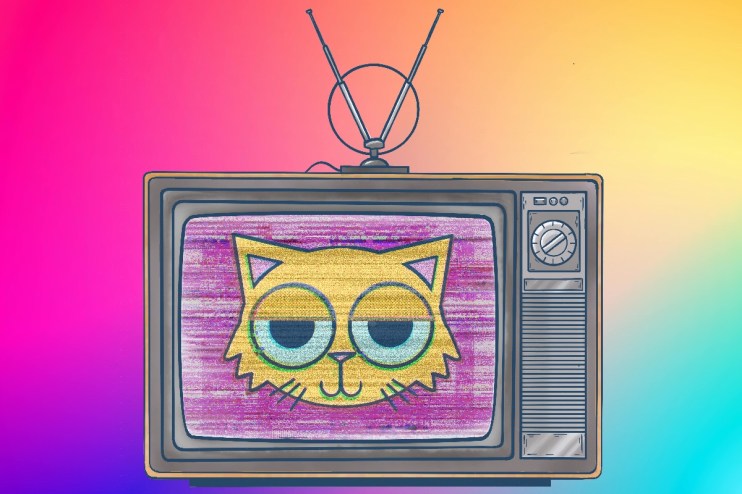
On the internet, no one knows you’re a cat. But The Algorithm almost certainly knows if you’re a cat owner, and it will increasingly serve you content aimed at keeping your housebound feline entertained. Welcome to the YouTube phenomenon of Cat TV, a peculiar niche of video streaming whose primary audience (one has to assume) are crepuscular predators with names like Socks, Mr Biscuits and Santa Paws.
Like most internet phenomena, the origins of Cat TV are a mix of blind luck and ingenuity. One of the genre’s most popular content creators, who was at the forefront of the nascent industry some 10 years ago, is Cornwall-based amateur wildlife photographer Paul Dinning. His YouTube page describes an initial plan to film local bird species for the benefit of other nature lovers, which suddenly blew up when he experimented with the title Videos for Cats. Dinning’s account now has 832,000 subscribers and his most popular videos have amassed millions of views (his 10-minute piece about Cadgwith Cove has not yet broken the internet in quite the same way).
Jasper the half-Bengal juvenile cat is fixated
The content itself is unsurprising, for humans at least. I have a half-Bengal juvenile cat called Jasper who is fixated by these eight-hour long videos, filmed in static close-up, of cats, mice and squirrels nibbling at treats on feeder tables. As far as Jasper is concerned, these strange exercises are a high watermark of on-screen entertainment, second only to televised football, where occasional displays of metronomic passing in the mould of early-period Guardiola are known to activate his hunting instincts to such an extent he ends up body-slamming our flatscreen.
I’m less interested in the psychology of pets, however, than I am the motivation of the creators. A quick scroll of YouTube suggests this cottage industry may be more of a tower block. It turns out amateur enthusiasts like Dinning are the exception rather than the rule of Cat TV. If his early experiments in the form were a happy accident, it didn’t take long for the entrepreneurial twitchers of the internet to realise these recordings represent a simple way to capture a small slice of the attention economy.
“These videos do well because YouTube ranks them on watch time,” says Adam Jones, the co-founder of social-first video production company Trendy Grandad. “If you watch 30 seconds, that feeds a bad sign into an algorithm. But if you watch five hours of it, that’s a great sign for the algorithm. It’s a good earner in terms of advertising revenue, and people do it to build up watch time and subscribers, which allows them to monetise other content later on. Essentially you’re farming watch time.”
‘Cat TV is more cut throat than you would ever imagine‘
This may explain why, after efforts to contact a large number of the accounts behind these videos, I received only one fairly cryptic response. “The world of Cat TV is probably more surprising and cut throat than you would ever imagine,” said an established creator in the field, who would speak only under the shadow of anonymity. “Due to this I am quite private about what I reveal about myself or my processes.” My follow-up questions went unanswered.
One positive we can draw from the Cat TV industry is that it does not yet appear to have been eaten up by AI: the majority of the videos are real films of critters. Content produced by channels with names such as Birder King and Cat Games have racked up millions of views, but search traffic is dominated by a relatively small number of players.
I came across half a dozen accounts struggling to succeed with this traffic fishing approach, with their videos only reaching the hundreds or low thousands of viewers, and in some cases far less. Zoë Glatt, a digital ethnographer at LSE, pointed out that while this type of content “may seem like an easy way to make a quick buck, research shows it is exceptionally hard to build a following and generate sustainable revenue as a content creator, especially in oversaturated content verticals with a low barrier to entry”.
Perhaps it’s only fitting that content designed for predators, whose natural bloodlust has yet to be bred out of them despite four thousand years of domestication, has given rise to a behind-the-scenes industry just as savage. Beneath the bright eyes and fur, there are always claws.
• Tom Duggins is a freelance journalist










+ There are no comments
Add yours