





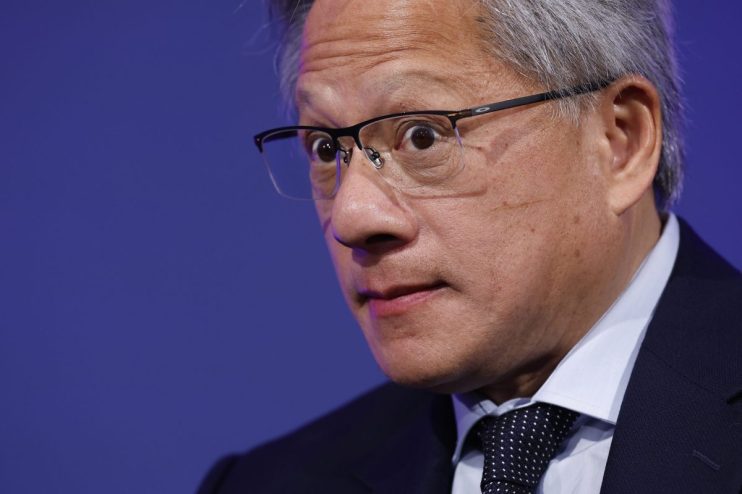
Jensen Huang’s reinstatement as Nvidia chief executive has raised questions over corporate governance at the world’s most influential chipmaker, with legal experts suggesting its founder may have become “too big to fire”.
Nvidia’s board voted unanimously on Monday to reinstate Huang as chief executive, president and board member, just 11 days after announcing his resignation following reports of multiple extramarital affairs, including one with a suspected Chinese spy.
The decision restored nearly $1 trillion to Nvidia’s market value, with shares soaring more than 31 per cent and triggering a global technology rally.
But the reversal, which came before the conclusion of an independent investigation into Huang’s conduct and following intervention from Donald Trump, has exposed the industry’s dependence on a single executive.
“This is a company (and a founder) who you might argue is viewed as too big to fail (and too big to fire),” Troy Featherstone, managing associate at law firm Mishcon de Reya, told City AM.
“You only need to look at the residual effect on the wider global markets and the reports of the levels of US government involvement in this matter.”
Could it happen in the UK?
Unlike fellow Silicon Valley founders Mark Zuckerberg and Alphabet’s Larry Page and Sergey Brin, Huang does not hold special voting shares protecting him from being ousted.
Yet Nvidia’s directors reversed their decision less than a week after chairman Harvey Jones publicly ruled out Huang’s return.
Featherstone said Nvidia’s success appeared to have been dependent on Huang “without a huge amount of independent governance”.
He pointed to the greater emphasis placed on board independence in Britain, where the UK Corporate Governance Code provides that the roles of chief executive and chairman should be held by separate individuals.
Directors are also subject to statutory duties under the Companies Act 2006, including exercising independent judgement and avoiding conflicts of interest.
Lucinda Brendon, also of Mishcon de Reya, told City AM that allegations of personal or professional misconduct would ordinarily warrant a thorough investigation before a board determined its next steps.
“Absent a board demonstrating clear steps taken, it is difficult to shed the perception that governance has been overlooked,” she said.
Nvidia has established a new committee of independent directors to oversee overseas trade compliance and national security risks, alongside plans to appoint a chief compliance officer who will not report to Huang.
The board said it was confident Huang’s reinstatement posed no national security risk following input from senior US government officials.
However, Trump, who claimed he had “made the deal” to secure Huang’s return, could have personally gained as much as $15m from Monday’s rally, according to estimates based on his financial disclosures first reported by the Financial Times.
Democratic senators have since called for an investigation.
Can the AI rally hold?
Beyond supplying the chips powering the world’s leading AI models, Nvidia has become a major financier of the industry, investing billions of dollars in customers that in turn purchase its products.
Kathleen Brooks, research director at XTB, said Huang’s return suggested Nvidia’s directors could not envisage a future for the company without him.
“We’ve had the Fed put, the Trump put, now we have the Jensen put to backstop the market when sell offs get brutal,” she said.
However, the broader pressures facing the AI industry remain, including rising borrowing costs, mounting infrastructure bills and uncertainty over investment returns.
The world’s largest cloud computing companies accounted for around 52 per cent of Nvidia’s revenue in its latest quarter, leaving the chipmaker exposed to any slowdown in data centre spending.
Ipek Ozkardeskaya, senior analyst at Swissquote, warned the saga had exposed how far the risks associated with a single executive could spread.
“You might hold Nvidia through an index fund, own shares in a cloud company that buys its chips and invest in a utility supplying a data centre. On paper, those are three different investments. Next week, they could all react to the same news about one person,” she said.
Huang is due to face questioning from three congressional committees next week, while Nvidia’s internal investigation remains ongoing.
Investors are already tempering their enthusiasm, with Nvidia shares falling around six per cent in early trading on Tuesday.



+ There are no comments
Add yours