







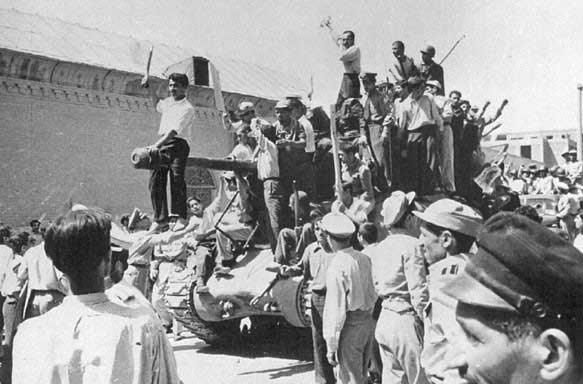
As the government’s standing plummets to an all-time low due to a reckless disregard for the welfare of its people, mass protests sweep across major Iran’s cities, including Shiraz, Tabriz and Tehran. Driven by a threat to their economic survival, the merchant class, or bazaaris, are leading the demonstrations.
This is not a news report from December 2025. This is the spring of 1891, the opening salvos of the Persian Tobacco Protest. Recognizing that unfettered concessions to foreigners pose a threat to both national sovereignty and their own economic interests, the powerful Shia clergy joined the merchants in an open revolt. It was Iran’s first bitter lesson in what happens when a ruler sells out the nation to ensure his own political survival. It wouldn’t be the last.
Iranians know their history well, especially when it comes to confronting foreign aggressors. Amid whispers of diplomatic backchannels and leaks about potential deals, Iranian officials have taken to the social media platform X to send cryptic, and at times humorous, references to past triumphs. Most notably, foreign ministry spokesperson Esmaeil Baqaei invoked the Sasanian Empire’s victory over Roman Emperor Philip the Arab, when Rome was forced to accept peace on Persian terms in the 3rd century.
But make no mistake: these posts are not cautionary tales directed at the United States and Israel alone. They can also be read as stern warnings to Tehran’s own negotiators. Any concessions, or capitulations, made by the Islamic Republic can trigger severe domestic backlash because in the Iranian historical imagination, yielding an inch inevitably leads to Western exploitation and destabilizing protests. For Iran’s hardliners, a deal is tantamount to surrender.
This mindset can be traced to what Hamid Dabashi, professor of Iranian studies and comparative literature at Columbia University, describes as a “long historical memory which is very much alive and resonant in their contemporary politics.”
According to Dabashi, even the current ruling government is “entrusted with the responsibility of safeguarding that memory.”
Two examples of historical violations of Iran’s economic sovereignty illustrate why this memory remains so potent today. The French, Russian and British empires all vied with each other to extract concessions from Iran in the late 19th century. In 1890, the Qajar Shah granted British entrepreneur Major G.F. Talbot total control over the cultivation, sale and export of Iranian tobacco. Britain had already forced the opium trade on China and fought a war when its emperor tried to ban its sale decades earlier. By commodifying a daily staple in Iran, the secret deal ignited the tobacco riots, uniting merchants and the Shiite clergy in a boycott of the drug, this time leading to a successful campaign to force the Shah to cancel the concession.
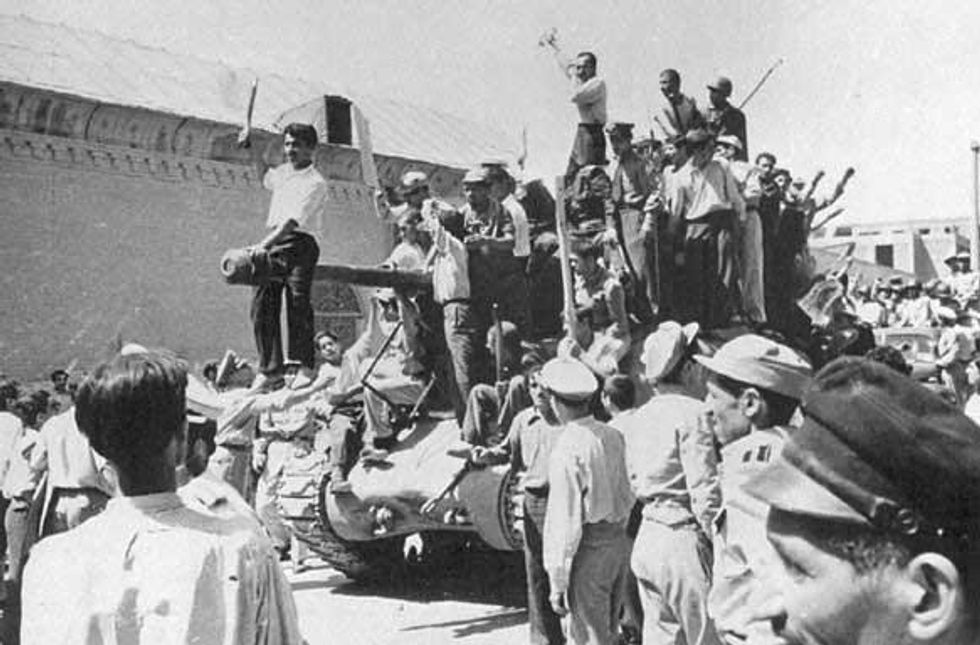
The D’Arcy Concession would later allow the British government, at the direction of then-Lord of the Navy Winston Churchill, to establish an “Anglo-Iranian Oil Company,” today’s British Petroleum, in 1911. The company would later control 84% of Iran’s oil profits. When Prime Minister Mohammad Mossadegh nationalized that wealth in 1951, the response was an Anglo-American-backed coup in 1953 that reinstated the shah’s absolute royal rule. The suppression of Iranian independence sowed decades of popular resentment against Shah Mohammad Reza Pahlavi, ultimately erupting in the 1979 Iranian Revolution. For Iranian nationalists, these episodes prove that concessions to foreign entities inevitably lead to intelligence infiltration and total loss of sovereignty.
It is this legacy that Western powers tend to misjudge. As Dabashi points out, “the most significant part of Iranian anticolonial nationalism” that the U.S. and Israel have failed to understand is that these two formative episodes “have been paramount in the minds of all Iranians since this war began, and it informs every single sentence in their negotiations with United States.”
Cutting through the rhetorical noise from both sides, it would be politically suicidal for any Iranian government to accept the full terms the U.S. and Israel are attempting to impose. The White House is pushing for an expansive, face-saving surrender that demands Iran give up its 60% enriched uranium, halt its missile program, dismantle its regional alliances and permanently relinquish state control over the Strait of Hormuz. For Tehran, these are contemporary equivalents of the 19th-century concessions and non-negotiable pillars of national defense that cannot be bartered away.
More significantly, despite domestic hardships, Tehran retains significant leverage, holding the global energy market hostage through its grip on Hormuz and still waving the disruptive wildcard of the Red Sea via its alliance with the Houthis. To concede the inconceivable when they have weathered the initial military onslaught would not be in their interest and would completely undermine the regime’s narrative of resistance.
Some former U.S. officials have acknowledged this problem. As former CIA Director Bill Burns noted in an interview with The Economist, “We’ve kind of boxed ourselves in at this point. You can declare victory and walk away, but with the future of the Strait of Hormuz up in the air, it’s hard to make that a plausible option.”
He argued that escalation through blockades and infrastructure strikes alone would be unlikely to force “this hard-bitten regime to run up the white flag,” leaving serious diplomacy backed by leverage as the “least bad” remaining option. The more difficult challenge, he suggested, would be the future of the Strait of Hormuz itself. Having rediscovered the immense strategic leverage the waterway provides, Tehran is unlikely to relinquish influence over it willingly.
The realistic path to a settlement lies in a formulation where both sides can claim victory without crossing their respective red lines. Iran enters the room with a clear objective of clawing back its frozen funds and assets, which remains the primary leverage the United States wields. A viable middle ground requires Washington to narrow its sights to a strict nuclear framework, temporarily shelving its demands for regional disarmament or the integration of the Abraham Accords.
Still, the path forward will depend on who has the luxury of time. Tehran has historically counted on American impatience to force a diplomatic breakthrough, but President Donald Trump seems to be in no rush. He recently shrugged off domestic political pressure, saying “I don’t care about the midterms,” and that he could “out-wait” the Iranians.
Recent history suggests that a drawn-out dispute is more likely than a rapid resolution. The Russia-Ukraine war has stretched over five years without a peace deal, the Doha accords required 18 months, the original Joint Comprehensive Plan of Action or “Iran Deal” took 20 months, and the Paris Peace Talks after World War I dragged on for nearly five years. By contrast, the current war began just three months ago.
Tehran can afford to sit at the table, but it can only concede up to the point where its core interests remain intact. To cross that red line would mean repeating the fatal mistakes of the Qajar and Pahlavi shahs, sparking severe domestic backlash that no Iranian government can survive.
The lessons of Talbot’s tobacco monopoly and the Anglo-Iranian Oil Company’s oil exploitation remain absolute truths for the current leadership. Trump may view these talks as a standard business transaction, but history has taught Iran that a compromise with the West is a trap where the foreign superpower always walks away with the ultimate prize.
From Your Site Articles
Related Articles Around the Web





+ There are no comments
Add yours