







In July 2026, the White House released what it called the most ambitious rethinking of American science policy in decades.
Michael Kratsios, President Trump’s science advisor, penned a report titled “Science: A New Golden Age,” with the goal of charting a course to revitalize American research and development.
The report contains ideas worth taking seriously. Kratsios is right that the system needs reform. Researchers have long complained about grant writing taking far too much time and how peer review leaves little space for bold new ideas. Kratsios wants to shake that up, proposing “golden tickets” for unconventional proposals, fast-tracking grants, and greater funding flexibility. All of this makes sense.
But the overall vision behind the report is troubling. It presents science almost entirely as a weapon in great-power competition. The main goal isn’t advancing knowledge for everyone. Rather, it’s dominance. You see this fact clearly in President Trump’s letter commissioning the report: “We are not just competing with other nations; we are seeking, striving, fighting to make America greater than ever before.”
Throughout the report, there’s a drumbeat about how simply publishing great science isn’t enough. The report emphasizes that America must be “formidable at turning [scientific] breakthroughs into national power, or we risk watching the fruits of American discovery harvested first by others.”
Competition undoubtedly matters. It has driven many of America’s scientific breakthroughs. But competition can’t be the sole defining feature of American science policy. There are entire fields where cooperation is the only way forward.
Welcoming foreign researchers
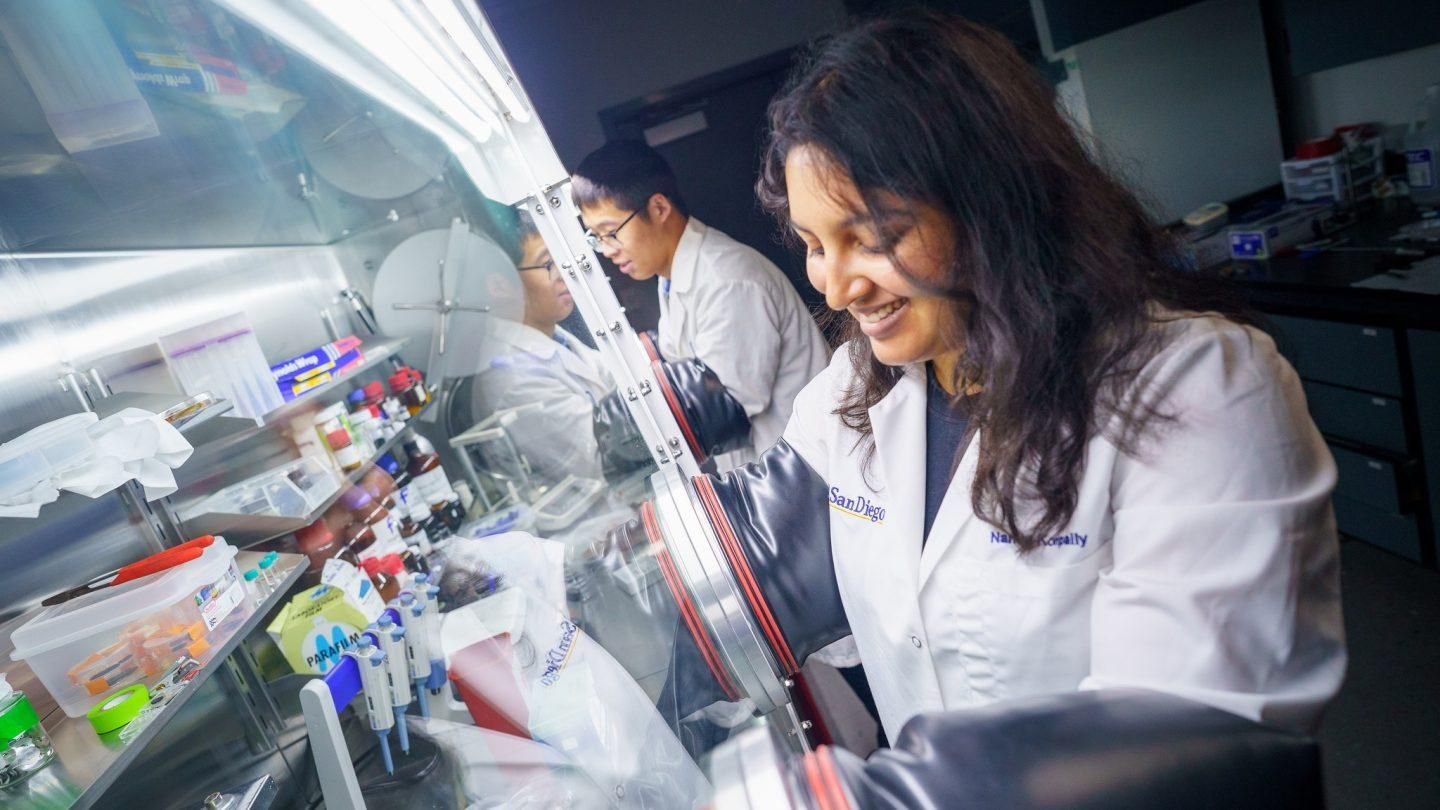
The report’s treatment of foreign students is especially problematic. The report says, “America’s over-reliance on foreign students also creates a security challenge our institutions are ill-equipped to address.”
The report goes further, asserting that “our competitors have learned to exploit a deep asymmetry between open and closed scientific systems, using our education system as an entry point into our innovation base.”
The solution to the changing demographic situation can’t be tighter restrictions on foreigners. Open science has always been America’s competitive advantage. We train some of the brightest minds from around the world, and we shouldn’t be losing them to other countries that recruit them. America should instead be the place those scientists want to stay and contribute.
Trump himself once suggested stapling a green card to every STEM PhD awarded by an American university. That idea is spot on. We should be welcoming talented scientists from abroad and helping them build their careers here, not pushing them away or treating them with excessive suspicion.
Before the 1930s, Europe was the center of global science. Albert Einstein moved to the U.S. in 1933 to escape the Nazis’ persecution of Jews. Along with many others, Einstein went on to help build the foundations of America’s scientific primacy. It all happened because America welcomed European scientists fleeing fascism, gave them positions at universities that rewarded innovation, and backed them with unprecedented federal funding. That history should be a source of pride, but it’s also a reminder not to close ourselves off now.
One big thing the report misses entirely is why so many young Americans are walking away from scientific careers. With slashed research and university budgets, rising student debt, and precarious academic career prospects, it’s a tough sell. It’s also almost impossible to talk about a “golden age” for science while cutting funds to key federal research institutions like the National Science Foundation, National Institutes of Health, and the National Oceanic and Atmospheric Administration.
US-China rivalry
When it comes to great-power competition, the rivalry with China is real. From AI and biotechnology to semiconductors and aerospace, both governments treat science as a terrain for strategic competition.
But the relationship isn’t only adversarial. China is also one of our closest scientific partners. Collaboration between American and Chinese scientists has led to some of the world’s best research, especially in areas like medicine, engineering, and climate science. Many of the world’s most consequential scientific questions still require the two largest research systems on Earth to work together.
The report’s discussion of new technologies highlights this tension. The U.S. and China will undoubtedly compete over the next wave of breakthroughs, but we must recognize that emerging technologies carry risks no single country can manage alone. Algorithmic systems that could destabilize financial markets or enable autonomous weapons don’t respect borders. We need to be co-managing these challenges. We must embrace a new version of “competitive coexistence”: a recognition that we are bound to compete, but also that we must cooperate where global imperatives demand it.
Scientific cooperation
Throughout the report, there is no mention of international scientific cooperation or the role American science must play in addressing transnational challenges. The word “international” appears only once in the document. “Global” comes up more often, but mostly in the context of global competition.
This is a glaring blind spot. The biggest problems — pandemics, exploring space, protecting the oceans or the poles — are global by nature. Science is not zero-sum. A discovery made in a Chinese laboratory, a Russian research station, or a European observatory does not diminish American science. Instead, it enlarges the common store of human knowledge. A U.S. science strategy should invest in international structures that allow science to do what it does best: travel across borders and return home enriched.
America should absolutely seek to remain the world’s scientific leader. But real leadership doesn’t come from dominance. Leadership attracts talented researchers by building institutions that others want to join.
If America truly seeks a golden age of science, it should aspire to lead a scientific enterprise that remains open, ambitious, secure, and connected to the rest of the world. In an era of planetary-scale challenges and escalating geopolitical tensions, such an approach is essential.
From Your Site Articles
Related Articles Around the Web











+ There are no comments
Add yours