







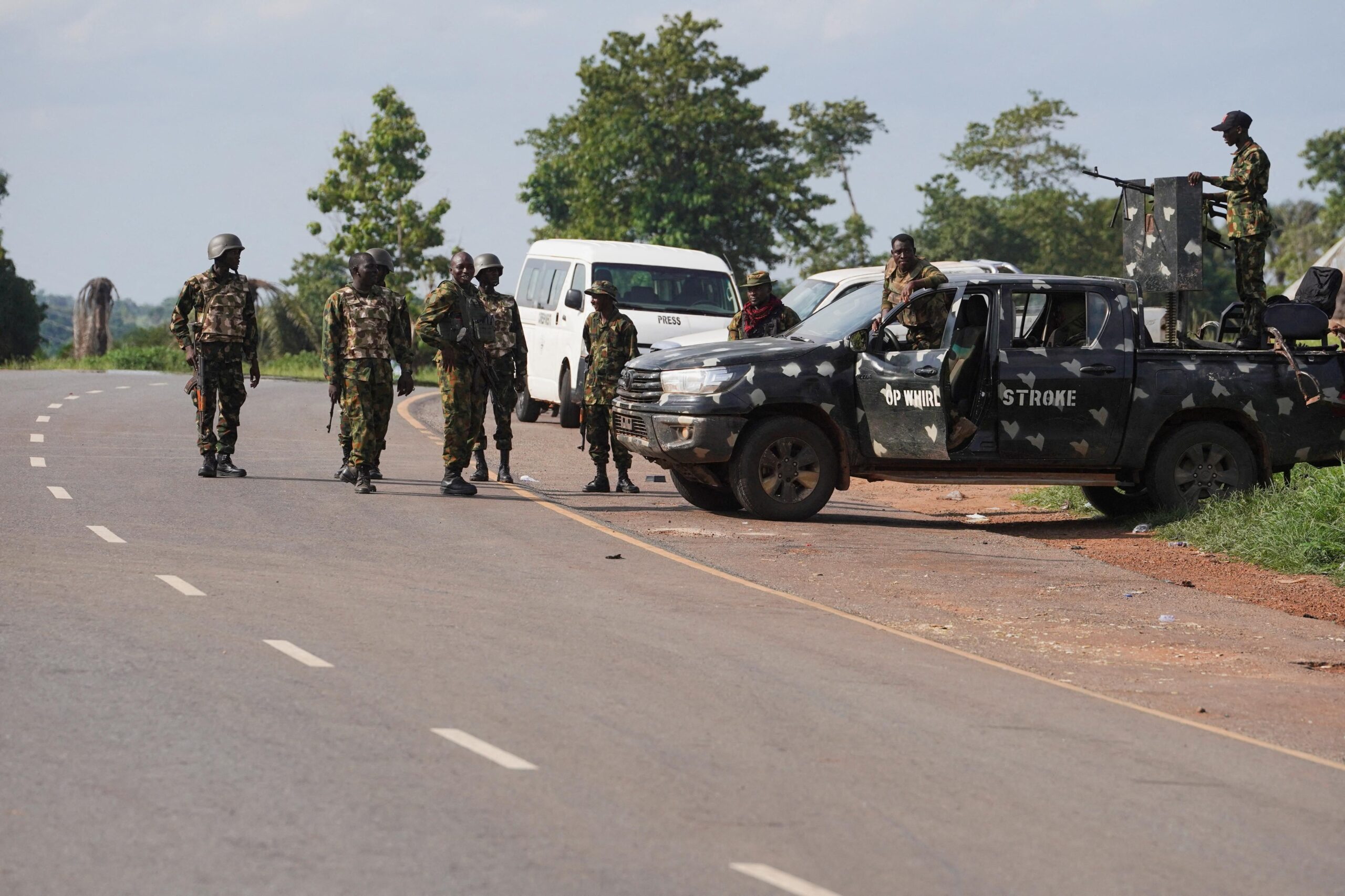
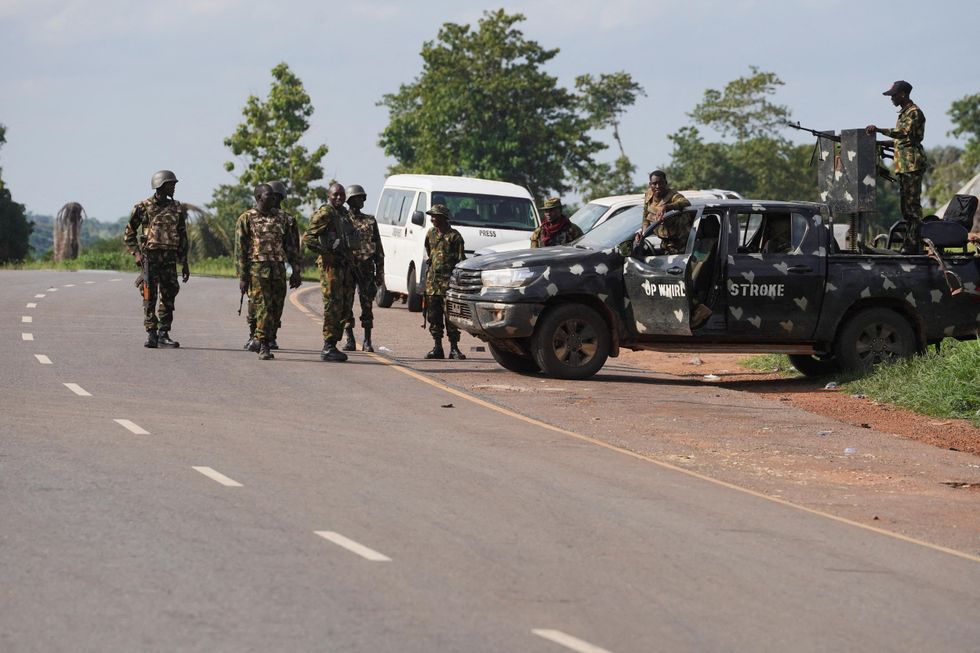
On May 19, a press release from the Nigerian military proclaimed that, in a joint operation with the United States, it dealt a “devastating blow” to ISIS and “eliminated” a senior leader and more than 170 fighters.
The press release followed a few days after the announcement by President Donald Trump that “brave American forces and the Armed Forces of Nigeria flawlessly executed a meticulously planned and very complex mission to eliminate the most active terrorist in the world from the battlefield.”
U.S. operations in Nigeria had already reached a new stage of direct and publicly announced military involvement with the Christmas Day strike targeting an alleged Islamic State camp. Now, with the latest strikes, U.S. operations are reaching yet a higher stage of intensity and frequency.
Much here is new — but much is not. For over 15 years, in fact, Nigerian military spokespersons have assured the Nigerian public and the world that pivotal battlefield successes are occurring.
Choosing almost at random, here is a part of one statement from 2020, which uses the acronym for the Islamic State’s West Africa Province: “Scores of the terrorists were killed and over 20 terrorists [sic] dead bodies were counted…Troops of Operation LAFIYA DOLE under the guidance of the Chief of Army Staff, Lt Gen TY Buratai will continue to sustain the aggressive, offensive posture to rid the entire North East of remnants of Boko Haram/ISWAP criminals, rapists and marauders.” In this framing, every dead commander was a pivotal figure, every pile of corpses brought victory one step nearer, and the “terrorists” were always on the back foot.
In reality, the grinding insurgency that Nigeria has faced since 2009 has proved relatively impervious to the application of sporadic, albeit brutal force. Boko Haram, which grew from a hardline preaching community in northeastern Nigeria into a formidable pseudo-army, staged a mass uprising in 2009 under its then-leader Muhammad Yusuf. After the uprising was crushed and Yusuf killed, Nigerian authorities waxed triumphant – only to see an even more dangerous version of Boko Haram resurface the following year.
Military crackdowns on civilians in the northeast inflamed rather than blunted the insurgency, which reached a peak of sorts in 2014-2015; Boko Haram seized substantial territory, only to be beaten back by Chadian, Nigerien, and Nigerian forces. In the 2010s, the U.S. provided significant training and logistical support to the Nigerian military and neighboring governments, and may have deployed special forces to northeastern Nigeria as well. But direct U.S. participation in combat in Nigeria did not, according to publicly available sources, occur during that period.
Although Boko Haram’s territorial control was disrupted in early 2015, the group persisted, and a splinter faction, affiliated to the Islamic State and acting as the Islamic State West Africa Province, broke off in 2016. The rump Boko Haram and ISWAP have pursued, over the ensuing decade, campaigns of killing Nigerian soldiers, extorting and brutalizing civilians, and rendering some remote zones too dangerous for government officials to function. The operation that targeted “the most active terrorist in the world,” to use Trump’s phrase, went after an ISWAP commander and logistician, Abubakar Mainok, in an area so remote and well-fortified by ISWAP that plans for a ground-based capture were reportedly abandoned in favor of an airstrike.
How many fighters would need to be “eliminated” for Boko Haram and ISWAP to be defeated? Is it 1,000? If so, then, at a rate of 175 fighters killed every few days, Nigeria should be victorious by June. Is it 10,000? That would take, at a rate of 40 per day, 250 days, or until January 2027. Or is it 20,000? That would put the end of the insurgency in October 2027.
One might find a Nigerian military official or elected politician bold enough to predict the defeat of Boko Haram or ISWAP by then, but I wonder whether one could find anyone at U.S. Africa Command or in the Trump White House who would make such a promise. Body counts alone do not lead to victory — a lesson that reaches back to Vietnam — and neither do “decapitation” strikes necessarily make insurgencies crumble. In fact, they can worsen the problem. As noted above,violence against Boko Haram and ISWAP, and especially violence against innocent civilians accused of belonging to those groups, has only made the insurgency grow.
What, then, are the current strikes going to achieve? Notably, the U.S. attack in northwestern Nigeria in December did not meaningfully alter dynamics there. Like the insurgency in the northeast, the long-running instability in the northwest — a mix of banditry, other organized crime, jihadism, and more — is a symptom of Nigeria’s intertwined political, economic, and security crises.
What Trump then called a “powerful and deadly strike” soon emerged as something much more ambiguous and fleeting, as journalists and analysts debated exactly what and whom U.S. forces had hit, and as civilians in the area reeled from the shock.
Months later, analysts continue to issue dire warnings about the long-term trends in the northwest — and to caution that, at least in the case of one powerful militant faction, “prioriti[zing] military strikes and ideological counternarratives” would mean “missing the group’s actual vulnerabilities,” which have more to do with militants’ community relations and economic behaviors.
Sporadic strikes are strategically pointless, and intensive strikes feed into blinkered body-count mindsets. There is no replacement for the hard work of addressing the very human dynamics that underpin long-running insurgencies. The story of Mainok himself, who went from village barber to Specially Designated National subject to U.S. economic sanctions, suggests that Nigeria cannot just “eliminate” such figures. It must instead figure out how to stop producing them.
The more the United States involves itself in that effort, meanwhile, the harder it becomes. The president does not appear to have a plan that extends far beyond the strike of the moment.
For U.S. Africa Command, there is an awkward dance of trying to justify long-running but increasingly antiquated exercises and structures, such as the Flintlock training exercise, while also adapting to the president’s shifting dictates on Nigeria. AFRICOM’s 2026 posture statement to Congress was long on the description of threats and short on its theories of change, vaguely suggesting that enhanced surveillance and continued training, along with an approach of “monitor and respond,” could help meet growing threats.
On the ground in Nigeria, meanwhile, U.S. involvement raises concerns about Nigeria’s sovereignty (as well as the potential for backlash), makes the U.S. into a rhetorical target for militants, confuses and alarms civilians, and adds tensions into a fragile political space that already witnessed an alleged coup plot last year. It is hard to reverse the kind of damage that U.S. overreach might do — whereas six months from now, Abubakar Mainok will be mostly forgotten.
From Your Site Articles
Related Articles Around the Web






+ There are no comments
Add yours