






| Updated:
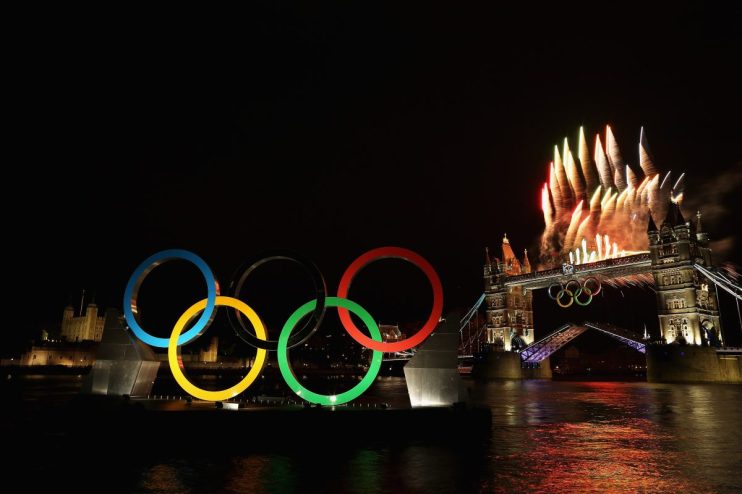
England winning a World Cup in our lifetime. This may appear as elusive as ever, but hosting it may be more achievable. Particularly given our stadia, infrastructure and track record for hosting major global events.
The signals from Downing Street suggest a similar plan. There’s talk of a potential 2042 World Cup in Great Britain, run as a possible home nations event, and even another bite on the Olympic cherry in the 2040s, propelled by Andy Burnham’s hunger for a northern Games.
As we know from prior global events, the cost of hosting is huge. So, before Britain commits to pursuing another sporting mega-event, we need to answer a simple question: why? And, what is our intended return on investment? If the answer is tourism, inward investment, regeneration, sporting legacy or altering our reputation on the global stage, it’s vital that these outcomes shape the experience from the outset, instead of being treated as welcome by-products.
World Cup and Olympics legacy question
The real value in hosting global sports events is the aftermath – how cities develop post-investment, and how perceptions alter after a stint in the spotlight. Paris understood this, and as a result their record-breaking 2024 Olympic Games generated an extra 0.35 per cent contribution to France’s economic growth in the third quarter of 2024 and drove a 37.3 per cent jump in the brand value of the Games themselves.
Much of the above is just ambition, for now. The World Cup ‘bid’ is currently a discussion point, and the possibility of a northern Olympics is for UK Sport to assess. But, in light of London’s loss to Nairobi this week for the World Athletics Championships, it’s important to recognise that London, or Britain, is far from a shoo-in for major sporting events.
The feeling was that Nairobi made a more compelling ‘why here, why now’ case. World Athletics President Sebastian Coe called theirs a “compelling and emotional bid”, and their win will take the championships to Africa for the first time – with World Athletics emphasising the opportunity to grow the sport and create a legacy across the continent. In light of this, does Britain risk being seen internationally as the established choice rather than the exciting one?
Our bid also wasn’t helped by public dispute around the Olympic London Stadium being used in the football season – a point that highlights how we may not have ironed out the details of sporting legacy regarding London 2012’s most primary assets.
London too establishment?
So, what can we take away from this? Fundamentally, we need to be sure of what the compelling case for a ‘mega event’ is. The answer to that must come from what we actually want to achieve – or, more importantly, what we want to change.
We must begin by asking where Britain sits in the world today. What are we known for and what can we be celebrated for? Brand Britain is, if we are honest, probably perceived as 80 per cent brand London to a global audience. Culturally and sportingly, we may have collateral outside of the capital, but despite The Beatles, Man United, City and the Cotswolds, we have centuries of international discourse that disproportionately favours London. London 2012 did a great job in celebrating British diversity, but it was very much centred on a single city.
This presents an interesting opportunity, a chance to do something different. What if we made a conscious decision to not focus solely on our most familiar cultural stereotypes: double decker buses, Buckingham Palace, the River Thames, Parliament, the Royal Family? Paris did a brilliant job of reflecting different parts of French history and culture and not the familiar cliches.
At the Paris Olympics, the brand experience of which our Paris team was honoured to lead on, ‘Games Wide Open’ became the North Star: a theme of change and awareness running through everything around inclusion, accessibility, openness and reaching new audiences. The Olympics was a centrepiece in the repositioning of Paris and France on the world stage, and the Paris 2024 brand encouraged people to reassess the spirit and values of the country. It showed Paris as a modern and progressive city – and there wasn’t a beret to be seen or an ‘ooh la la’ to be heard.
The conduit
The individuality of our regions, from our accents to our culture, varies dramatically across Britain. A home nations World Cup or a northern Olympics should celebrate these individual traits, histories and cultures that have impacted the world. Manchester, Cardiff, Glasgow, Liverpool, Edinburgh, Leeds – they are centres of culture, innovation, creativity and sport in their own right. Hosting across multiple cities would allow Britain to present a richer national narrative while showcasing compelling destinations for investment, tourism and talent.
It’s, of course, not about creating another London: Manchester should feel like Manchester, and Glasgow like Glasgow. Nor does it mean being anti-London. It’s about opening up opportunities and broadening the national spotlight. The capital, for once, could be the conduit for the journey, not the destination.
Britain possesses world-class stadia, transport links and operational expertise. But our recent loss to Nairobi reminds us that, despite these, Britain has no upper hand in the global hosting bid. Paris 2024 provides us with a blueprint for how to achieve a sporting spectacle that sensitively honours and expresses our culture on the world stage. What we need now is our own North Star: a compelling vision of the Britain it wants the world to see, supported by a credible plan for the economic, social and reputational returns it intends to achieve. A major sporting event is the investment – the return is the country that emerges afterwards.
Thom Newton is Global CEO of Conran Design Group









+ There are no comments
Add yours