






| Updated:
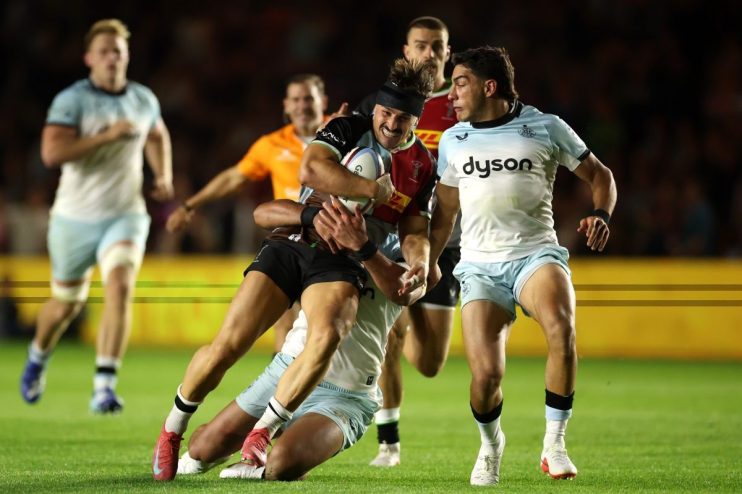
Watching Harlequins at the moment is either absolutely soul-crushing or completely baffling, depending on whether you support the London club or not.
Soul-crushing because the club is supposed to represent the very best of attacking rugby in a fusion of England internationals and overseas superstars. Baffling because it should never have got this bad, losing 48-0 to Gloucester last weekend without firing a shot.
But losing on the pitch is only ever surface-level, and it will be interesting to see how long Harlequins can be bad for before season ticket holders walk away, casual fans snub either of their two big matches at the 82,000-capacity Allianz Stadium and sponsors choose not to renew their deals.
Of course Harlequins may now go on an unbeaten run to next year’s final, and keeping hold of major club sponsor DHL shouldn’t be too much of an issue – it is reported that the logistics firm’s chief John Pearson supports the London club.
Though on the other hand, DHL Express head of global sponsorships told City AM earlier this year that the state of rugby in England is a “concern”, adding that “we’re seeing that the level of fan engagement seems to be slowly decreasing”.
That should send alarm bells ringing not just at The Stoop but across the English game.
Weather the storm
Harlequins must weather the storm, through thick and thin, and hope their loyal fans – and major sponsors – stick with them. It is the smaller sponsors, on year-long deals, that will need reassurance.
“While sustained poor performances could naturally make sponsors review the value of their partnerships, Harlequins remains a strong, well-known brand with significant appeal,” says MSQ Sport + Entertainment’s Steve Martin says.
“Sponsors understand that sport has its ups and downs – but continued underperformance could eventually become a factor in future decisions.”
The club seems to be in a fairly stable financial place, however. Their recent accounts saw ticket revenue rise despite volume sales flatlining – the club often sells out its 14,800 Twickenham arena so the second metric can be misleading – with turnover and commercial revenue both up, the latter by nearly 10 per cent.
Yet for the 2024-25 season the club posted losses of £3.3m, up from £1.8m the year prior.
The Harlequins question
All of this will undoubtedly put pressure on the club’s chief Laurie Dalrymple, who has been in post since 2019. But it’s interesting that the long-term owner Duncan Saville was appointed back to the board in March, and changed his residency from Singapore to the UK in August. Does he want a shorter leash? Could he be tempted by increasing investor interest in the league? It’s his cash after all.
I simply will not buy an argument that the club will die a painful death on the pitch and a brutal one off it, though. Far from it. Harlequins, in my view, are the main London club, for a casual fan at least.
I think the atmosphere is better than what’s currently on offer at Saracens and, without London Irish nearby, they’ve got one hell of a catchment area to exploit. The club isn’t a 25 minute walk from a station, and they generate revenue from England’s internationals over the road. The corporate offering has always been great.
There will be no quick fix on the pitch, even if Harlequins blow Sale Sharks away on Sunday afternoon. But the club will be relying on a lot of good will from their more casual supporters and shorter-term sponsors, because nobody wants to be associated with serial losers.
And while Harlequins are hardly worth that tag at the moment, another season of mediocrity would see them move towards that association. To the detriment of a superb club.
Former England Sevens captain Ollie Phillips is the founder of Optimist Performance. Follow Ollie @OlliePhillips11






+ There are no comments
Add yours