





Food and Agriculture, Global, Headlines, Sustainable Development Goals, TerraViva United Nations
Máximo Torero is the Chief Economist of the Food and Agriculture Organization of the United Nations
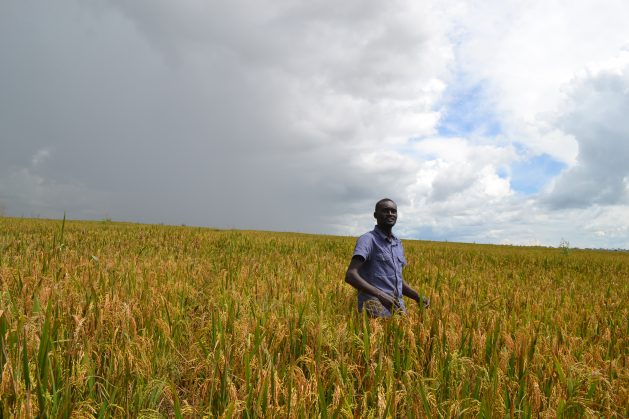
Three years of declining hunger have answered one question: Progress is possible. The question now is whether governments will scale what works before conflict, climate shocks and financial retreat erase it. Credit: Isaiah Esipisu/IPS
– Here is a fact that should interrupt the world’s drumbeat of bad news: Hunger fell again in 2025.
For the third consecutive year, fewer people faced chronic hunger. The total declined to an estimated 645 million, 14 million fewer than in 2024 and 43 million fewer than at the 2022 peak. Moderate or severe food insecurity fell by 86 million, to 2.1 billion from 2024 to 2025.
The number remains a profound collective failure. But the decline challenges the fatalistic assumption that conflict, climate change and economic instability make rising hunger inevitable. When governments align social protection, agricultural investment and economic policy, they can bend the hunger curve.
Asia’s hunger is now about one quarter below its 2015 level. Latin America and the Caribbean has also moved below the rate recorded a decade ago. In Africa, the rate declined for the first time in nearly a decade, from 20.3 percent in 2024 to 20 percent in 2025.
Africa’s progress is fragile. Rapid population growth kept the number of hungry people at about 309 million. Yet even this small reversal is significant, especially because bilateral development assistance to sub Saharan Africa fell 26.3 percent in 2025 and is projected to fall again this year.
Countries making the greatest gains offer no single formula, but they do offer a common lesson. India cut hunger from 21.1 percent in the mid 2000s to 9.8 percent; Senegal from 15.8 percent to 5.3 percent; Rwanda from 31.8 percent to 22.6 percent; and Peru from 17.9 percent to 5.7 percent. Brazil, Chile, the Dominican Republic and Guyana now report rates below 2.5 percent.
Their histories differ, but their choices share key features: social protection that preserves purchasing power; investment that raises agricultural productivity; rural roads, irrigation and market infrastructure; and policies connecting small scale farmers to expanding food markets. Hunger falls when these policies reinforce one another.
The danger is that governments will read three years of improvement as permission to retreat.
The Middle East conflict and disruption of the Strait of Hormuz are already raising energy, fertilizer and transportation costs. The strait is critical not only for oil and liquefied natural gas but also for sulphur, fertilizers and other farm inputs. Decisions made now could determine whether this shock becomes a much larger food price crisis within six to 12 months.
Climate is the second threat. El Niño is strengthening, with an 81 percent probability of becoming a very strong event late this year. That does not guarantee crop losses, but it raises the odds of damaging heat and rainfall patterns across major producing regions.
The third threat is cutting even more humanitarian and development financing when vulnerable countries most need resilience. Aid cuts do not make costs disappear. They transfer them to food importing governments, humanitarian agencies and households already spending most of their income on food.
But preventing hunger is only the first test. The harder challenge is helping people eat well.
About 2.69 billion people, roughly one third of humanity, still cannot afford a healthy diet. In Africa, the share is 66.6 percent. Calories alone are not enough. A diet that prevents hunger does not necessarily prevent anaemia, child stunting, obesity or diabetes.
The economics explain why. Starchy staples provide about half the calories in a healthy diet but only 13 percent of its cost. Fruits and vegetables provide roughly 5 percent of calories but account for 16 percent of the cost. Animal source foods provide 13 percent of calories but consume 28 percent of the budget. Calories are relatively cheap. Nutrients are expensive.
Much of that expense accumulates after food leaves the farm. New analysis for the 2026 State of Food Security and Nutrition in the World indicates that 70 to 75 percent of the cost of a healthy diet arises in storage, processing, transportation, wholesale and retail. Poor roads, inadequate cold storage, unreliable electricity and post harvest losses turn nutritious perishables into luxuries.
That should change how governments spend. They already provide $540 billion to $635 billion a year in agricultural support, much of it concentrated on a few staples. Supporting staples alone can pull land and investment away from fruits, vegetables and other nutrient dense foods. Governments should redirect more support toward horticultural productivity, cold chains, irrigation, rural roads, storage, energy and competitive markets.
They must also get the sequence right. Expanding school meals, food vouchers and other demand programs without increasing supply can raise prices. Investment in farms and supply chains must precede, or accompany, policies that stimulate demand.
Three years of declining hunger have answered one question: Progress is possible. The question now is whether governments will scale what works before conflict, climate shocks and financial retreat erase it.
The next frontier is not just cheaper calories. It is making healthy diets affordable.









+ There are no comments
Add yours