






Author
Ahmed Barakat
Author

Share

Fact Checked by
CryptoNews Editorial Team
Author
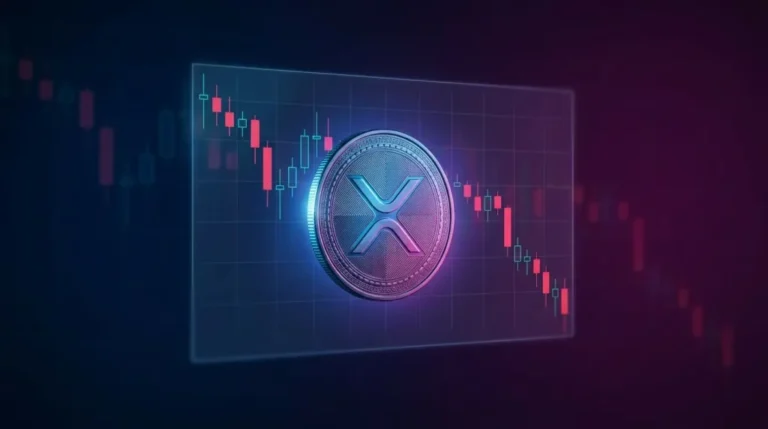
XRP price has started to stabilize, but its onchain activity has collapsed to levels not seen since before 2025. Network fee volume, a direct proxy for transaction demand, has dropped by 91.5% from its February peak.
According to Glassnode data, the 90-day simple moving average of total fees paid on the XRP network has cratered from 5,900 XRP in February to just 500 XRP today. Simultaneously, XRP’s 90-day realized profit-to-loss ratio has fallen to 0.38, down from a peak of 50 when XRP traded at $3.40 January last year.
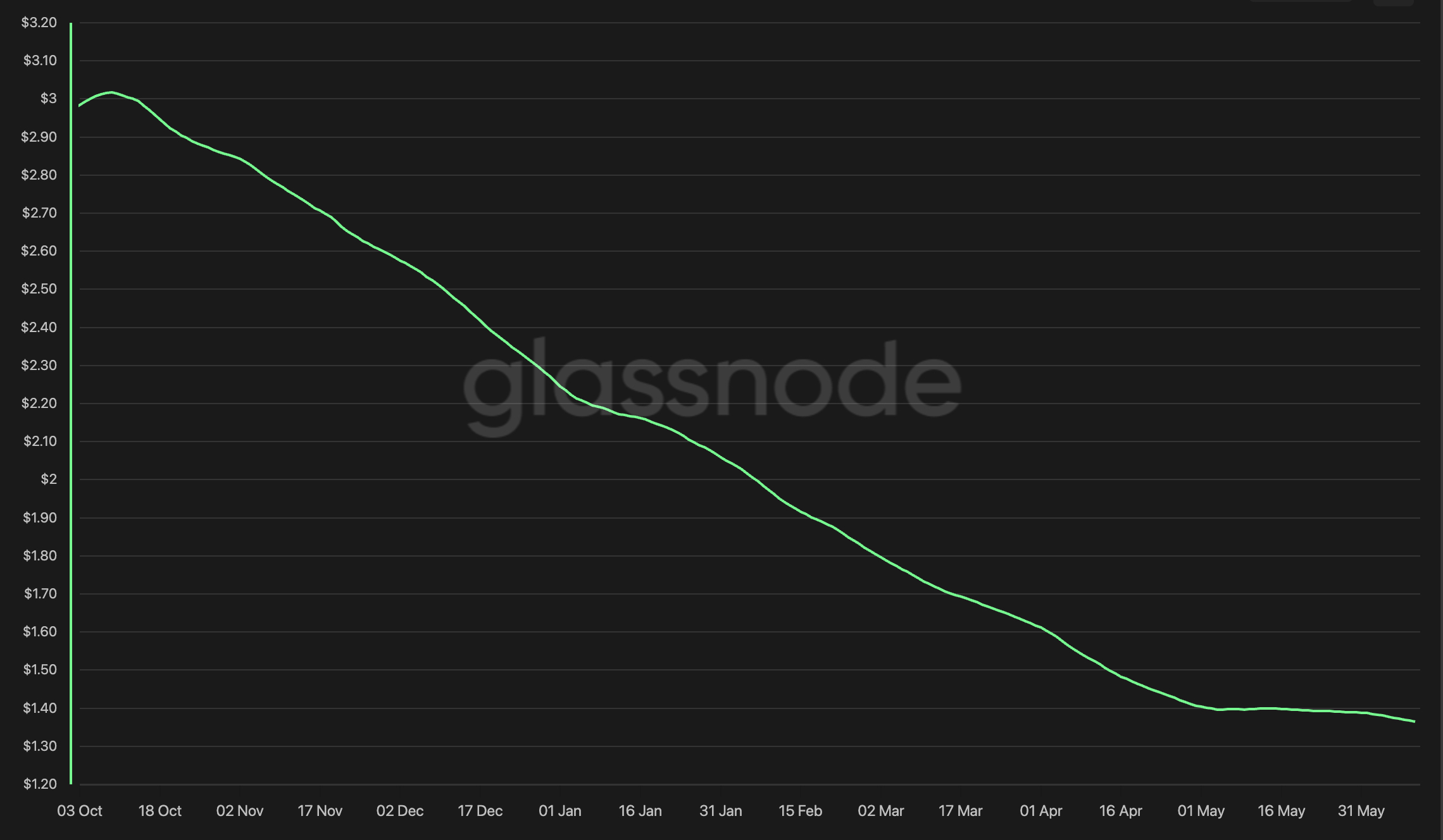
That ratio means participants are now realizing $1 in losses for every $0.38 in profits, a signature of capitulation selling. Data also shows that large-wallet transfers of 1 million XRP or more to Binance have declined since the 2025 peak, a display that major holders are not yet aggressively distributing.
Price action is compressing into a narrow decision zone, and the technical structure reflects the same tension between exhausted sellers and hesitant buyers.
Discover: The Best Crypto to Diversify Your Portfolio
Can XRP Price Reclaim $1.50 or Is a Drop to $1.09 Next?
XRP is currently consolidating below the 100-hour simple moving average, with price action grinding between $1.10 and $1.15 after a recent failed attempt to hold above $1.30, but so has the whole crypto market.
Immediate support sits at $1.05–$1.10, with a secondary demand pocket at $1. Resistance is layered at $1.20–$1.25, then $1.30–$1.40. A clean reclaim of $1.50 would shift short-term momentum and open a path toward the mid-$1.60s. Bearish momentum is still present, but the declining exchange inflows from large holders suggest distribution pressure is easing.
If support at $1.10 holds as volume picks up, price could recover toward $1.20 in the near term, and eventually $1.30. XRP could also consolidate between $1.10 and $1.15 for the next several sessions, absorbing sell pressure before any directional break.
But, in a bad scenario, a close below $1.10 opens the $1 target, and the $1.00–$0.65 band is identified as the macro support zone if this correction extends.
The profit-to-loss ratio at 0.38 does historically precede XRP price recoveries, but timing a bottom in a 91.5% fee-contraction environment is not for the faint-hearted.
Discover: The Best Token Presales
LiquidChain Targets Early-Mover Upside as XRP Struggles To Maintain Key Levels
XRP’s compressed activity data tells a familiar mid-cycle story: the speculation phase is over, the infrastructure phase is beginning. The rotation, away from price-momentum plays toward fundamental utility, is exactly the gap that early-stage infrastructure projects are moving to fill.
LiquidChain is a Layer 3 infrastructure project positioning itself as the cross-chain liquidity layer fusing Bitcoin, Ethereum, and Solana liquidity into a single execution environment.
The core value proposition is a Unified Liquidity Layer with Single-Step Execution and Verifiable Settlement, meaning developers deploy once and access all three ecosystems without fragmented bridging or multi-step routing.
The $LIQUID token is currently priced at $0.01468, with the presale having raised $830K to date. The raise is live, but early, and the figure reflects meaningful traction without the kind of saturation that closes early-entry windows.