







The roles played by Pakistan, Saudi Arabia, Qatar, and Turkey in facilitating the “Islamabad Memorandum of Understanding” underscore the extent to which regional actors have invested in creating off-ramps for the United States and Iran, and steering the conflict away from further escalation.
Across the Gulf Cooperation Council (GCC), this diplomatic off-ramp has garnered broad relief that the conflict appears to be moving toward de-escalation as Washington and Tehran prepare for talks on the sensitive nuclear and non-nuclear issues. But where the United Arab Emirates (UAE) fits into this broader picture is far from straightforward.
Navigating Israel, Iran, and GCC sensitivities
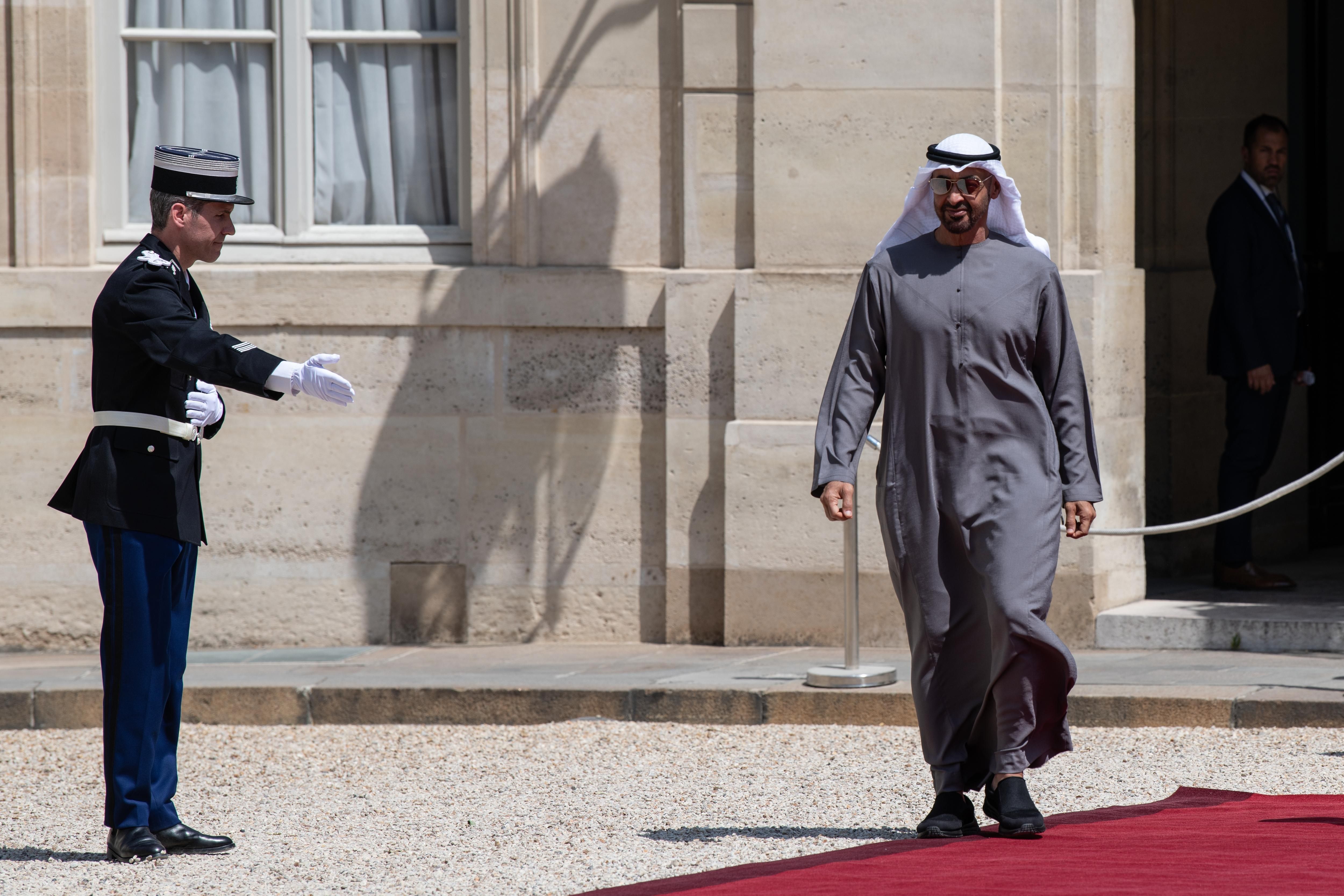
Although Abu Dhabi is unlikely to openly challenge the Trump administration’s decision to sign the “Islamabad MoU,” it is no secret that Emirati officials have been displeased with Pakistan’s bridging role between Washington and Tehran.
Abu Dhabi appears to believe that U.S. and Israeli military operations should have continued longer to further weaken Iran before any ceasefire took hold. Regardless of what this extended ceasefire ultimately achieves, the Emirati leadership will emerge more suspicious of Tehran’s intentions and more determined to deepen cooperation with Israel in countering the Islamic Republic, while still leaving the door open to future diplomatic engagement with Iran.
Cementing Abu Dhabi’s threat perception is the fact that, throughout the war, Iran hit the UAE with more than 3,000 drones and missiles, which was more than the number of such attacks on the other five GCC members combined.
Israel’s deployment of the Iron Dome system and military personnel to the UAE during the war also left a lasting impression on Emirati officials. “Iran’s attacks against the UAE have strengthened the Emirati-Israeli relationship. The UAE suffered a disproportionate number of Iranian attacks and appreciated the support it received from Israel — support it is not likely to forget even after a ceasefire goes into effect,” explained Gordon Gray, the former U.S. ambassador to Tunisia, in an interview with RS.
However, Abu Dhabi’s deepening partnership with Tel Aviv risks exacerbating tensions with other GCC members that increasingly view Israel as a threat. Israel’s bombing of Doha in September 2025 informed perceptions in Saudi Arabia that Tel Aviv’s willingness to project force beyond its borders poses a threat to the kingdom and other Gulf monarchies that have declined to join the Israeli normalization camp.
Against this backdrop, the UAE’s growing alignment with Israel could become a major source of friction with Saudi Arabia, particularly when viewed alongside Abu Dhabi’s exit earlier this year from OPEC and OPEC+; its support for the Southern Transitional Council (STC)’s short-lived territorial advances in southern and eastern Yemen; and its backing of Somaliland and Sudan’s Rapid Support Forces (RSF). Officials in Riyadh regard these aspects of Emirati foreign policy as harming Saudi interests.
At this stage, as Saudi Arabia and Qatar seek non-aggression pacts with the Islamic Republic, and with Oman’s ties to Iran having essentially weathered the war unscathed, Israel and Iran are likely to revert to a “war between the wars.” As in the 2010s and early 2020s, this would involve proxy activity, intelligence operations, targeted assassinations, cyberwarfare, and other forms of indirect confrontation. While the UAE will likely make considerable efforts to avoid appearing openly aligned with Tel Aviv in such a shadowy conflict, the possibility of covert Emirati support for Israel should not be ruled out.
If the “Islamabad MoU” leads to the U.S. and Iran reaching a more lasting and comprehensive deal, “you would likely see a resumption of the Israeli-Iranian ‘shadow war’ with the UAE clandestinely assisting Israel, through intelligence sharing or joint surveillance,” Rob Geist Pinfold, who teaches International Security at King’s College London, said. He told RS that this could “complicate UAE-GCC relations if the remainder of the Gulf continues to see Israel increasingly as a threat.”
Although Abu Dhabi’s exit from OPEC and its growing cooperation with Israel have increasingly positioned it as somewhat of an “outlier” within the GCC, Emirati leaders are likely to continue coordinating with their Gulf counterparts whenever doing so serves the UAE’s national interests. In practical terms, the UAE is expected to deepen cooperation with Israel, particularly in efforts to counter an Iran that has emerged from the war emboldened and radicalized, while carefully managing the optics of that relationship to avoid being perceived as excessively aligned with Tel Aviv by fellow GCC members and Arab public opinion.
As a result, Abu Dhabi faces a “difficult balancing act,” according to Jelena Novakov, a Belgrade-based geopolitical analyst who writes for Kosovo Online. The UAE is likely to continue cooperating with Israel in areas such as defense, intelligence sharing, technology, and trade, while remaining acutely aware of the political costs associated with overly visible ties to Tel Aviv, she said.
Although she does not expect the UAE to abrogate the Abraham Accords, Novakov believes Abu Dhabi will “place greater emphasis on diplomacy, de-escalation, humanitarian issues, and support for regional stability,” enabling it to “preserve strategic ties with Israel while maintaining credibility with Arab partners.” In her view, the UAE will continue coordinating with Saudi Arabia and the wider Gulf on multiple fronts, reflecting the shared interest among all six GCC members in preventing renewed escalation and avoiding a broader regional conflict that could jeopardize economic growth, energy infrastructure, and investment flows across the Gulf.
The Somaliland question and Sudan’s civil war
Beyond Iran, other issues, notably Emirati activities in the Red Sea and the Horn of Africa, could further strain relations between the UAE and some of its GCC partners. Since Israel, in a process brokered by the UAE, became the first country to formally recognize Somaliland’s independence late last year, a growing perception has taken hold in Saudi Arabia, Egypt, Turkey, and elsewhere that Abu Dhabi and Tel Aviv are strategically aligned in the region.
Nonetheless, with the UAE already maintaining a military presence in Berbera, Gray believes Abu Dhabi could well become the next country to formally recognize the breakaway republic. If that occurs, “it will be interesting to see how [Abu Dhabi and Tel Aviv] cooperate strategically in the Horn of Africa, and whether such a partnership would be replicated elsewhere,” the former American ambassador told RS, adding that “Emirati recognition of Somaliland would come at the expense of fellow Arab League member Somalia, thereby widening the divide within the GCC.”
The American-Israeli war on Iran and Tehran’s retaliatory strikes against the UAE did not prompt Abu Dhabi to cut off support for the RSF in Sudan. Regardless of what the “Islamabad MoU” leads to, Emirati backing of the RSF will probably continue given Abu Dhabi’s view of the paramilitary force as the most reliable partner for the UAE to work with in Sudan. Saudi perceptions of Abu Dhabi playing a destabilizing role in Sudan, which threatens the kingdom’s interests, indicate that the UAE’s backing of the RSF will probably continue fueling tension in the Saudi-Emirati rivalry.
Divergence in a changing Gulf order
As much as GCC states were united in opposing Iran’s attacks on the Gulf, the war also exposed significant divisions among the Gulf monarchies while aggravating longstanding fractures with important implications for conflicts stretching from the Gulf to the Horn of Africa. Whether the issue is Iran, Somaliland, Sudan, or other regional flashpoints, the UAE’s ability to reconcile its distinct national interests with broader Gulf interests will play a critical role in shaping both the GCC’s cohesion and the future stability of the Arab world and parts of Africa.
From Your Site Articles
Related Articles Around the Web






+ There are no comments
Add yours