







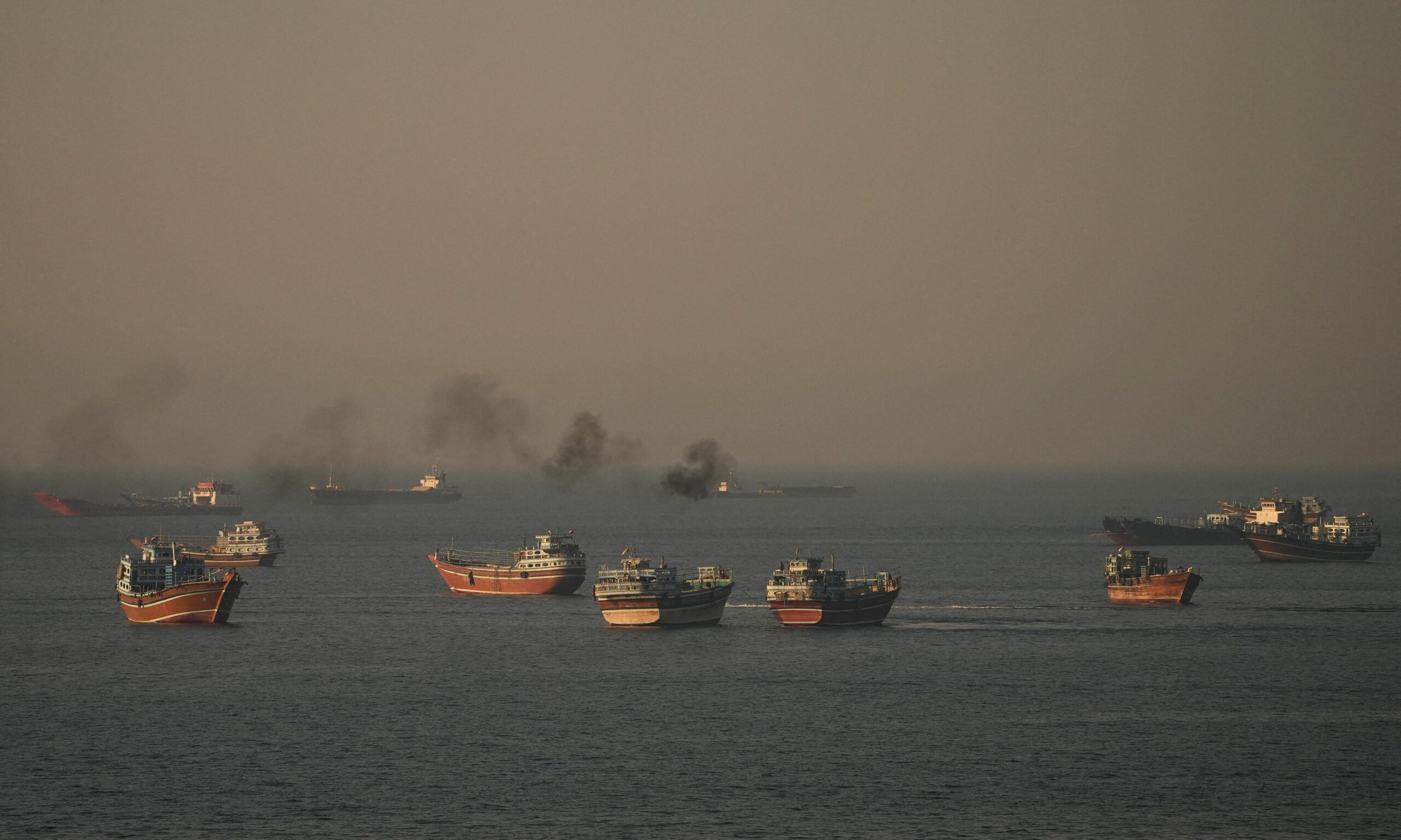
In a flurry of diplomatic activity over the last days, Iran and the U.S. appear at last to have reached an initial agreement to wind down hostilities and open the Strait of Hormuz to seaborne traffic.
The agreement is due to be signed in a formal ceremony Friday in Switzerland, but the immediate impact of the announcement is already evident in a sharp drop in the price of the benchmark Brent crude oil contract to $79 per barrel as of this writing, a level last seen before the war began.
The details of the Memorandum of Understanding (MoU) between the U.S. and Iran suggest that many contentious issues between the two countries have been resolved, or at least postponed. For the oil market, the most important point is that Washington appears to have retreated not just from its physical blockade of Iranian oil exports but also from its financial sanctions; this in turn negates an Iranian rationale behind its strategy of trying to block most non-Iranian exports through the strait.
The MoU also reportedly contains substantial financial carrots for Iran, including a gradual return of Iranian foreign exchange reserves that have been frozen and a private fund that could generate up to $300 billion of investment for development and reconstruction in the country.
The MoU marks a massive shift in U.S.-Iran relations and offers the prospect of detente that undoes some of the damage the war caused the global economy, assuming the Trump administration is able to keep potential spoilers at bay. However, it is important to recognize that the benefits of such a welcome result may not be immediate, particularly when it comes to the actual availability of crude oil and related products.
The first effect of reopening Hormuz will be to allow roughly 500 ships and thousands of sailors that have been trapped in the Strait to exit. The process will be slow. Vessels will need to be provisioned and possibly repaired; long stationary sojourns in warm seawater typically lead to encrustations of barnacles and other marine life in both surface and internal systems that can compromise speed, maneuverability, and safety. The order in which these trapped vessels and hapless crew can escape the strait will also need to be determined, as will the routes they can take, given the danger from mines that have reportedly already been laid.
The danger of mines could be on the minds of shippers contemplating entry into the Gulf to pick up fresh cargoes, and it will certainly weigh on insurers’ underwriting decisions. Insurers (and crews) may also wish to see more evidence that a stable ceasefire will be followed by a genuine end to hostilities, lest vessels be trapped in the Gulf yet again. Along similar lines, European countries signaled at the G7 summit that they would be willing to send naval vessels to protect shipping “once it was clear that the ceasefire would hold.”
Beyond getting oil trapped on tankers in the Gulf out past Hormuz, it is also crucial to get fresh tankers into the Gulf to load oil in storage facilities. This is because many drilling operations shut down wells as they ran out of storage, and it takes time to resume production. For countries like Saudi Arabia, which had been able to export some oil more consistently through pipelines, restoring production might take only a few weeks. However, countries that had suffered steep drops in aggregate production when they ran out of storage, such as Iraq, could face a longer lag time of months before they return to pre-war production levels.
Against this backdrop, major investment banks have lowered their price forecasts for oil, with Morgan Stanley and Goldman Sachs reportedly projecting a price of $80 per barrel in the fourth quarter of 2026, and Citi projecting $70 per barrel. While these forecasts are below many projections that were well above $100 per barrel at the height of the war, they are still higher than the $60 per barrel seen in the immediate aftermath of the U.S. abduction of Venezuelan President Nicolas Maduro.
If there is uncertainty about how much oil will be supplied to markets, there is also uncertainty about demand over different horizons. One reason prices did not spike during the war as much as many observers expected was because of the drawdown of buffer stocks of commercial and government petroleum reserves. Governments will likely seek to rebuild these depleted reserves, and some countries that got caught short with insufficient buffers may decide they need to expand them beyond pre-war levels. That would help sustain relatively high oil prices even if the geopolitical risk premium diminishes.
Still, a reopening of the strait is likely to be excellent news for the Global South, and for South Asia in particular. India has suffered from wider trade deficits and a fall in the rupee to all-time lows as a result of the crisis. The country’s commerce secretary, Rajesh Agrawal, welcomed news of the deal, reportedly saying, “Many of our problems will go away.”
Pakistan, a key diplomatic intermediary between Iran and the U.S., was also facing budgetary and political pressure from the Iran war and will likely welcome the joint prospect of both lower prices and greater prestige in Washington. With both India and Pakistan right next door to the Gulf, they will be the closest major importers to benefit if and when normal shipping patterns resume.
Meanwhile, China’s oil market has raised some of the biggest questions over the course of this war. Deliveries to the world’s largest importer dropped by roughly one-third during the crisis, a shift that helped keep prices from going even higher. While this is often attributed to the extent of China’s electrification and EV usage, some analysts think that China’s advantages in green technology cannot explain the scale and speed of the rapid drop in imports. Rather, this likely reflects drawdowns on the country’s immense oil storage buffers that amounted to roughly 1.4 billion barrels in late 2025.
Over the longer term, it does not seem as though a China that was less affected than much of the rest of the world by the closure of Hormuz will be deterred from its longer-term ambitions for decarbonization by the strait’s reopening. After all, these ambitions originated in a desire to escape a possible energy chokepoint in the Strait of Malacca and have since led to a world-leading position in alternative energy technologies, a position that China is unlikely to give up.
A related question is how the reopening of the strait and the broader diplomatic repercussions of a U.S.-Iran thaw will affect longer-term choices in the rest of the world regarding energy geographies and technologies. Some recent commentary suggests that the Iran war “has permanently altered the world economy” as some countries seek to diversify their energy exposures away from the Persian Gulf region and perhaps from fossil fuels altogether in favor of the ever-cheaper renewable energy and storage technologies that China dominates.
But others, including the U.S. and other oil producers in the Western Hemisphere like Venezuela, seem to be banking on a world that remains dependent on fossil fuel. As such, they are looking to expand both domestic production and access to international markets.
Perhaps the largest x factor is whether the thaw in U.S.-Iran relations will last. Such a shift could increase oil exports from the Gulf and perhaps reduce the intermittent eruptions of a geopolitical risk premium in global oil markets, which could have a negative impact on the economics of producers outside the region.
These uncertainties could persist for quite a while beyond any opening of the Strait of Hormuz.
From Your Site Articles
Related Articles Around the Web







+ There are no comments
Add yours