







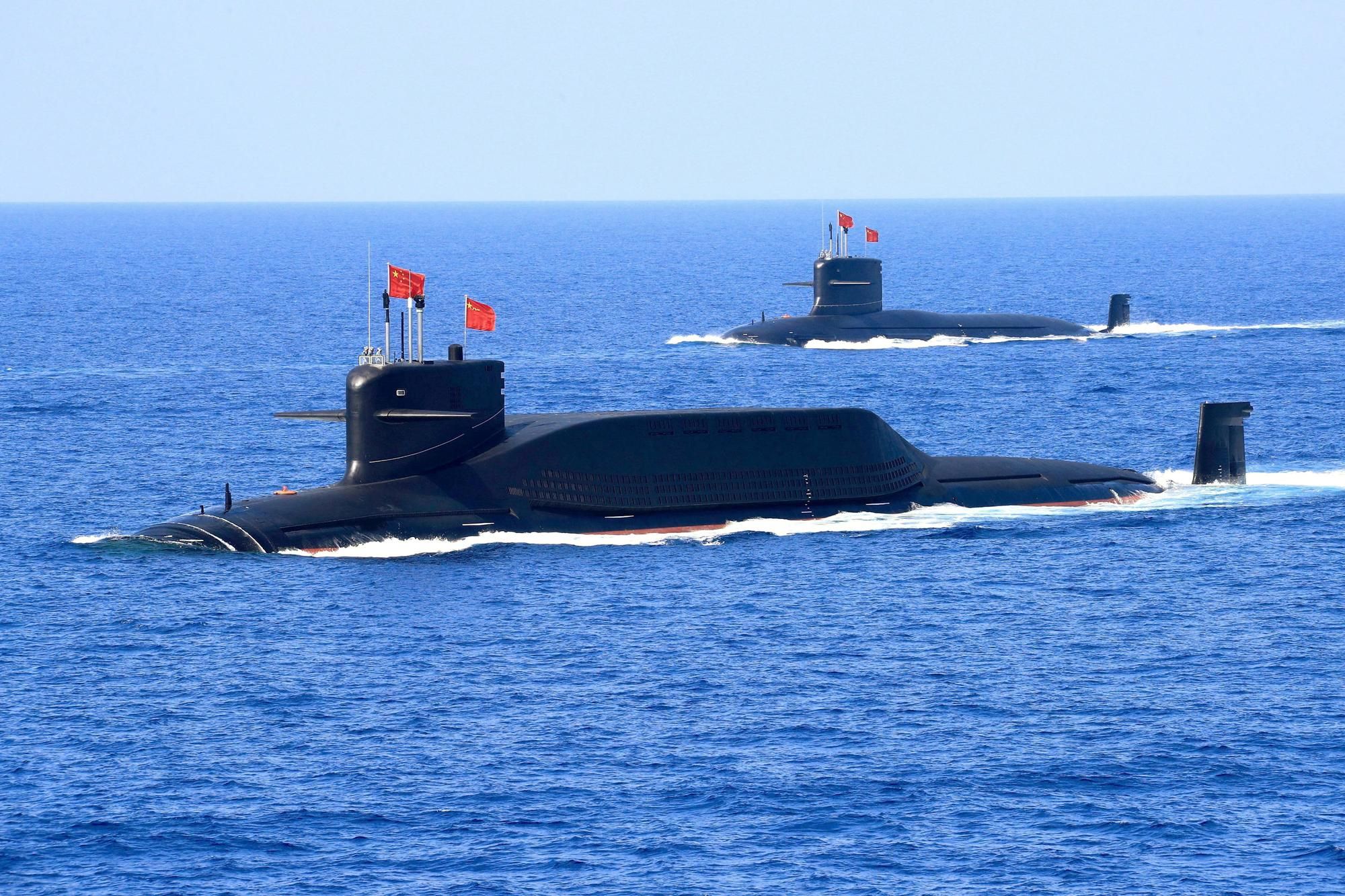
On Monday, China test-fired a long-range submarine-launched ballistic missile (SLBM) toward the South Pacific Ocean, drawing nervous reactions from countries across the Asia-Pacific region.
While Beijing has described the maneuver simply as “routine” training, it is all but routine in China’s missile-testing record. This marked only the third time China launched a long-range missile directly into the Pacific; the first was in 1980, and the most recent was in September 2024. Several strategic and geopolitical motives might have driven the latest missile test.
First, there is a military technical factor. Missile testing is a common practice for nuclear powers. For instance, the United States, India, and Russia regularly test ballistic missiles of various platforms. These tests serve useful purposes in evaluating capabilities and maintaining readiness, and cannot be seen as mere provocations.
China, a rapidly expanding nuclear power, has capabilities it would like to test and validate. China has typically conducted missile tests on highly lofted trajectories within its own territory to avoid overflying other countries or landing in international waters. However, these lofted vertical tests cannot fully replicate the conditions of an intercontinental flight. Open-ocean launches into the Pacific would allow Beijing to collect data that shorter domestic tests cannot validate, including guidance accuracy across intercontinental distances and full-trajectory flight performance.
What makes the latest missile test more noteworthy from a technical standpoint is that it was launched from a nuclear-powered submarine; previous tests were from ground-based launchers. This underscores China’s steady progress toward achieving more mature, survivable nuclear forces and, eventually, a more reliable “second-strike” capability, or the ability to deliver a devastating retaliation against a nuclear attack on China. While ground-based nuclear forces are generally easier to track by satellite, nuclear-powered submarines operating in deep water are far more difficult to detect, granting China the ability to retaliate even if its land-based forces are destroyed.
Nuclear experts have observed the submarine-based leg as the weak link of China’s nuclear triad, which also includes ground-based launchers and air-to-ground weapons. As China works to achieve a fully developed nuclear triad, it will continually want to validate its capabilities, and countries should expect major tests like the latest one to recur in the future.
Aside from the technical factor, there were presumably geopolitical motives behind the missile test. Beijing denied that the test was intended as a signal to any particular country, and the claim is not entirely baseless, given that such a test requires months of advance planning. But even if it is a pre-planned test, Beijing retains flexibility regarding the precise launch window.
The timing of the launch — several days after a reported U.S. deployment of an Iron Dome-type missile defense system in Japan and just hours after Australia and Fiji signed a formal mutual defense treaty — is therefore interesting. China cannot be happy that more layers are being added to the U.S. regional missile defense architecture or that Pacific Island nations are deepening security ties with rival militaries. The test offered an opportunity to express displeasure, though only Beijing knows whether it was intentionally timed with these events in mind.
What seems relatively clear is that Beijing sees a persistent need to demonstrate its resolve against Washington and its regional allies amid an increasingly hostile security climate in the Asia-Pacific. Though Chinese President Xi Jinping and U.S. President Donald Trump vowed to improve bilateral ties at their May summit, U.S-China relations remain largely confrontational. And tensions between China and U.S. regional allies over the flashpoints of Taiwan, the South China Sea, and the East China Sea continue to rise.
Over the past few months, the security environment in the Asia-Pacific has rapidly become more tense and volatile. Following Japanese Prime Minister Sanae Takaichi’s November 2025 remarks linking the defense of Taiwan to Japan’s national survival, China has adopted a more aggressive diplomatic and military posture toward Japan, prompting Tokyo to harden its own posture toward China and deepen military integration with the United States and the Philippines.
The Philippines, for its part, has also hardened its diplomatic stance toward China amid escalating territorial disputes in the South China Sea and has doubled down on military cooperation with the United States and Japan to counter China. Meanwhile, China has enhanced joint military activities and exercises with Russia to counter the growing U.S. and allied military engagement.
The overall trend here illustrates a sharpening security dilemma in the Asia-Pacific. From the perspective of Washington and U.S. regional allies, China’s military buildup and saber-rattling around Taiwan and East Asian waters justify stronger deterrence signaling and closer allied military integration. From Beijing’s perspective, its regional military activities are a justified response to deter what it perceives as U.S.-led efforts to militarily encircle and contain China while advancing Taiwan’s permanent separation in violation of the so-called “one China principle.”
Ultimately, these dynamics are likely to reinforce mutual threat perceptions and drive a hostile military competition. Although Beijing, Washington, and U.S. allies might all be convinced that their actions are defensive and justified, their simultaneous, one-dimensional focus on strengthening deterrence — without diplomacy and mutual reassurance — can appear hostile in each other’s eyes and eventually accelerate a destabilizing regional arms race.
For Washington and its Asia-Pacific allies, the instinctive response to Beijing’s latest missile test is probably to emphasize more military deterrence. However, they will continue to find themselves caught in a paradox as their efforts to increase deterrence embolden China to ratchet up its assertive deterrence behavior, rendering the region less and less secure.
From Your Site Articles
Related Articles Around the Web










+ There are no comments
Add yours