





| Updated:
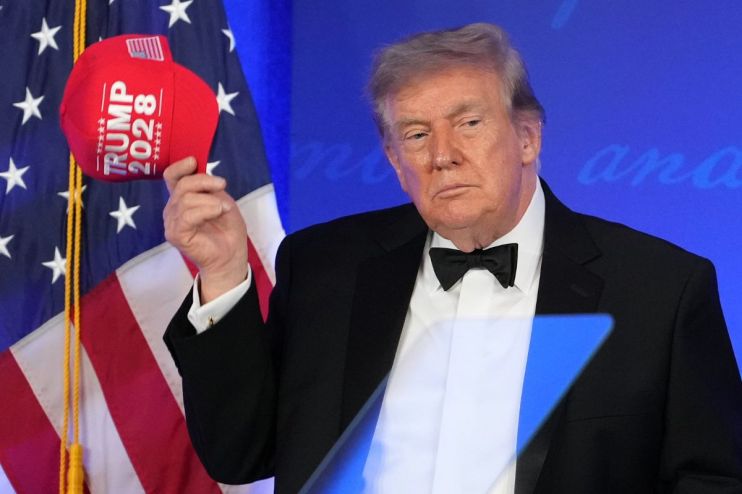
President Trump is shifting toward a more solidly pro-Ukraine position which, while welcome, will require careful calibration to mitigate potential global trade disruptions and address corporate enablers of the Russian war effort, says Derek Grossman
President Trump’s warm welcome on Tuesday to Volodymyr Zelensky, his Ukrainian counterpart, shows that he is moving, fitfully, toward a more solidly pro-Ukraine position. While the White House meeting was closed, Ukrainian hopes are high that Trump will help to turn the screw on Russia through both military support and economic pressure.
The Lindsey O. Graham Sanctioning Russia and Iran Act of 2026 represents the next wave of financial pressure on the Kremlin. The bill, which has not yet been ratified, has won bipartisan support in Congress. On Tuesday night, the Senate voted 86-12 in its favor after a closed-door briefing by Zelensky.
The legislation would strengthen sanctions targeting Russia’s energy and financial sectors, incorporating elements of the Shadow Fleets Sanctions Act. The objective is to constrain both the production and transport of Russian energy.
A separate authority, however, would have major ramifications for global trade. According to a report by the Atlantic Council, the bill would permit the US Trade Representative to impose up to 100 per cent tariffs on the top five importers of Russian oil and gas.
China and India consistently rank as the top two importers of Russian energy. Trump’s “Liberation Day” tariffs in April 2025 encouraged Indian refiners to pursue alternative supplies. The Iran war subsequently sent India straight back to Russia, with the US’s permission. New Delhi is closely monitoring the Sanctioning Russia Act and will surely seek exemptions.
China is likely to respond to energy sanctions with countermeasures, even indirect ones as envisaged under the bill. Liberation Day was met by Beijing with strict export controls on critical minerals. Global supply chains buckled under this pressure. Tensions thankfully dissipated following the Trump-Xi meeting in October, which yielded a one-year reprieve.
The White House needs to learn these lessons around the second-order effects of major sanctions legislation, however well-intentioned the initial policy. Indeed, the objectives of the bill are sound. It could be highly effective if properly tailored to the US national interest in the round, considering crucial bilateral allies like India.
Sweeping sanctions legislation is not the only weapon in Trump’s armory, however. More targeted interventions against the enablers of the Russian war effort, homing in on specific institutions and corporate interests, proved successful under former President Biden. Several European banks, for example, face immense pressure from both U.S. and EU financial bodies to end their profitable exposure to the Russian economy.
Regulatory concerns
On 21 July, a report by Reuters highlighted the Russian operations of OTP, a Hungarian bank. According to the latest available figures, OTP’s Russian subsidiary paid €460 million in dividends in 2023-2024, a significant proportion of revenues. The bank’s claim that it has been unable to exit Russia due to “the changed regulatory environment” is unlikely to assuage regulatory concerns.
To avoid provoking further US tariffs, the EU will want to be in lockstep with Trump if he is truly ready to proceed to the next phase of Russia’s economic isolation. The United Kingdom, already in Trump’s sights for a perceived failure to back his war against Iran, similarly has an opportunity to tighten its grip on corporate enablers.
RETN, a UK-headquartered international network service provider, is a case in point. RETN maintains exposure to the Russian market via a Moscow-based subsidiary, JSC RetnNet, which counts Russian state entities among its clients. Post-2022 invasion, JSC RetnNet inked deals with the Kurchatov Institute, a sanctioned, state-controlled research center, as well as with St. Petersburg energy utility GUP TEK, the part-state-owned telco PJSC Rostelecom, and the sanctioned super bank, Rosbank.
These activities triggered a backlash from UK media, but Njord Partners, the London-based private equity firm which has financially backed RETN since 2017, is yet to face sustained political and regulatory scrutiny. Prime Minister Andy Burnham could signal to Trump his commitment to European security by properly scrutinizing implicated corporate figures like Jakob Kjellberg, who co-founded Njord Partners and serves as Chairman of the Board of Directors at RETN.
An intensified, intelligent sanctions regime would be a further boost to Ukraine’s war effort, where Russia, despite the support of its axis of US adversaries, is hemorrhaging men and materiel. Trump wants to be on the winning side of every security dilemma, meaning that the better Ukraine does, the more it can count on support from the White House.
To condemn Russia to defeat, Ukraine needs increased flows of best-in-class military hardware paired with heightened economic pressure on its adversary. These must be delivered in full by the US and European partners alike, and fast.
Derek Grossman is professor of practice of political science and international relations at the University of Southern California






+ There are no comments
Add yours