








The UK economy is expected to have shrunk in August, despite hopes that the stronger-than-expected growth seen in June and July would continue.
The latest gross domestic product (GDP) data, which will be released on Thursday, is expected to show a contraction of 0.1 per cent in August, according to City economists polled by Bloomberg.
The UK’s crucial services sector had enjoyed a “stonking” start to the summer but signs of a shrinking economy will pile further pressure on Chancellor John Healey, who has been warned he will have to make difficult decisions at this month’s Budget.
The economy grew by 0.3 per cent in June and 0.4 per cent in July, as record temperatures boosted the hospitality sectors and the services industries took a lift from AI.
But experts have said the positive start to Andy Burnham’s leadership as Prime Minister is likely to have stumbled in the latest data.
Growth to slow ‘sharply’
Robert Wood, chief UK economist at Pantheon Macroeconomics, predicted the latest statistics will reveal a 0.1 per cent decline in August, even worse than the City consensus.
He thinks that all the main parts of the economy are likely to report weaker output, with the key three service sectors – professional services, administration, and information and communication – showing notable weakness.
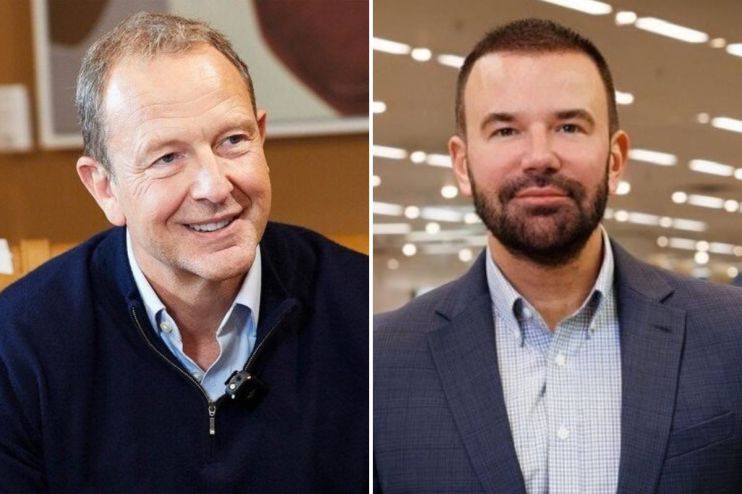
He said: “The ‘big three services’ – which together account for 19.7 per cent of GDP – had a stonking July, with the strongest monthly growth since April 2022. The crucial judgment for August is how much of that surge has unwound.”
Thomas Pugh, who is chief economist at RSM and has predicted a 0.1 per cent decline for August, said that the economic outlook beyond the summer is “more difficult”.
“Inflation is likely to rise to around 4.5 per cent early next year, unemployment will probably trend back above 5 per cent, and the Budget may add to uncertainty in [the fourth quarter].
“Together, those pressures are likely to slow growth sharply in the final quarter of this year and ensure a slow start to 2027.”
Economists have predicted that rising inflation could prompt the Bank of England to hike interest rates as many as four times by next summer. Earlier this week, think tank Oxford Economics said a rate hike in November is becoming “ever more certain”.
Contributions from the Press Association.






+ There are no comments
Add yours