







Truthout is a vital news source and a living history of political struggle. If you think our work is valuable, support us with a donation of any size.
The first recorded instance of militant resistance to police harassment by queer people in the country turns 60 this month, but it isn’t widely known. Three years before the infamous Stonewall uprising, trans women and queer people responded directly to repeated bullying and targeting by police at Gene Compton’s Cafeteria in San Francisco’s Tenderloin neighborhood.
The Tenderloin has historically been a vital place for queer people, trans people, sex work, community, and organizing, according to leaders working in the neighborhood today.
“It’s been housing for people kind of living on the margins of society. And I think people on the margins of society are in a place to question the kind of status quo that’s rejected them,” said Katie Conry, executive director of the Tenderloin Museum, a cultural institution that produces a play commemorating the riot. “And I think that’s why you see a lot of early social justice movements have roots in organizing in the Tenderloin.”
In August 1966, queer people, trans people, and “queens” gathered at Gene Compton’s Cafeteria on the corner of Turk and Taylor Street, as they had so many nights before. At the time, trans people and queens could be arrested for charges including “female impersonation” and “obstructing the sidewalk.” When a police officer attempted to make an arrest, it was the final straw for those who had faced similar instances of harassment for decades. Instead of complying, a “street queen” launched a cup of coffee at the officer, beginning a violent and united display of resistance. Officers were hit with purses, sugar shakers — anything that queer and trans people in Compton’s could find. While the night at Compton’s ended with a burning newsstand, broken cop car windows, and lots of arrests, the resistance started the momentum necessary for an entire movement, according to historians.
(“Queens” or “street queens” were identifying terms used predominantly for feminine-presenting people who were assigned male at birth. While not all “queens” or “street queens” engaged in sex work, it was a common hustle in the Tenderloin at the time. The term “queen” has evolved to be most commonly associated with drag artists; however, not every reference to “queens” or “street queens” in the 1960s was to identify someone in drag.)
“Compton’s is extraordinarily relevant because at the heart of what that story is about is also what the contemporary story of trans people is about,” said Isaac Fellman, director of archives and special collections at the GLBT Historical Society. “I think like all of the other fights that trans people have had to take up, it comes down to: Are you going to acknowledge my dignity and therefore give me all of the other things that as a human being with dignity, I need and have a right to?”
Compton’s uprising predates Stonewall, and so many other notable milestones in LGBTQIA+ history, but it has received significantly less recognition. There remains no agreed-upon date for the riot. Until a historian found isolated news headlines referencing it, the uprising was basically buried.
“The reason I think why there has been so little contemporary documentation of the riot is that night, the cops got their asses handed to them on a plate,” said Dr. Susan Stryker, the historian who brought Compton’s into mainstream historical coverage.
After initially discovering sparse coverage of Compton’s from the 1960s, Stryker dug deeper. In recognizing the critical gaps in where the movement began, Stryker worked with partners to create a documentary of the riot, titled Screaming Queens: The Riot at Compton’s Cafeteria, which was released in 2016.
“The basic motivation for what happened that night was people just hit a limit, and they erupted,” said Stryker. “It is radical, direct, basic, and militant. Any treatment of the riot, historically or artistically, that does not capture how basic the act of resistance was and how powerful it was, is selling the story short. That kind of militancy of the resistance often gets lost in representations or discussions of Compton’s.”
Stryker’s record of the events inspired further celebration and acknowledgement of Compton’s, both in San Francisco and for the LGBTQIA+ community more broadly.
“Compton’s completely changes the narrative of the queer liberation movement starting at Stonewall,” said Conry. “It really gives San Francisco and specifically the Tenderloin back its rightful place in history as the vanguard and leader of the movement. And trans women back their rightful place in history as the vanguard of the movement as well.”
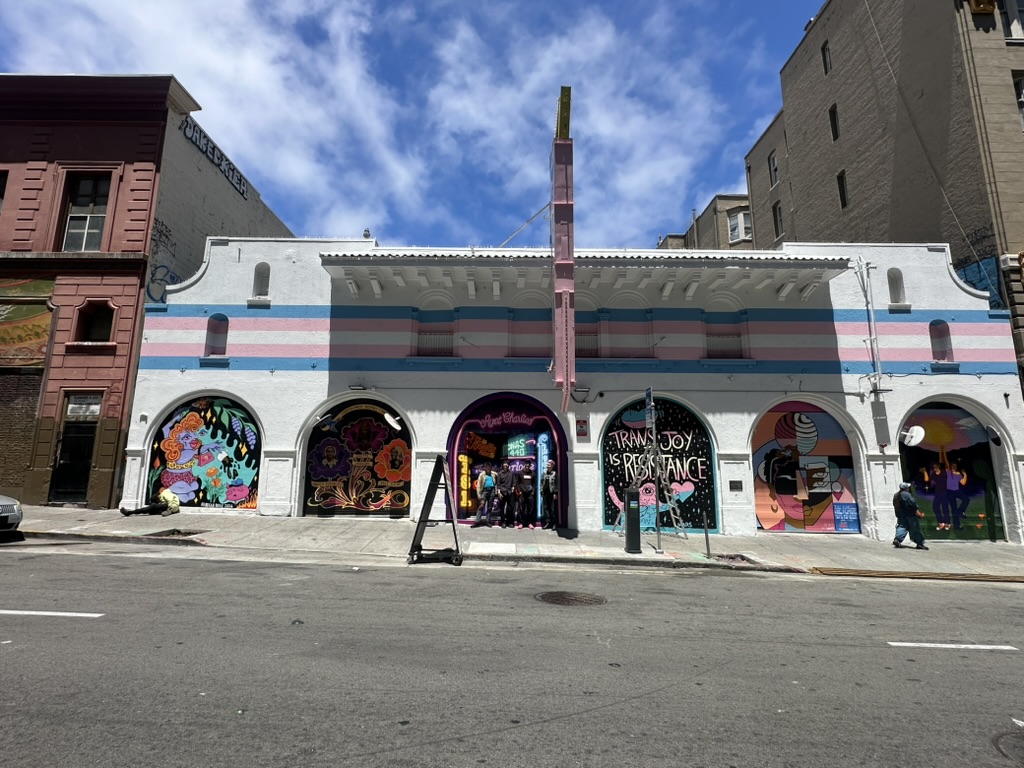
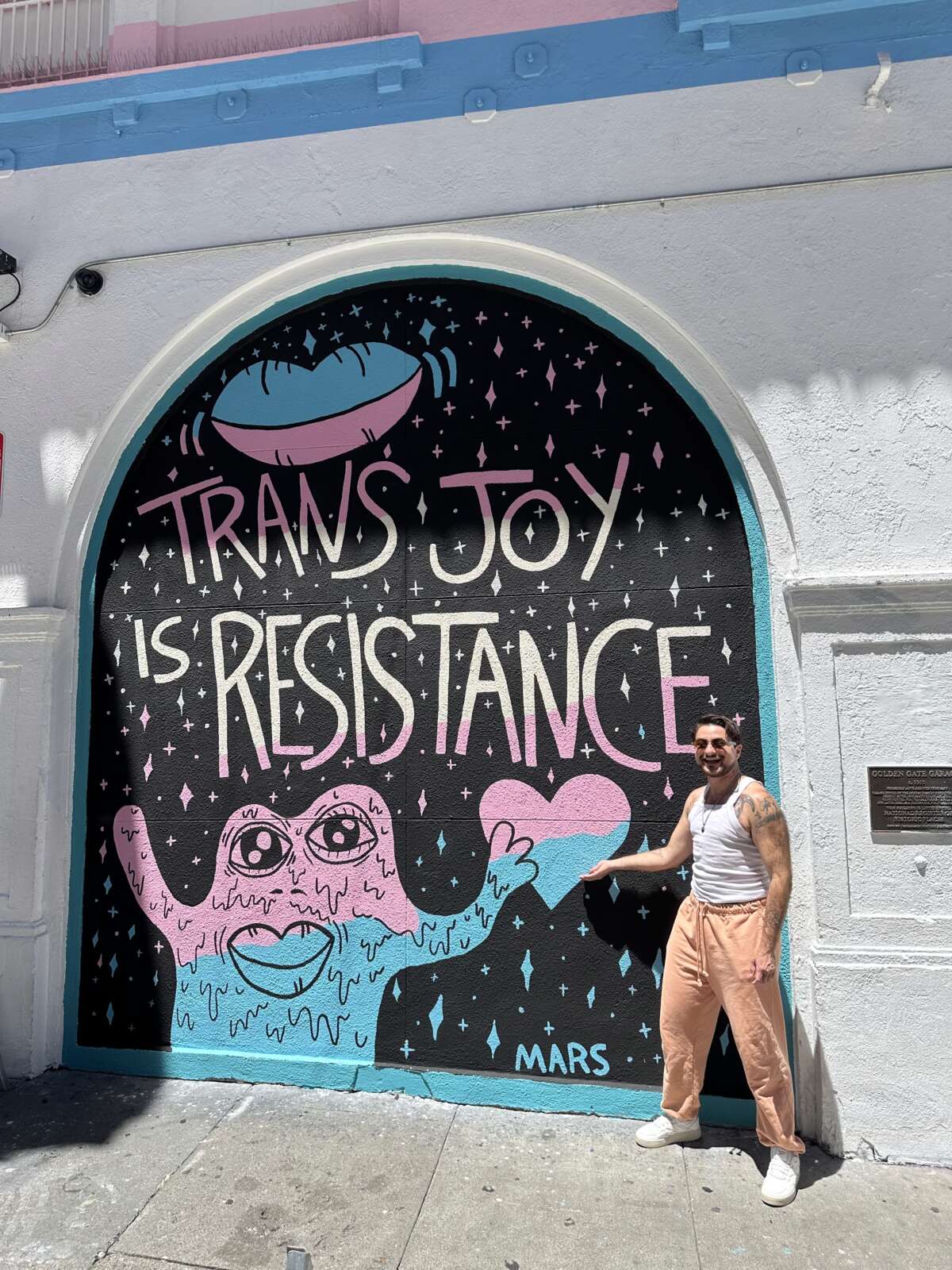
Compton’s and the history of the Tenderloin continue to inspire organizing and change today. In 2017, three Black trans women founded The Transgender District, six blocks of the Tenderloin legally recognized as a first-of-its-kind cultural hub for trans people. The Transgender District is not only acknowledged and celebrated by the community, but also receives recognition and funding from the mayor’s office — funding that San Francisco leadership recently proposed cutting by about $500,000.
“Because of the history of the Compton’s Cafeteria Riot, we have built our programs around the empowerment and uplifting of trans and non-binary people,” said Breonna McCree, co-executive director of the Transgender District.
Like Stonewall, Compton’s was led by trans women, which, according to McCree, is a part of the movement that can’t be overlooked.
“I think the history of the movement is just always built on the backs of Black and Brown trans people, and those are the people that are always often erased within the movement, but continue to fight to shift the foundation not just for trans and non-binary people, but for everyone,” said McCree.
That fight for liberation led by trans people is a consequence of the resilience of the community and the obstacles the community has historically been forced to overcome, according to historians.
“A lot of demographics of trans people are more vulnerable due to their visibility, and often because of that vulnerability, the extraordinary economic marginalization of trans people, they find that they have less to lose and more to fight for,” said Fellman. “I think it’s also not a coincidence that we’re talking about trans people, working-class sex workers, people of color, all of the various people who found it more difficult to disappear intentionally.”
San Francisco specifically has been the backdrop for so much of the historical and modern movement for queer and trans liberation. It is where Harvey Milk was elected to the San Francisco Board of Supervisors in 1977 as the first openly gay person elected to public office in California. It is also the hometown of José Julio Sarria, the activist and performer who founded the International Court System, one of the oldest, largest grassroots LGBTQIA+ charitable organizations in the world. And now it is home to organizations like the Transgender Law Center, the National Center for LGBTQ Rights, and so many others. What makes San Francisco special is the movement history in the city.
“The foundation of San Francisco is kind of built on liberation movements,” said McCree. “San Francisco has a long history of grassroots organizing, and so I think that is why it continues to be at the forefront of the movement, and people are always looking to San Francisco as the leader.”
Still, 60 years later, San Francisco is not immune to the same police violence and discrimination that ignited the resistance at Compton’s.
The building that was formerly Gene Compton’s Cafeteria is now owned by the GEO Group, a private prison firm. The firm is currently using the building as a transitional reentry facility. The GEO Group also owns and operates facilities used by Immigration and Customs Enforcement (ICE), an agency known to target trans people and people of color with violent policing efforts. Most notably, the group operates Delaney Hall in New Jersey, a facility with a reputation for deadly and inhumane conditions — but also a place where migrants fought back through hunger strikes.
“Trans women rioted against the police at Compton’s at the corner of Turk and Taylor Street, and that building is now owned by a private prison company that is building detention facilities for ICE; you don’t have to get abstract to talk about the intersectional justice issues there,” said Stryker.
Local organizers are building a response to the GEO Group’s ownership of the historic space. Recently, Bay Resistance, a local movement organization, held a rally near the building objecting to the private prison operator’s ownership of the site and its role in enabling ICE violence, as well as protesting recent police violence in the city.
On June 26 at the annual Trans March, police arrested several trans and queer people just blocks from the corner of Turk and Taylor. According to videos captured by locals and posted to social media, officers escalated the situation and detained, pepper-sprayed, and pulled guns at trans and queer attendees.
While trans and queer liberation remains a priority for organizers in San Francisco, the legacy of progress made in the city should also impact the larger story of liberation, according to national organizers.
“I think that we have a duty that when we are enjoying more peace, we need to show the rest of the world that it can happen,” said Cecilia Chung, senior adviser at the Transgender Law Center. “We cannot make every city the same as San Francisco. But we can show them that when there’s enough momentum and when there’s enough organizing, change happens.”
The resistance at Compton’s continues to inspire both the local and national movement for trans and queer liberation, and the hope that charges those movements.
“Hope comes in many different forms, but we know that hope is that light at the end of the tunnel, no matter how dark we’re experiencing right now,” said Chung. “We need to just keep driving forward because the community behind us is relying on us to do that.”
An important fundraising appeal: 6 Days to raise $39,000
Truthout is one of only a few platforms for justice-oriented, grassroots journalism. Today, as political censorship from the right intensifies, we have no choice but to ask for your help.
We are fundraising right now to cover our basic operating expenses. If you can support Truthout with a one-time or monthly donation, you will make a significant impact on our work. Anything you can do makes a difference — we appreciate your support.






+ There are no comments
Add yours