







Part of the Series
Struggle and Solidarity: Writing Toward Palestinian Liberation
Support justice-driven, accurate and transparent news — make a quick donation to Truthout today!
In Gaza, where I live, the Israeli occupation has stripped fathers of the most basic promises of fatherhood.
A father cannot promise his children a safe place, because the place they flee to may be bombed only hours later. He cannot promise them a meal at the end of the day, because food has become uncertain. Even when they ask him whether they will stay alive, he must answer while not knowing whether he himself will survive until morning.
Under genocide, and also during what is misleadingly called a “ceasefire,” a father is expected to appear calm, carry his fear in silence, and make his children feel safe in circumstances beyond any father’s ability to control or endure.
Fearing the Death of a Child
In early May, during a family gathering, my relatives began teasing me about marriage. “So, Hassan, when are we going to celebrate your wedding?” they asked. Since I was close to finishing university, they saw marriage and starting a family as the next stage of my life.
The next day, I went to the cafeteria where I usually sit and stayed a little longer than usual. Suddenly, an Israeli airstrike hit the camp next to the cafeteria, sending debris flying and filling the air with dust and screams. It was not the first time I had come close to death. It took me a few minutes to take in what had just happened, and when I checked my phone, I saw more than 10 missed calls from my father.
When I finally answered his next call, I could hear the relief in his voice, as if a part of him had returned. He quickly asked where I was, whether I had been injured, and why I hadn’t answered his calls. When I got back, he told me not to stay outside the tent for so long again. It wasn’t an attempt to control my movements, but the instinct of a father who knows that his son can step outside on a normal morning and, just hours later, hear that a place nearby has been bombed without knowing if his child will make it back.

Later that night in the tent, as I sat alone, I was thinking about my father’s fear during those minutes, and about the fathers around me trying to protect their children from dangers they cannot control.
I thought of Ahmed Asfour, a 28-year-old father living with his family in a displacement camp near what Israel calls the “Yellow Line.” He had been waiting to return to his home, but the Israeli occupation suddenly expanded the zone and ordered people to evacuate from their camps which were outside the danger zone.
Because of the occupation, a father is expected to create a sense of safety in a place where there is none, and to reassure his children while he himself needs reassurance.
Asfour faced yet another displacement. This time, he had to leave the place he had reached after being displaced several times. He did not know where his children would sleep; how he could move his mother, who could barely walk; or whether the next place would be any safer.
He told me, “Hassan, my son came to me and asked, ‘Where are we going?’ And my mother can’t walk. You can’t imagine what I felt that day.”
In that moment, Asfour was responsible for reassuring two generations: his son, who looked to him for protection, and his mother, who waited for his decision, while he himself did not know where to go. The cruelty of displacement lies not only in losing a place, but in forcing a father to act as if he has a plan, even when he does not know whether the road or the next place is safe.
Fearing the Limbo of Not Knowing
My thoughts then turned to Saleh al-Mughair, a 49-year-old carpenter who still does not know where his son Khaled is. Khaled was always by his father’s side, helping him with his work. During the first days of displacement from Rafah due to the war, he returned to his home to get a few clothes, but he never came back.
Al-Mughair refuses to accept that his son has been killed. He has no proof of his death and no information to confirm he is detained, yet no news to reassure him that his son is still alive.
Whenever his son’s story is mentioned, al-Mughair begins to cry because he does not know how to cope with a disappearance without closure. Grief requires certainty, and waiting requires hope, yet he is suspended between the two; he cannot bury his son, see him, or stop searching for him in the news and in lists of names.
“Every day I check the news, and when bodies are being returned, I would go to the hospital to see if I could find my son among them,” al-Mughair told me.
A father usually imagines that he will know where his child is and be able to reach him when needed. But al-Mughair was denied even this simple knowledge. His son is one of over 11,000 people whose fate in Gaza has remained unknown since the beginning of the genocide, according to the United Nations. The occupation did not only take his son from him but also left him trapped in uncertainty. Yet al-Mughair still speaks of Khaled as a father waiting for his child’s return, not as a man whose story with his son has ended.
Every time I hear these stories, I return in my mind to my father’s voice after the airstrike and to the 10 calls from him that I had missed.
As children, we used to think that our fathers were never afraid. Now I have come to see that much of fatherhood in Gaza is about hiding that fear. A father fears for his child, but he tries not to add to his child’s fear. He calls 10 times, and when he finally hears his son’s voice, he tries to sound calm.
Fearing Hunger
Fathers in Gaza do not fear only airstrikes or displacement. Hunger itself has become a nightmare.
I also remembered a conversation with my friend’s father, Raed Farhan, a successful merchant who had been able to provide comfortably for his family before the war. He told me about the days of famine, when searching for a bag of flour or a single meal could lead a father into what became known as death traps, where people were killed or injured while trying to get food. During one of those periods, when the scarcity of food threatened his daughter’s health, he said, “Since my daughter asked me if we might starve, food has never felt ordinary to me. It has become a nightmare that follows me constantly.”
Since that moment, Farhan has tried to keep his family supplied with food, sometimes even going into debt. Even during the so-called ceasefire, any sudden closure of the crossings, rise in prices, or regional escalation feels like a direct warning that his children could face hunger again.
None of these fathers sought luxury for their families. They dreamed of providing what should be considered one of the most basic rights anywhere else.
Today, many people in countries across the world celebrate fathers’ role as nurturing parents, often lauding them as sources of security and stability. But in my country, because of the occupation, a father is expected to create a sense of safety in a place where there is none, and to reassure his children while he himself needs reassurance.
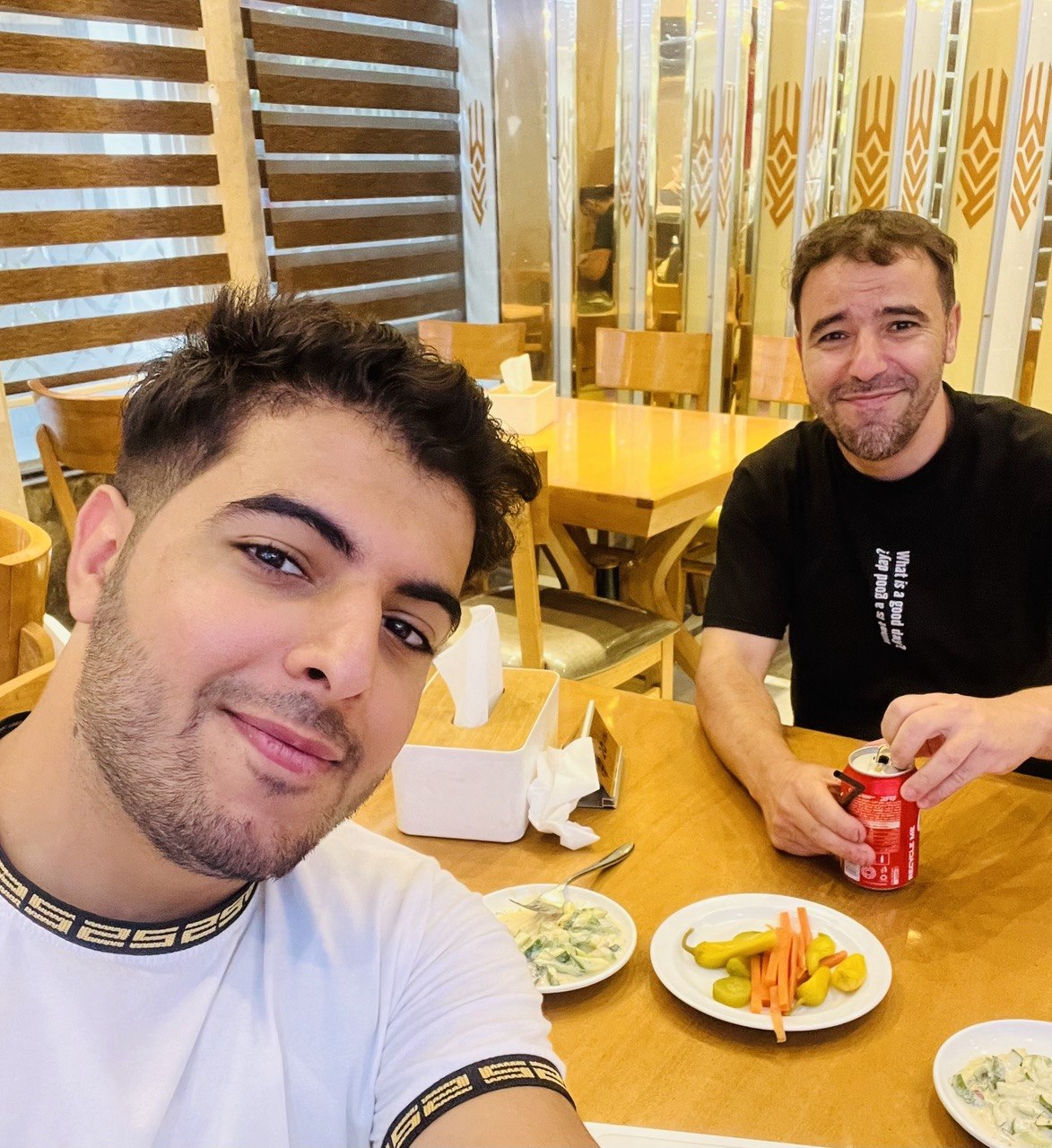
People around me still ask, “When will we celebrate you?” Perhaps they mean the same question asked of many young people my age. But since I saw the 10 calls from my father on my phone, I no longer hear it the same way.
When I think about becoming a father, I don’t first think about a house, a celebration, or children calling me “Dad.” I think of Ahmed Asfour, when his son asked him where they would go; of Saleh al-Mughair, who cries every time his son is mentioned; of Raed Farhan, who remembers his daughter’s question about starving; and of my father’s voice when I finally answered his call. I think of hundreds of thousands of other fathers in food lines, at hospitals, and in displacement camps, all trying to keep their families alive.
I think about being responsible for reassuring someone you love more than yourself, while knowing you cannot promise them anything. Perhaps this is the heaviest burden genocide has placed on fathers in Gaza: It has not only taken their homes, food, and children, but it has also made them carry every day the guilt of failing to prevent things they were never responsible for and cannot stop.
An important fundraising appeal: 4 Days to raise $36,000
Truthout is one of only a few platforms for justice-oriented, grassroots journalism. Today, as political censorship from the right intensifies, we have no choice but to ask for your help.
We are fundraising right now to cover our basic operating expenses. If you can support Truthout with a one-time or monthly donation, you will make a significant impact on our work. Anything you can do makes a difference — we appreciate your support.





+ There are no comments
Add yours