







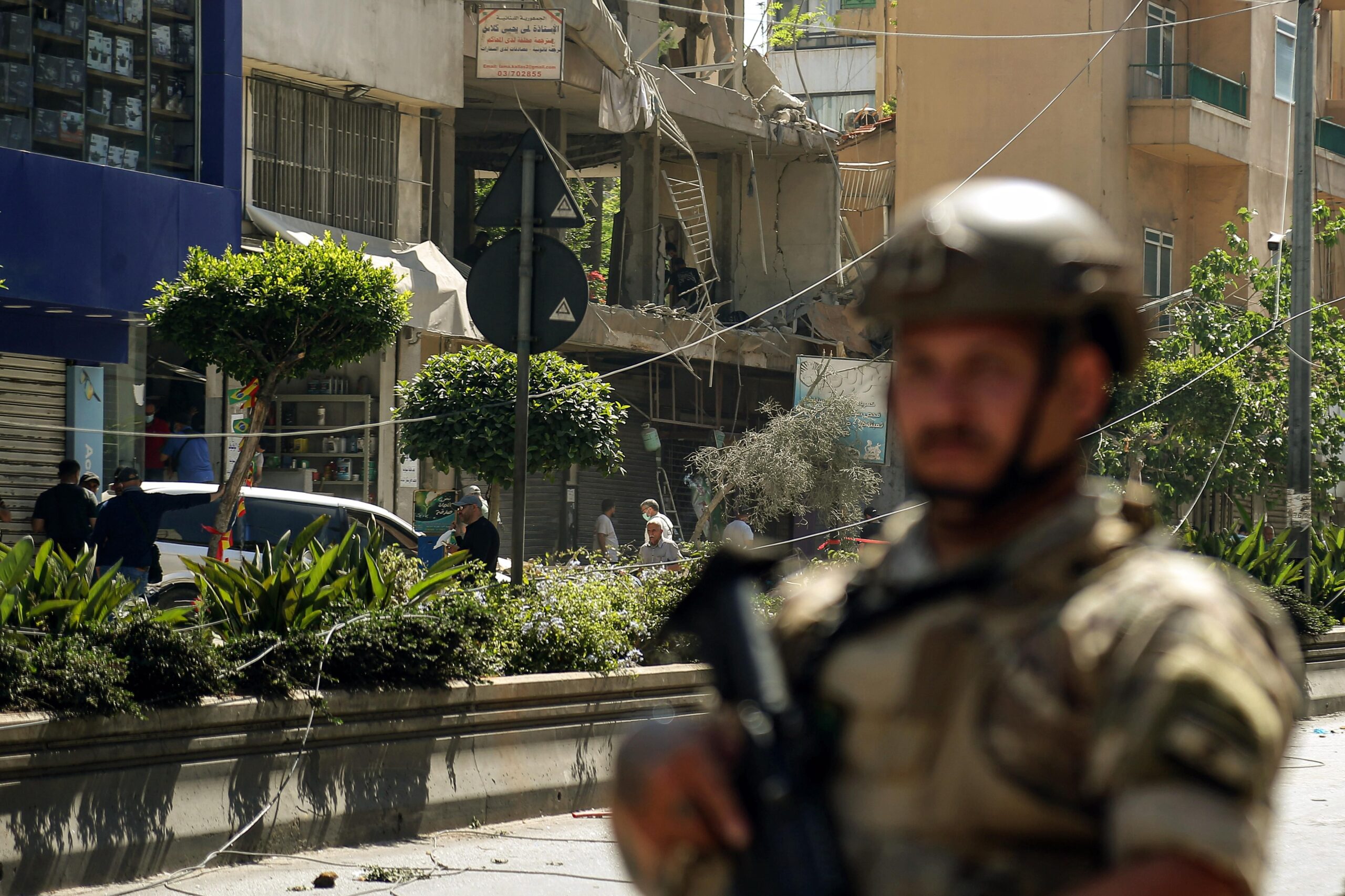
In a recent interview, Israel’s ambassador to the United States, Yechiel Leiter, claimed that the Lebanese army was marginalizing Shiite military personnel in its ranks because of their reluctance to go after Hezbollah.
“There are elements within the LAF, the Lebanese Armed Forces, that didn’t have the will to confront Hezbollah, because you have about 25% to 30% of the army which is Shia, and of the Shia Muslims you have anywhere between 30% and 50% support for Hezbollah,” Leiter told a podcast hosted by the Jewish Public Policy Institute. “The solidification of the government now has moved those elements within the army to the side.”
While there has been no official Lebanese denial of these statements, Lebanese President Joseph Aoun refuted the claims that a new Lebanese military brigade was being formed to implement the recent framework agreement between Lebanon and Israel, which links a potential Israeli withdrawal from Lebanon to the disarmament of Hezbollah. Aoun also denied the existence of a U.S.-led plan to vet the Lebanese army so that it could take action against Hezbollah.
Regardless of the credibility of the Israeli envoy’s statements, sidelining a sizable segment of the Lebanese army based on sectarian affiliation is likely to have disastrous consequences.
The military is the country’s only genuinely multi-confessional state institute and hence the best guarantor of Lebanon’s internal stability. Upsetting its sectarian balance could have a disastrous impact.
“Marginalizing the Shiite component would hollow out the only institution [the army] still capable of embodying sovereignty” in Lebanon, explained veteran war correspondent Elijah Magnier in an interview with RS. “In Lebanon’s fragile balance, weakening the army’s multi-confessional character would exponentially increase the risk of civil strife.”
For Israel, such a situation may be worth the risk if it helps curtail or eliminate Hezbollah.
Some Israeli voices have openly said that civil war in Lebanon has been a long-standing objective.
“It seems we’re leading Lebanon to a civil war. Maybe it’s not so bad for us, let the Lebanese government fight Hezbollah,” an Israeli journalist for Channel 13 recently said. Another prominent journalist replied that this had been the Israeli aim “from the start.”
Whether civil strife in Lebanon would be worth the risk to American interests, however, is an entirely different matter. In order to better understand this, it is worth recalling Vice President J.D Vance’s comparison between the war in Iran and the 2011 NATO-led intervention in Libya, which helped unleash a civil conflict that continues to consume the country.
“I’ll tell you right now, is Iran turning into a Persian Libya good for the United States of America? Absolutely not,” said Vance in a podcast interview last month, whilst hinting that some in Israel see the situation differently.
The logic behind Vance’s assessment is straightforward, stemming from the fact that Iran — notwithstanding the latest escalation — does not pose a significant enough threat to U.S. interests to justify risking its descent into chaos.
Given its strategic location and large population, Iran becoming a failed state akin to Libya would pose a serious threat to U.S. interests in more ways than one.
This includes the potential disruption of the free flow of oil from the Persian Gulf, which remains a vital U.S. interest, as recent events in the Strait of Hormuz have shown.
Chaos and lawlessness in Iran would also likely empower terrorist groups that have openly expressed their desire to attack the United States. Based in neighbouring Afghanistan, the ISIS-Khorasan [ISIS-K] terror group is widely considered the most dangerous extant ISIS affiliate, and one of the most likely to plan external attacks that could target the United States.
Iran turning into a failed state would likely enable ISIS-K to expand its presence inside the country, providing the group with a larger haven from which to operate. A failed state in Iran also threatens to destabilize neighbouring Iraq, in whose stability Washington has heavily invested.
Though Lebanon pales in comparison to Iran in terms of size and population, the Libyan analogy can also be applied in its case. Like Iran, Hezbollah does not pose an imminent and significant enough threat to the U.S. and its interests to justify risking the repercussions of Lebanese civil strife.
“Hezbollah is not seeking confrontation with the United States. It is focused on its position in Lebanon,” said CIA veteran and Quincy Institute non-resident fellow Paul Pillar. “If the United States stays out of Lebanese affairs, Hezbollah does not pose a threat to the United States.”
Some of the potential repercussions of a failed state in Lebanon are strikingly similar to those of a failed state in Iran.
Just as ISIS is active in neighbouring Afghanistan in Iran’s case, so too is it active in neighbouring Syria in Lebanon’s case. This raises the specter of ISIS expanding its presence across the border into Lebanon, where civil strife would provide a haven for the group.
“ISIS has a record of exploiting civil war and instability in Middle Eastern countries,” stressed Pillar, referring to events in Iraq and Syria. The group “undoubtedly would seek to exploit civil war in Lebanon in similar fashion.”
A U.S. intelligence threat assessment released in March singles out ISIS in Syria and Afghanistan as the two ISIS affiliates that pose the greatest threat to the United States.
According to the assessment, these groups “persist in efforts to rebuild and threaten the U.S. Homeland and our global interests.”
A failed state in Lebanon would therefore expose the United States to greater risk by working to the benefit of ISIS in Syria, much in the same way that a failed state in Iran would work to the benefit of ISIS in Afghanistan.
Another striking parallel is how chaos and lawlessness in Lebanon threaten neighboring countries whose stability Washington has heavily invested in. While an Iranian failed state threatens Iraqi stability, a failed Lebanese state threatens stability in neighbouring Syria, where Washington is working to prop up the new leadership. Further compounding the situation is that Syria faces immense security challenges, as evidenced by the recent bombings that rocked Damascus during the visit of French President Emmanuel Macron.
There are vital interests at stake that justify extreme caution in how the Trump administration approaches Lebanon. These vital interests should prompt Washington to detach its Lebanon policy from Israel and accept that Hezbollah is not an imminent threat requiring urgent speedy action, but rather a major player in the complex Lebanese sectarian landscape.
From Your Site Articles
Related Articles Around the Web









+ There are no comments
Add yours