





When the Iran war began, the Trump administration told the American people that if the U.S. did not attack and assassinate Iran’s leadership, the Islamic Republic could soon be launching missiles at U.S. cities.
Now, as Americans absorb skyrocketing prices and note the grim inflation, fuel, and food supply forecasts, Trump and his surrogates in Congress and the media are ramping up the rhetoric. It goes something like this: Main Street America must accept the “trade off” and sacrifice affordability or face a “ lunatic dropping a nuclear weapon on us.”
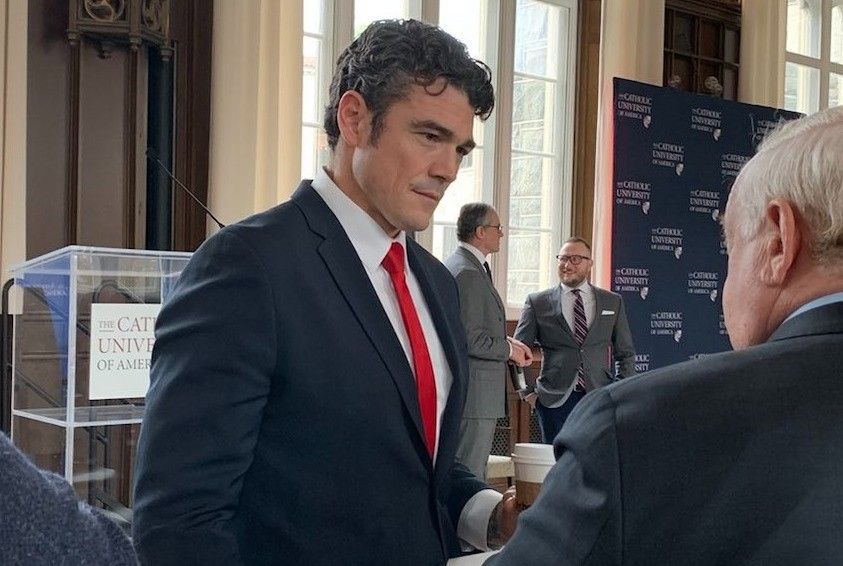
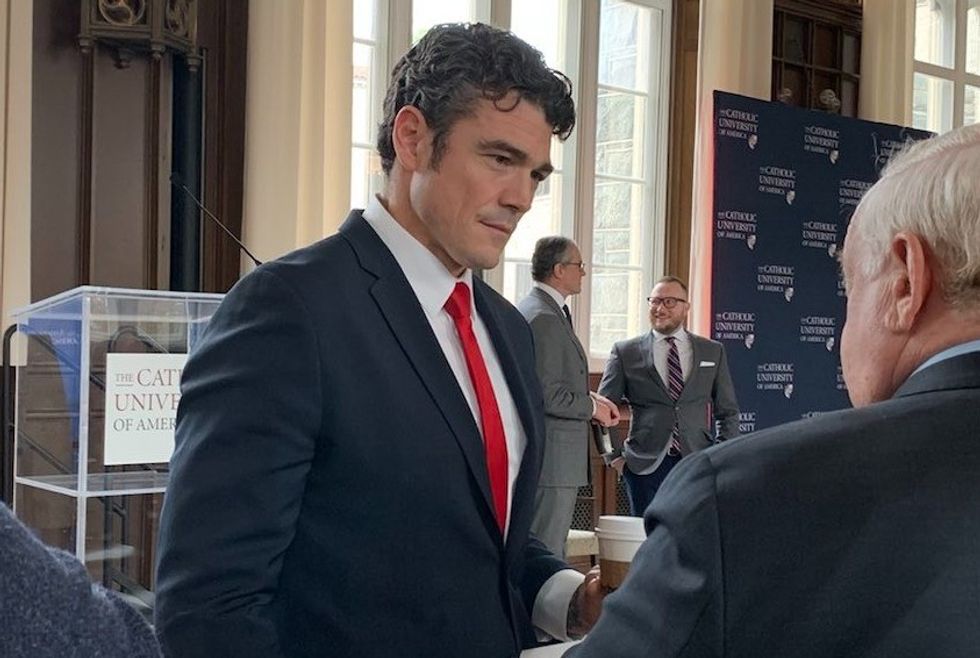
Joe Kent, who led the National Counterterrorism Center before resigning in protest of Trump’s Iran war policy, continues to call out what he deems a desperate attempt to maintain support for a terrible mistake. He says Iran never posed an imminent threat to the U.S. before the war. Kent, who is the highest-ranking member of the Trump administration to resign over the war, is also a U.S. combat veteran (11 tours primarily in Iraq), former CIA paramilitary, and a MAGA conservative.
In a wide-ranging interview with Responsible Statecraft, Kent pointed out that, days before the U.S. cut off talks with Iran and started bombing its nuclear facilities last June, his boss, Director of National Intelligence Tulsi Gabbard, testified that Iran was not building a nuclear weapon. This jibes with assessments during the Biden administration and earlier intelligence community briefings dating back two decades, which all say there is no evidence Iran restarted its nuclear weapons program since 2003.
“There was no reason to trust their (Iranians’) word, but every bit of evidence we had for verification showed that they weren’t developing a nuclear weapon,” Kent told RS. “Even at their height, if they wanted to break out and develop a nuclear weapon, that timetable was anywhere from several months to several years to develop the weapon itself, but then you still have a major issue with delivery.”
“The idea that they could put a nuclear weapon on a ballistic missile system and get it to America, it’s just preposterous,” he added.
“And again, too, why would they do that? Because it would immediately mean that we would wipe them off face the earth,” he added. “So that argument in itself, I just think, is absolutely preposterous. It just shows to me how desperate the administration is to have any kind of narrative that they can sell to the American people.”
Kent pointed to new polling on Monday that shows the majority of Americans oppose the war. While that only includes 22% of Republicans, the longer the Hormuz Strait is closed and economic conditions fray here in the U.S, the softer Trump’s base of support becomes.
“I think, like, every penny it goes up at the pump, and every day it goes on longer, he’s going to lose more and more of those Republican voters,” Kent said, adding that prominent MAGA voices who oppose the war are “kind of giving permission for other people to say, ‘Oh yeah, okay, I’m not for this.’”
Of course, it will be one heck of a battle. Seven-term Rep. Thomas Massie, (R-Ky.) lost his primary Tuesday night after a grueling race in which his opponent Ed Gallrein was backed by Trump and pro-Israel billionaires eager to get the anti-Iran war, anti-Israel aid Massie off the playing field.
“He walks out of this with his honor intact,” Kent posted last night. “He’s a patriot & kept his integrity. As long as the voters give their votes to whoever can run the most ads we will have politicians who are purchased by foreign governments & corporate interests.”
‘Every time it’s been the Israelis’
In his resignation letter, Kent said that early in this second Trump administration, “high-ranking Israeli officials and influential members of the American media deployed a misinformation campaign” that “sowed pro-war sentiments to encourage a war with Iran.” Kent was immediately accused of antisemitism. He maintains that the Israelis have divergent interests and that, when the administration was close to getting a deal with Iran in June 2025, they convinced Trump to abandon talks and pursue regime change.
This was borne out in an explosive New York Times “reconstruction” of Trump’s path to the most recent war on Feb. 28. In it, the paper notes that Prime Minister Benjamin Netanyahu’s four trips to the U.S. from July through December 2025 paid off. “The U.S. decision to strike Iran was a victory for Mr. Netanyahu, who had been pushing Mr. Trump for months on the need to hit what he argued was a weakened regime.”
During that period, Kent contends that the DNI started getting sidelined, which was also borne out in reporting at the time.
“After the 12-day war, after Midnight Hammer, it seemed like the (Trump) circle shrunk down to just the president and a handful of advisers,” he said. Once Operation Epic Fury began, he claimed, “(we) worked diligently for two weeks trying to present the President with kind of off-ramps, but our ideas really weren’t even reaching the White House.”
Kent said the Israelis, to their credit, “have always, in my experience with them, since January of 2025 when we came in the administration, they’ve been very upfront about what they wanted. They never came to us and said, like, ‘we just want to make sure Iran doesn’t get a nuclear weapon.’ No, they said, ‘This is the time for us to change out the Iranian regime.’”
Kent caused a stir just last week when he charged that the U.S. was on the cusp of getting a better deal than President Barack Obama’s Joint Comprehensive Plan of Action when Trump threw it all away to bomb Iran in June 2025.
“The Iranians feared and respected Trump in a way they never respected Obama — he took out the terror mastermind (Islamic Revolutionary Guard Corps Commander) Qasem Soleimani, yet was prudent enough not to get sucked into the quicksand of another Middle Eastern quagmire that would only favor Iran and strengthen its hardliners,” he posted on X on May 13.
Eight months after Operation Midnight Hammer, despite Trump’s claims that Iranian nuclear sites had been “obliterated,” the Israelis helped to convince Trump the time was ripe to strike again as protests roiled the streets of Iran, according to press accounts. Trump, feeling emboldened by the Venezuela operation months before, made the final decision to move.
Kent said it was a mistake that he felt he could no longer condone by staying in the government.
“We killed the Supreme Leader, who had the prohibition on developing a nuclear weapon, who was able to withhold the proxies, killed him, killed (head of Iran’s National Security Council Ali) Larijani, killed a bunch of the other Iranian moderates, and now we’re stuck with these hardliners,” Kent said. “That was the Israeli strategy. It was very effective, and now we’re back in this situation. So, that’s why I’ve always said, in order for us to get ourselves out of the situation and get a deal with Iran, the first step has to be restraining the Israelis.”
As Kent posted on X, “President Trump can still correct course,” but he has to “leverage the potential of sanctions relief to open the Strait of Hormuz and secure a new deal on the nuclear issue.”
His advice was not taken so well by the White House, which claimed that Kent’s resignation letter and current comments were “riddled with lies.”
“Most egregious are Kent’s false claims that the largest state sponsor of terrorism somehow did not pose a threat to the United States and that Israel forced the President into launching Operation Epic Fury,” the White House said in a statement to Fox News. “President Trump’s number one priority has always been ensuring the safety and security of the American people.”
But the lack of messaging management has allowed for different narratives to peek through, like when Secretary of State Marco Rubio said (then walked back) that the U.S. bombed on Feb. 28 because Israel was going to first, and a swift Iranian retaliation would be inevitable. More recently, Trump said the war in Iran was “at the behest of allies” in Gulf. Even Defense Secretary Pete Hegseth admitted Iran does not have the current capability to hit the U.S. with missiles.
Kent’s resignation and public criticisms of the administration’s policies have drawn swift rebuke from detractors, who called his letter — which put more onus on Israel than the president for American actions, and suggests that Israel had pulled the U.S. into the 2003 Iraq War — “virulent anti-Semitism” (Sen. Mitch McConnell), deploying “ugly stuff that plays on the worst antisemitic tropes” (J Street’s Ilan Goldenberg). Longstanding accusations of Kent indulging in January 6 conspiracy theories and having extremist and Christian Nationalist “associations,” which came up during his confirmation hearings last year, soon resurfaced.
“Other people before me that said things like this had their entire lives ruined for it, because they were just immediately labeled as being horrible antisemites,” he noted regarding his charges of Israeli influence on the government. Things have changed, he added. He stands behind what he says was his direct experience in the administration. “I think with a younger generation that’s more active on social media and doing their own research… It’s just not sticking as much as it did, you know, in the past.”
From Your Site Articles
Related Articles Around the Web







+ There are no comments
Add yours