





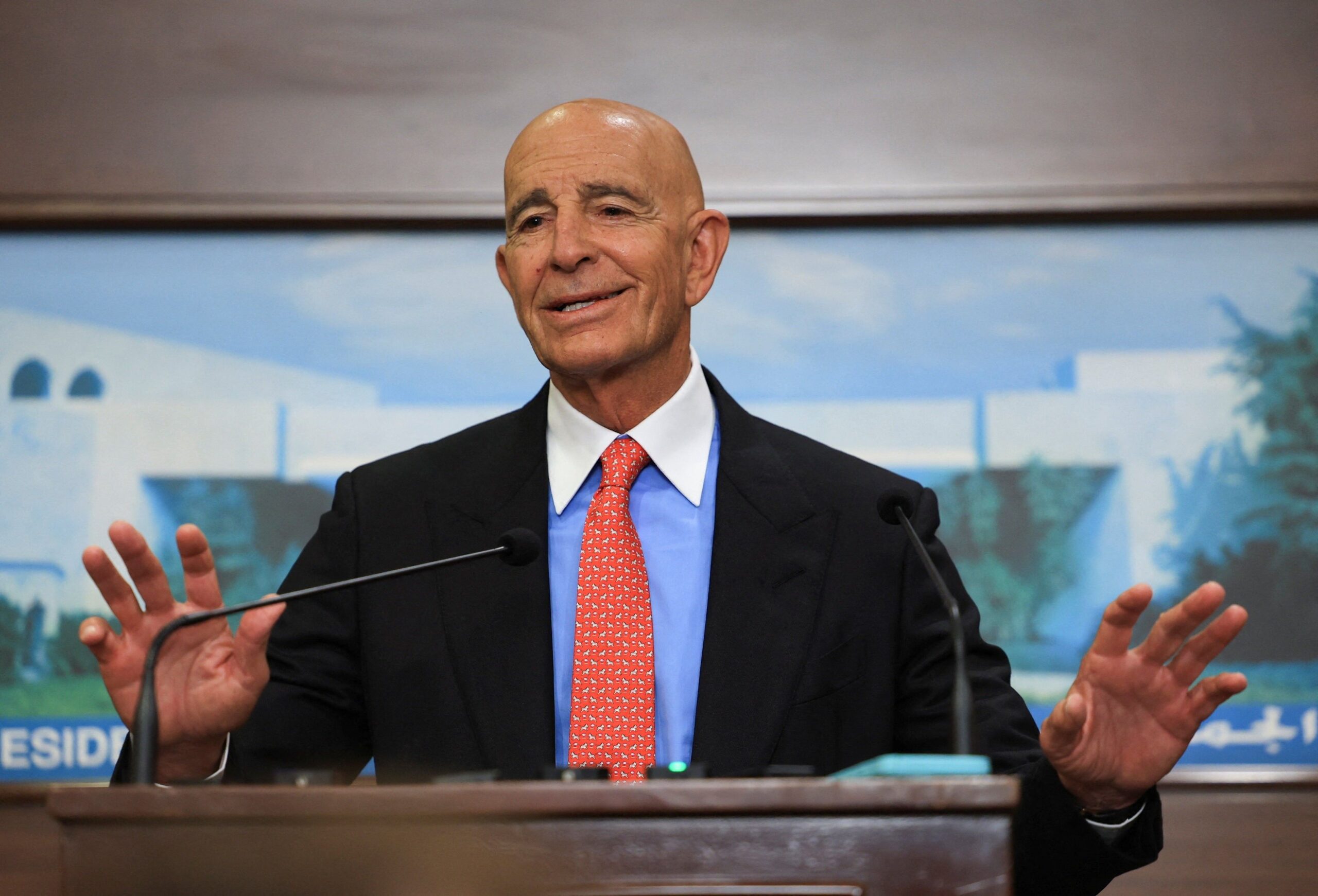
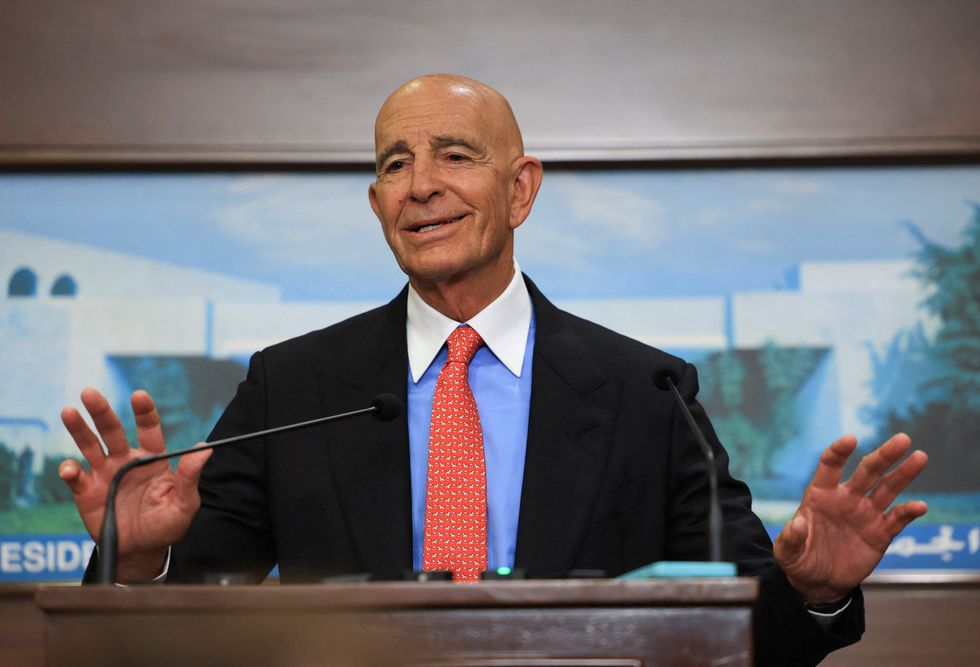
During a panel appearance at the Antalya Diplomacy Forum last month, U.S. Ambassador to Turkey Tom Barrack managed to anger observers in both Turkey and Israel.
Israelis took umbrage at his comments that both Israel and Hezbollah are “equally untrustworthy,” as well as his observation that Turkey is “not a country to be messed with.” Turkish observers, meanwhile, balked at his claim that “power” is the only thing Middle Eastern leaders understand.
This split response highlights the delicate balancing act that Barrack has pursued since taking over as the ambassador to Turkey in May 2025. Barrack has embraced a broader and more complex role than that of a conventional American diplomat in Ankara. As both an ambassador and the U.S. Special Envoy for Syria, he is conducting shuttle diplomacy across some of the most sensitive lines between Ankara, Damascus, Beirut, Tel Aviv, and Washington.
What makes Barrack especially notable is that his efforts have produced a different kind of backlash on almost every side. Many in Israel see him as too close to Ankara and Damascus, unfriendly to Israel, and acting against U.S. interests. In Turkey, meanwhile, the government has praised Barrack for his remarks on regional issues, while some opposition and nationalist circles have criticized him as a foreign representative overstepping his bounds, even a figure who behaves like a “colonial governor.” Further complicating Barrack’s role has been the U.S.-Israeli war on Iran, which has deepened a crisis in Israel-Turkey relations and destabilized countries across the region.
As Barrack enters his second year in the Middle East, one thing is clear: the Antalya controversy will not be his last.
A useful figure in Ankara
During the Biden administration, U.S.-Turkey relations went through recurring crises, with limited leader-level engagement and a relationship marked by strategic disagreements. When President Donald Trump returned to the White House, the arrival of a high-profile new ambassador was initially welcomed in Turkey.
Barrack’s key advantages, in Ankara’s eyes, were his family roots in Ottoman-era Lebanon, the fact that he was not a career diplomat bound by typical diplomatic norms, and, most importantly, his access to Trump through their longtime friendship.
Turkey also welcomed Barrack’s new role as Trump’s Special Envoy for Syria. After Trump’s remark that “Turkey holds the key” to dealing with Damascus, the role was seen as a concrete sign that the new administration viewed Turkey as a rising regional power and a partner on Syria.
Barrack’s early statements overlapped to a significant extent with Ankara’s positions, which endeared him to pro-government media. Barrack soon became one of the most visible and well-liked foreign diplomats in the country.
The first and most notable point of agreement was his strong emphasis on preserving Syria’s territorial integrity and national unity. Ankara welcomed Barrack’s involvement in U.S.-Turkey efforts to shape Syria’s future, as he signaled that U.S. policy toward Damascus would not follow old patterns.
Particularly important in Turkey was Barrack’s approach to the Syrian Democratic Forces (SDF), which are dominated by the Kurdish People’s Protection Units, known by the acronym YPG. Turkey considers the YPG to be the Syrian branch of the PKK, a group that both Washington and Ankara have designated as a terrorist organization. But the U.S. has long supported the SDF and downplayed its connection to the PKK, which has been one of the main drivers of anti-American rhetoric in Turkish public opinion over the past decade.
Barrack sharply changed that language, defining the SDF as “the YPG, an offshoot of the PKK” and saying that the United States did not owe the Kurds an independent country. Turkish leaders and media responded positively to this apparent recognition of Ankara’s deep security concerns.
Contrary to Israel’s point of view, Barrack also made clear that Washington does not define Turkey’s role in Syria as hostile, nor does it see the new Syrian government as inherently hostile to Israel. His criticism of Israeli strikes in Syria, which had fueled Turkish-Israeli tensions last year, gave Ankara the signal it needed that its influence there was not being treated as a threat in itself.
Barrack also maintained contact with the Kurdish side, including figures like SDF leader Mazloum Abdi, even at the risk of irritating Ankara, which has long targeted Abdi. But Ankara saw these contacts as diplomatic pressure aimed at pushing the SDF toward integration with Damascus, not as an effort to grant it separate political status.
Where Barrack touched Turkish nerves
None of this means Barrack has been accepted in Turkey without controversy. In his first months in office, he praised the country as a model of internal peace for the region. Yet his reference to the “Ottoman millet system,” under which religious minorities enjoyed limited autonomy in the Ottoman Empire, drew criticism from the opposition, which accused Barrack of advocating for reviving the system.
As the Ottoman Empire’s successor, Turkey’s relationship with its historical roots remains contested. The nature of the nation-state is considered a core sensitivity, closed to outside commentary. His Halki Seminary remarks about facilitating a possible reopening of the Christian school in 2026 also sparked criticism as overstepping on Turkey’s internal decision-making.
Later, Barrack drew rebukes in Turkey for telling journalists in Lebanon to “be civilized,” his statement before Turkish President Recep Tayyip Erdogan’s Washington visit that Trump had given him “legitimacy,” and his Antalya speech. After Antalya, opposition parties called for Barrack to be declared persona non grata in the country.
Although Barrack often says he is not a “neocon” and is not trying to redesign the region, he has not fully shaken off the image of a foreign official speaking from above and lecturing his Middle Eastern interlocutors.
Remarkably, Erdogan has decided to not target Barrack. Erdogan has sharply criticized U.S. ambassadors before, including John Bass, David Satterfield and Jeff Flake. His silence suggests that Ankara still views Barrack as a useful partner.
A balancing act Israel sees as bias
Pro-Israel voices are less enthused about Barrack. The Foundation for Defense of Democracies published an analysis last month arguing that he is undermining U.S. policy, as did the Wall Street Journal editorial board. Sens. Lindsey Graham (R-S.C.) and Rick Scott (R-Fla.) have also joined the pile-on.
These analysts and politicians argue that Barrack is acting in a pro-Ankara way that runs against U.S. interests. What is striking, however, is that most of these criticisms avoid directly targeting Trump.
It is hard to frame Barrack, one of Trump’s oldest friends, as an ambassador acting independently of the president. His friendly approach to Ankara appears to stem less from a personal pro-Turkey inclination and more from his desire to carry out Trump’s regional vision on the ground. As Israeli Prime Minister Benjamin Netanyahu himself suggested, no one can simply tell Trump what to do.
For example, rather than being disturbed by Turkey’s contacts with Hamas and its mediation role, Trump sees these as a useful channel. Barrack’s remarks that Turkey should be involved in an international stabilization force for Gaza caused discomfort in Israel, but they largely fit with this line.
Similarly, Barrack’s willingness to move on the issue of F-35 sales to Turkey, which had been suspended after Ankara purchased Russian missile defenses, fits with Trump’s more open approach to Turkey in his second term, even if Israel opposes it.
On Syria, Trump removed sanctions and hosted Syrian President Ahmed al-Sharaa at the White House. Barrack, in this sense, is largely following his boss’s policy, even if Israel is more skeptical of the new Syrian government.
Barrack’s remarks about the unreliability of Israel and Hezbollah on the ceasefire can also be seen as reasonable in light of realities on the ground. Trump himself has also shown frustration with Israel’s violations of the ceasefire.
Barrack has also been careful from the beginning to use balanced language on the Turkey-Israel rift. Like Trump, he presents the tension as temporary and manageable, saying that the rhetoric “will go away,” and has made clear that Washington does not want to choose between two close partners.
That makes his role uncomfortable for pro-Israel groups, but also useful. If the Turkey-Israel rivalry is not to harden into a more durable regional fault line, Washington will need channels that keep space open between Ankara and Tel Aviv rather than closing it.
A year into his time in Ankara, Barrack has courted controversy but managed to maintain the trust of Trump and Turkish leaders, even as he’s drawn criticism from Israel. In Erdogan’s eyes, Barrack remains a crucial connector for the Trump-Erdogan “bromance,” as the ambassador himself described the relationship.
His tenure so far shows that, in Trump’s foreign policy, personal access can matter as much as formal diplomacy. If he stays focused on the overlapping interests of Ankara and Washington, especially on Syria, and avoids further gaffes that make him look like a foreign official lecturing the region, he may still become one of Washington’s most consequential diplomats.
From Your Site Articles



+ There are no comments
Add yours