




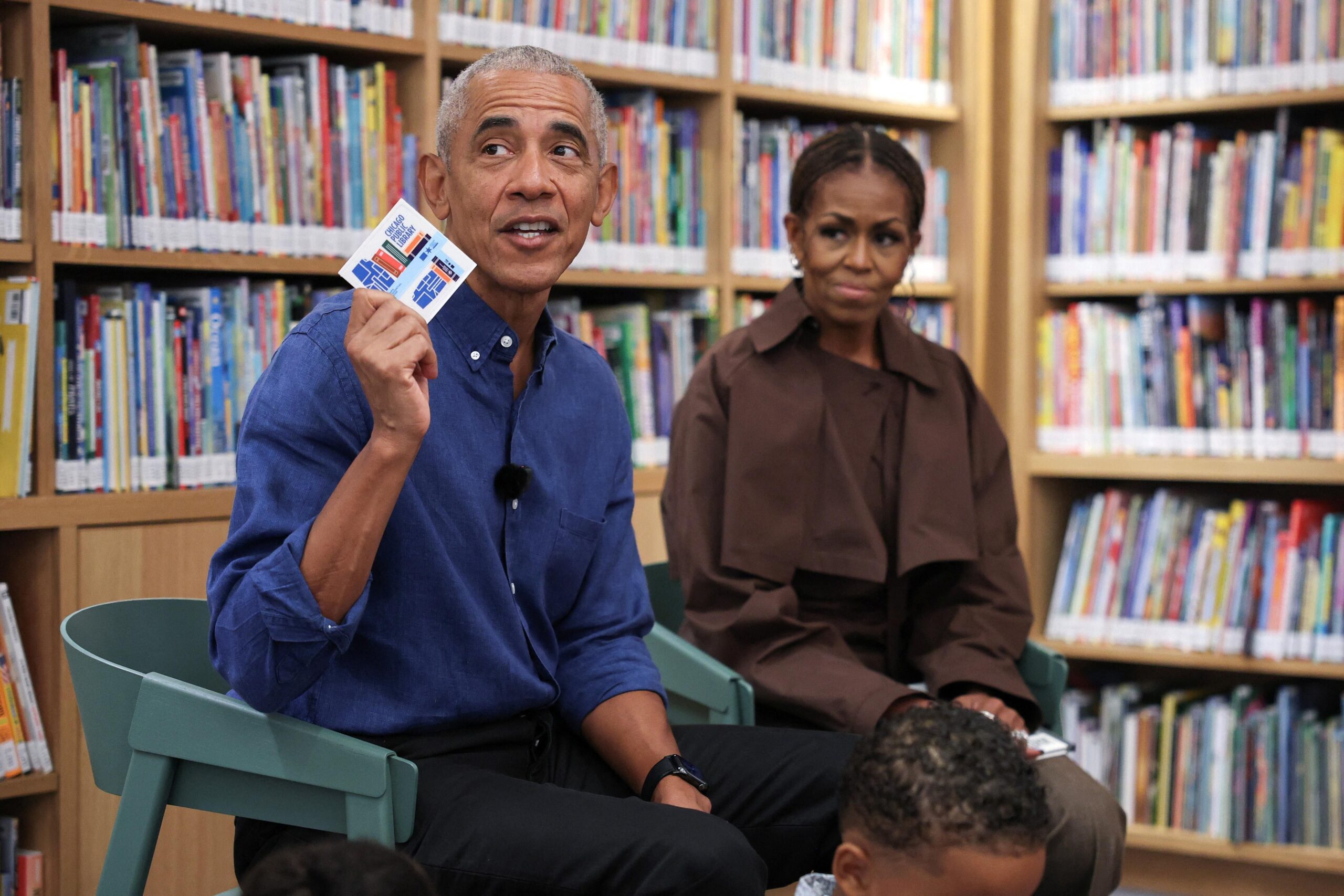
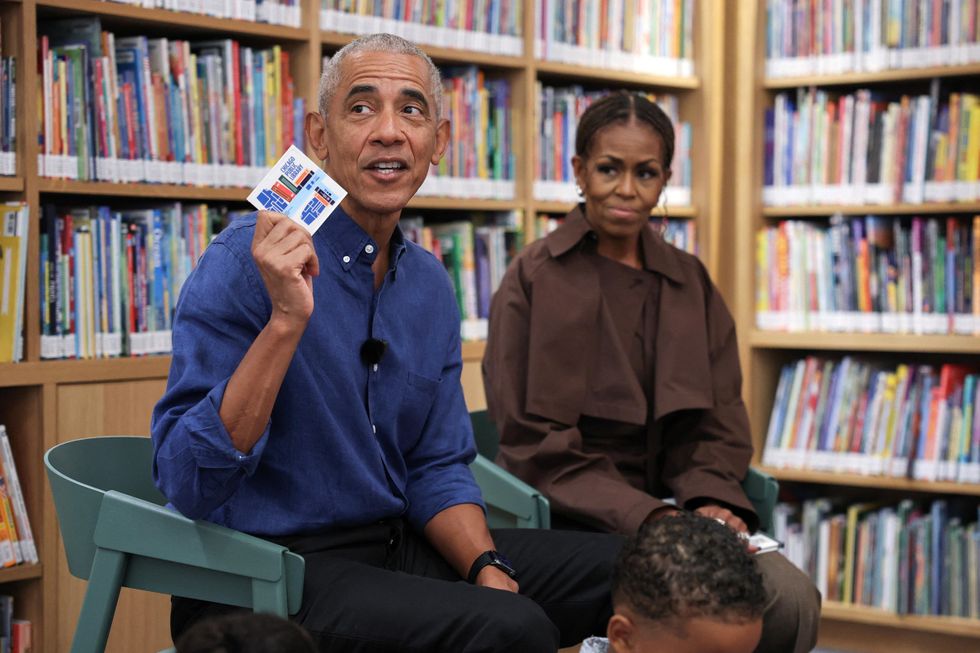
Opening his new Presidential Center in Chicago, Barack Obama once again gave eloquent expression to his faith in the fundamental American values of democracy and community.
Yet, a decade after his presidency, he has still not published his promised second volume of White House memoirs, which could show how he tried to realize those values in the real world during his final six years in power. In contrast, Presidents George W. Bush and Bill Clinton published accounts of their two terms within four years of leaving office.
The absence of the Obama “decider’s” story is particularly unfortunate in this Trumpian moment, as both the Democratic Party and the country struggle to define a coherent policy towards U.S. military intervention and assistance (as in Iran, Venezuela, Ukraine and Israel). Many of the underlying problems — violent conflict across the broader Middle East, deteriorating U.S. relations with Russia, a perceived decline in America’s geopolitical power — were first confronted during Obama’s administrations. Knowing more about how he chose to deal with them could provide valuable lessons for current and future foreign policy making.
Indeed, many issues in contemporary U.S. interventions — “wishful thinking,” “mission creep,” inconsistent support of international mediation, inattention to adversaries’ potential reactions and evasion of Congress’s constitutional role — were foreshadowed during the Obama years.
Obama’s story would be especially instructive because his deliberations took into account a broader range of perspectives on American national interests than other recent presidents, as his first volume’s thoughtful, meticulous account of early decision-making on Afghanistan and Libya demonstrated. This was in part the product of a remarkably diverse foreign policy staff composed of traditional, status quo-preserving establishment figures and more idealistic, change-oriented young Turks.
Furthermore, the long passage of time since his presidency might, paradoxically, prove auspicious by leading him to reflect on the consequences of his decisions, some of which former advisers have publicly recanted.
Among the latter were the costly U.S. military and paramilitary interventions in Afghanistan, Libya and Syria.
Despite Obama’s deployment of up to 100,000 troops to support the Afghan government against the Taliban, leaders of whom had earlier harbored Al-Qaeda terrorists who attacked America on 9/11, he failed to achieve his objective of enabling the regime to manage the insurgency on its own. Five years after he left the presidency, the Taliban took over.
Also deserving of scrutiny are the U.S.-led NATO air attacks and CIA and Western covert operations that enabled Libyan rebels to overthrow the longstanding Qaddafi dictatorship. After the U.S. operation, the revolutionaries quickly split apart; warring factions, some led by Islamic extremists, have reigned ever since, attracting disparate foreign sponsors. Even worse, weapons and fighters streamed across borders into sub-Saharan Africa and the Middle East, fueling bloody conflicts that endure today.
Another notable failure was the CIA-coordinated multinational effort to displace Syrian dictator Bashar al-Assad by arming and training “moderate” rebel fighters. This effort flopped because of rebel fragmentation and counter-interventions by Russia, Iran and Hezbollah, as well as the arming of Islamic extremists by other coalition members.
American policy contributed to the Syrian civil war’s horrendous toll of hundreds of thousands of deaths, helped spur a massive refugee flow into Europe that fueled the rise of anti-immigrant parties there, and exacerbated U.S. relations with Russia and Iran. Six years after President Donald Trump ended the failing CIA operation, Assad was overthrown by a former al-Qaeda fighter.
Even though some former policymakers have discussed these in their memoirs, leaked classified documents and scholarly analyses, the essential voice of the ultimate “decider” has not been heard. And it is all the more important because Obama reportedly overcame serious hesitations before taking these actions. By recounting and reflecting on the last three quarters of his presidency, Obama could help answer questions that continue to haunt U.S. diplomacy:
—Did “wishful thinking” affect his decision-making? If it did, was the source his optimistic personality, an undue deference to presumed military or political expertise, or domestic economic and political pressures pushing him to rapidly accomplish his goals at the least cost?
— Why did the avowedly limited missions to fight al-Qaeda in Afghanistan and to protect threatened civilians in Libya “creep” into nation-building and regime change operations?
—Why were efforts to mediate negotiations between the Afghan government and the Taliban delayed, and why did the U.S. not support the ongoing African Union mediation to ease Qaddafi out of power through a managed Libyan political transition?
—Did he consider the potential impacts of his Libya and Syria policies on his effort to “reset;” i.e., improve, relations with Russia? In 2014, Russian President Vladimir Putin told the Moscow Times, “You know, it’s not that [the reset] has ended now over [Russia’s annexation of Crimea In Ukraine]. I think it ended earlier, right after the events in Libya.” Without excusing Russian aggression, it is fair to ask whether recent Presidents have adequately considered adversaries’ potential reactions to U.S. interventions affecting their interests.
— Last but not least: Why — with one brief exception in Syria — did he decide not to seek open congressional debate and approval of these interventions, a departure from the letter or spirit of the American Constitution?
Given the continuing problems plaguing U.S. military interventions, how better for President Obama to manifest his faith in America’s democratic community than by transparently holding himself accountable for his past leadership?
From Your Site Articles
Related Articles Around the Web




+ There are no comments
Add yours