








Honest, paywall-free news is rare. Please support our boldly independent journalism with a donation of any size.
South of San Jose, California, residents of the city of Gilroy are fighting a proposed Immigration and Customs Enforcement (ICE) facility and an Amazon data center. Organizers with ICE Out of Gilroy, a coalition that launched in May of this year, have linked the two fights in a united struggle against detention and Big Tech surveillance. The coalitionincludes Community Agency for Resources, Advocacy, and Services (CARAS), a Gilroy-based immigrant-rights group; Services, Immigrant Rights & Education Network (SIREN), based in San Jose; and Bay Resistance, a Bay Area coalition for racial and economic justice which formed after Trump’s 2016 election and reactivated in 2025.
Gilroy’s farms and service economy depend on immigrant labor. The proposed ICE facility would menace workers and their families, while Amazon’s project would turn agricultural land into space for cloud infrastructure. The projects have distinct origins, but both raise the same question: Who gets to use Gilroy’s land, labor and infrastructure — and who gets to decide how?
On August 23, 2026, local residents joined the “Dump Big Tech” march opposing the ICE facility on Holsclaw Road, Amazon’s data center on Camino Arroyo, and the 54 automated license plate readers (ALPRs) owned by Flock throughout Gilroy. Mateo, an organizer with CARAS and the rapid-response network who asked to use a pseudonym due to concerns about potential repression, summed up why the coalition has linked the fights: “The data centers take our resources; the detention center takes our people.”
Kim Woo, a community organizer with SIREN, traced the connection in another direction: “Flock cameras lead us to the data center, and then to detention facilities.” Kim is concerned with how surveillance data moves across agencies to circumvent sanctuary policies. Records show out-of-state police searched the San Francisco Police Department (SFPD) Flock data for ICE-related purposes. Separately, an SFPD audit found a regional fusion-center network routed 299 federal and out-of-state queries; none were marked immigration-related. Kim calls these indirect channels “side-door sharing.” Rebeca Armendáriz, chair of the ICE Out of Gilroy Coalition and now a council-member-elect, says Flock data are being used to identify local rapid-response activists and monitor journalists. She calls all these technologies part of “the authoritarian state machine.”
The proposed ICE facility would menace workers and their families, while Amazon’s project would turn agricultural land into space for cloud infrastructure.
A WIRED investigation found that, since 2023, ICE and Customs and Border Protection have spent at least $515 million on services from Palantir, Microsoft, Amazon and Google. Palantir supplies investigative and case-management software; the others provide cloud and computing services. ICE’s Palantir case-management system runs on Amazon Web Services (AWS), and the companies also have a technology partnership. The government contracts are separate: ICE committed $86.3 million to Palantir on April 30, 2026, for case-management modernization; on September 8, the Department of Homeland Security committed $18.3 million to AWS for cloud infrastructure supporting ICE. All together, these figures exceed $619 million today.
A Federal Facility, a Private Landlord
The proposed ICE facility in Gilroy would generate rent and construction payments for a private landlord, Elmwood Capital Group, which is based in Beverly Hills. On January 8, 2025, the Trump administration awarded Elmwood a 20-year lease for up to $26,551,532 in rent. A March 2026 amendment authorized up to $8.66 million in construction reimbursements, bringing potential federal payments to the Elmwood Capital Group subsidiary ECG6 to $35.2 million over 20 years, according to the court order. Rent begins when General Services Administration (GSA) accepts the completed site, under a 20-year lease with a 15-year firm term. This arrangement uses public money to prepare private property for detention and then lease it to the government for profit.
On May 14, residents and immigrant-rights advocates rallied with county officials, who pledged to fight the project and said they were coordinating with Attorney General Rob Bonta, which led organizers to hold a community briefing and a mass organizing call on May 22. In response, the state of California and Santa Clara County sued after federal agencies began construction without the environmental review required by the National Environmental Policy Act (NEPA). Gilroy’s then at-large city council, which had no Latino members, declined to join the lawsuit.
The complaint alleges Elmwood described the project to county planners as “office and operations space,” without disclosing its holding rooms or the scale of construction. ICE’s court filing estimates about 10 detainees on a normal day; the state and county say plans show rooms for up to 150. A judge found the state and county likely to prevail on their NEPA claim and halted construction; the court later extended the pause.
The Detention-Industrial Complex
The Gilroy lease is part of a national detention buildout. An internal ICE memo from February outlined to expand capacity to 92,600 beds across the U.S.
Seven ICE-contracted detention facilities have been active in California in 2025, according to the DOJ; the eighth, the Central Valley Annex, began holding detainees in April 2026. The California Department of Justice says, affirming what families and attorneys are saying, that facilities are remote and hard to reach.
The Beverly Hills capital group’s reach extends beyond Gilroy: The state and county’s complaint alleges the firm leased at least two properties to the U.S. Department of Homeland Security (DHS) in Montana and Texas. In Billings, Montana, Elmwood’s portfolio lists a 14,444-square-foot GSA property; city records identify an ICE facility at 1711 6th Ave. N. A 2022 remodel permit lists Noah Zeligman as the owner of the property and describes jail processing spaces and holding cells.
The contracts reach beyond detention operators to surveillance firms, deportation contractors and property owners, as part of a broader detention-industrial complex. In the first year of Trump’s second term, ICE obligated about $5.4 billion to 679 contractors; the top ten received roughly $3.8 billion, according to a joint POGO–IRW analysis. Those top recipients included Palantir (surveillance analytics), CoreCivic and GEO Group (private detention), and CSI Aviation (deportation flights). ICE paid $129.3 million for a warehouse formerly majority-owned by Goldman Sachs and $68.2 million for one sold by a Carlyle-linked entity, CoStar and the Atlanta Journal-Constitution reported. Those are sale prices, not the firms’ disclosed profits. WIRED found ICE and CBP had spent at least $515 million with Microsoft, Amazon, Google and Palantir since 2023. Some firms, executives or PACs donated to Trump-aligned campaigns or initiatives, and some lobbied on ICE-related issues. More than 50 members of Congress launched separate investigations into six contractors, brokers and property owners, Salon reported.
A Threat to Farmworkers
Armendáriz warned KTVU that construction of an ICE facility may push farmworkers to leave Gilroy: “Our community is going to live in fear because this is going to be so close.” Law enforcement pressure is already palpable at county jails: On October 28, federal agents pursued two men after they were released from Elmwood Correctional Facility in Milpitas; one was tased. Observers reported seeing 10 to 12 agents at county jails daily the week before. Sheriff’s office figures show about 70 people detained near county jails since June 2025, local reporting found.
Farmworkers have the legal right to organize, but only about 10,000 of California’s 800,000-plus farmworkers arecovered by union contracts, a UC Davis review estimated in 2025. In a UC Merced survey of farmworkers in the state, 19 percent of respondents said an employer had withheld payment of wages; 43 percent said employers never provided the required heat-illness prevention plan. A national study found that spikes in immigration arrests cut noncitizen farmworkers’ weekly hours by as much as 23.1 percent that month. The threat of detention compounds workers’ risk of retaliation when they report wage theft or unsafe conditions.
Mateo said early marches in May drew mostly white allies from San Jose, Santa Cruz, and Salinas. In a small town, he said, residents feared detention, violence, or provocations that could lead to mass arrests. As more Latino residents saw other communities stand with them, they began joining — and calling for more people to join them in the streets.
The organizing efforts drew people from beyond Gilroy — from Stockton to Salinas and across the Bay Area. Organizers say about 800 people joined an emergency online call to action on May 22 after news broke that the ICE processing center was being built. Union members joined rapid-response work; Pacific Printing donated thousands of red-and-yellow campaign materials; SEIU 2015 and other health-care workers’ unions helped organize actions, while nurses brought material aid and joined protests. SEIU-USWW and the local labor council also supported the campaign.
More recently, on October 25, the coalition screened When ICE Melts, a documentary about Minneapolis resistance to Operation Metro Surge, in San Jose. The film follows unions, immigrant groups, and rapid-response networks as they defend their neighbors and build toward a mass strike. The film’s organizing argument has a local echo: Immigrant defense belongs inside labor organizing.
A Data Center Approved Without a Vote
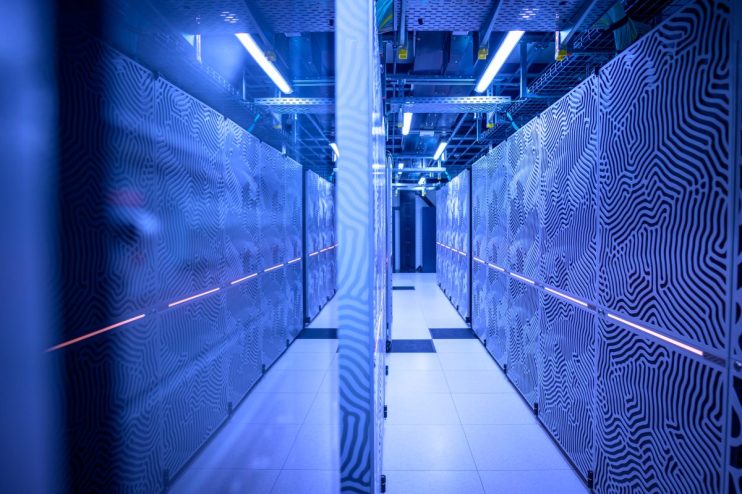
Amazon’s 56-acre data center at 8050 Camino Arroyo is a reported $2 billion project with two planned buildings. Its first phase requires a 49-megawatt connection to Pacific Gas and Electric Company (PG&E). That is the first building’s peak demand; the full site could require 98 MW, with any effect on household bills depending on who pays for grid upgrades.On July 3, 2025, Gilroy’s Community Development Director approved it under existing industrial zoning, without a planning commission hearing or city council vote. The Council later adopted new public-notice and hearing requirements for future large projects; Amazon’s approval remains in force. Resident Georgine Scott-Codiga told KSBW, “What they have done is they shut the people down; the people have no voice.”
Gilroy’s approval findings say the project’s benefits outweighed its unavoidable environmental impacts, including converting prime farmland and increasing vehicle travel above California’s environmental review threshold, which increases pollution from employee commutes. The city described the parcel’s long period of underdevelopment as “detrimental to the economic development of the City as a whole” and cited its goal of attracting technology companies seeking less costly locations. The city projects $40 million in revenue over the first decade, about 70 percent from a 5 percent tax on electricity use, according to its revenue FAQ. The city’s tax revenue rises with the facility’s power consumption.
The project requires off-site PG&E transmission upgrades. Gilroy’s Community Development Director says Amazon will fund a dedicated substation, but the California Public Utilities Commission’s Public Advocates Office issued a statewide warning that ratepayers could bear transmission costs if projected demand falls short. The city says newer state protections may limit that risk, though it remains unclear whether they cover Gilroy’s approved project.
Kim Woo of SIREN says the centers will “drastically deplete our electricity and water resources.” The project’s Water Supply Assessment estimates up to 23 acre-feet of water a year — about 7.5 million gallons — for cooling, irrigation and domestic use. Once recycled-water service is connected, expected by 2030, potable use should fall to about 2 acre-feet annually. Amazon must pay for the recycled-water infrastructure, which the city says will also serve future customers.
Only Short-Term Jobs for the Build, Long-Term Unemployment Uncertain
Gilroy City Council’s jobs argument centers on construction: The city projects hundreds of temporary jobs under a project labor agreement that prioritizes local hiring and prevailing wages. Those jobs matter to workers, but they end when construction does. The approval report’s employment projections estimate up to 25 full-time employees initially and 50 after Phase II. At full buildout, up to 125 employees and contractors, including part-time workers, could be on site. The figure of up to 125 people on site includes part-time workers and contractors. Hundreds of workers may build the reported $2 billion project; only a few dozen are expected to run it.
That is the point. Data centers are a massive fixed-capital investment designed to produce more output with less workers. Amazon CEO Andy Jassy has said generative AI and agents will mean fewer people doing some of today’s jobs, while his company announced two rounds of cuts affecting about 30,000 office-based corporate roles: 14,000 in October 2025 and 16,000 in January 2026, according to its October notice and January notice. A Fairwork investigation documents how AI and robotics intensify warehouse work, while algorithmic monitoring narrows workers’ control over their pace and tasks.
Distributed AI Research Institute (DAIR) research director Alex Hanna describes AI as “making our expertise an add-on, and making us more interchangeable.” Alongside replacing some jobs, these systems can speed up work, expand surveillance and make the workers who remain easier to replace. A Truthout investigation found that Amazon’s Atlas model draws on hundreds of data points — including worker feedback, injuries and proximity to union activity — to assess “labor risk” and anticipate organizing. Workers build and power this infrastructure while Amazon gains new tools to reorganize their work and contain resistance.
From a Pause to a Lasting Win
After the court injunction paused work at Holsclaw Road, Gilroy’s Council passed a 45-day moratorium on new detention facilities on October 5, then extended it through October 4, 2027. The ordinance covers detention and custodial-facility applications where city authority applies, but not Holsclaw Road, outside city limits. Mateo calls the injunction and moratorium partial victories. The coalition’s tactic, he says, is “to delay these projects while we build a broader opposition.”
“We need to fight these systems of mass surveillance now with a mass united front that brings immigrant defense together with the fight for civil liberties.”
On October 5, 2026, a community-backed proposal to bar immigration-enforcement staging on city property failed to advance. Kim had pressed for no-staging zones: “Our city property belongs to us, the community, not the ICE agenda coming here to harass and kidnap us.”
On October 19, the Council extended its moratorium on new data-center applications through September 3, 2027, but Amazon’s project remains exempt. The coalition is using the pause to press for the Holsclaw project’s cancellation, and a permanent data-center moratorium.
As a result of this grassroots movement, Gilroy’s political representation is changing. Before district elections, its at-large Council had no Latino members despite a population that is nearly 60 percent Latino, according to local reporting. After a lawyer’s December 2024 letter threatened a California Voting Rights Act lawsuit, amid Latino residents’ calls for greater representation, the Council voted in February 2025 to switch to district elections. The first were held in November 2026, when voters chose three Latinas—Diana Sanchez Bentz, Christina Tovar, and Rebeca Armendáriz—for the three seats on the ballot. Armendáriz, ICE Out of Gilroy’s chair, was among those elected and campaigned on protecting residents from ICE.
The struggle also crosses city lines. Kim sees the proposed Gilroy facility and the former Dublin federal prison as parts of one regional system, with Gilroy processing people and Dublin detaining them. Armendáriz wants the newly elected Congress to defund ICE, reverse its inhumane policies, and end qualified immunity for ICE agents. She is looking ahead to 2027: “It is a key year, and the community is ready for a general strike.”
For Betty, a San Jose teacher who asked to use a pseudonym due to fears of state repression, said that fight must unite immigrant defense with civil liberties. “We need to fight these systems of mass surveillance now with a mass united front that brings immigrant defense together with the fight for civil liberties,” said Betty, who is active with Workers’ Voice. “That means unions, immigrant rights groups and civil liberties organizations organizing together across the Bay Area, across California and nationally.”
An important fundraising appeal: 4 Days to raise $35,000
Donations are down for Truthout at a time when media is under immense pressure. Google’s AI search has driven our traffic down by 15 percent, Trump is arresting journalists, and many independent media organizations face heartbreaking cutbacks and closures.
At the same time, movement media is vital in the fight against Trump’s authoritarian reign. Our mandate to tell the truth, share strategies for resistance, and speak against fascism is ever more urgent in this deluge of political censorship and misinformation. Yet, we are struggling to meet our publishing costs when our work is so urgently needed.
We are fundraising right now for those basic operating expenses — we need $35,000 in the next 4 days. If you can support Truthout with a one-time or monthly donation, you will make a significant impact on our work. Anything you can do makes a difference.








+ There are no comments
Add yours