







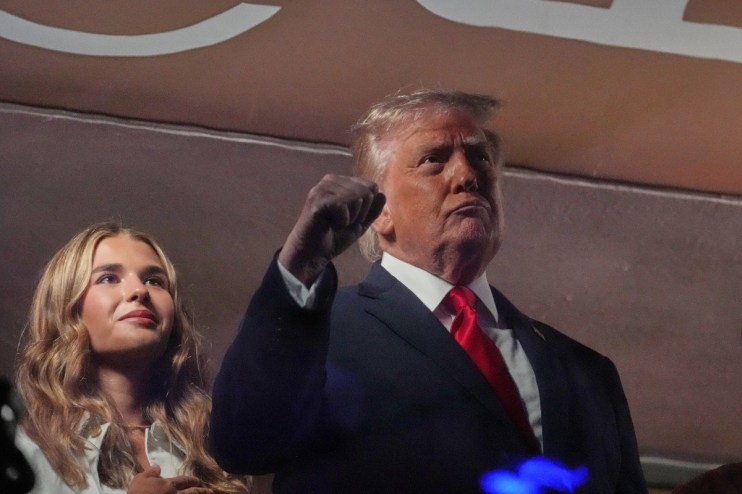
Donald Trump’s latest threat to impose 100 per cent tariffs on countries with digital services taxes has renewed concerns among British exporters, with business groups warning that a trade dispute over Big Tech could end up costing manufacturers billions.
The US president said on Friday that any country imposing a digital services tax on American tech firms would face an immediate 100 per cent tariff on all goods entering the United States, regardless of any existing trade agreements.
The UK’s two per cent Digital Services Tax, introduced in 2020, applies to large search engines, social media platforms and online marketplaces with global digital revenues above £500m.
It raises around £800m a year for the Treasury, largely from the leading handful of tech behemoths including Google, Amazon, Apple and Meta.
The levy survived last year’s UK-US Economic Prosperity Deal, which reduced tariffs on sectors including automotive exports and promised lower duties on British steel.
But it has remained a persistent source of friction between London and Washington, contributing to the suspension of the wider UK-US Technology Prosperity Deal late last year.
With Trump’s latest deadline approaching on 24 July, businesses are urging both governments to focus on implementing the trade agreement already on the table rather than escalating tensions.
“UK firms are bracing for changes to the US tariffs applying to many goods entering the US from the UK on 24 July,” William Bain, the British Chambers of Commerce’s head of trade policy, told City AM.
He warned that retaliatory tariffs linked to Britain’s digital services tax would be “a wholly disproportionate and damaging move for US businesses and consumers as well as UK exporters.”
Even if sectors including steel, pharmaceuticals and automotive products were ultimately exempt, Bain said the wider cost to trade would dwarf the tax revenue at the heart of the dispute: “New tariff costs would run into the tens of billions under such a plan compared with the £800m per annum Digital Services Tax yields for the UK Exchequer”.
Digital tax remains trade flashpoint
Trump has repeatedly argued that digital services taxes unfairly target American tech firms, writing on Truth Social that “numerous European countries” were discussing introducing or expanding digital services taxes and warning that any country proceeding would face an immediate 100 per cent tariff that would supersede “trade deals made with the country, whether implemented, signed, or not.”
The threat extends beyond Britain with France, Italy and Spain already operating digital services taxes, while discussions around an EU-wide levy have gathered pace, although such a proposal would require unanimous backing from all 27 member states.
Brussels has already signalled it would respond if Washington followed through. A European Commission spokesperson said the bloc reserved the right to defend itself against “unilateral measures targeting such legitimate policies”, arguing that digital services taxes apply to qualifying companies regardless of nationality.
The Economic Prosperity Deal agreed last year offered UK exporters relief from some of Trump’s sector-specific tariffs, including cutting duties on the first 100,000 British-built cars exported annually and paving the way for lower tariffs on steel subject to supply chain agreements.
Business leaders fear reopening negotiations over digital taxation risks undermining progress already made.
“The BCC urges both governments to up the dialogue on implementing the deal from last May instead,” Bain added.
That includes “looking to lower tariffs where they can, especially delivering the promised tariff cuts on steel, alongside new measures on boosting services and digital trade.
“The period between now and 24 July should be used to remove unnecessary tariffs, not adopt unjustified new hikes in business and consumer costs.”
The digital services tax has become a reliable source of Treasury revenue, raising more than £800m in the last financial year, and successive governments have resisted pressure from Washington to scrap it.
At the same time, the US remains one of Britain’s largest export markets, and preserving the tariff reductions secured under last year’s trade agreement is viewed by many manufacturers as equally critical.










+ There are no comments
Add yours