






On October 13 of last year, shortly after signing a ceasefire between Israel and Hamas, President Donald Trump addressed a room of world leaders congregated in Sharm el-Sheikh, Egypt. “At long last we have peace in the Middle East,” Trump proclaimed, basking in the praise pouring in from across the globe.
While this statement may have been an exaggeration, there was indeed reason for optimism at the time. The U.S. had just brokered an agreement between Israel and Hamas. Palestinian prisoners would be released, Israeli hostages would return home, and the mass slaughter of Gazans would come to a halt. Phase 1 of the plan also included the full entry of humanitarian aid and a withdrawal of Israeli forces to an agreed on “yellow line.” Tasked to oversee the process was the Board of Peace (BoP), a U.S.-led international panel.
Israel never fully implemented its side of Phase 1, opting instead to continue striking the enclave and restricting the flow of aid into Gaza. Nonetheless, on January 16, the U.S. announced the beginning of Phase 2. This step was set to include Hamas’ disarmament and further Israeli withdrawal, coinciding with the arrival of the International Stabilization Force and a transitional governing authority.
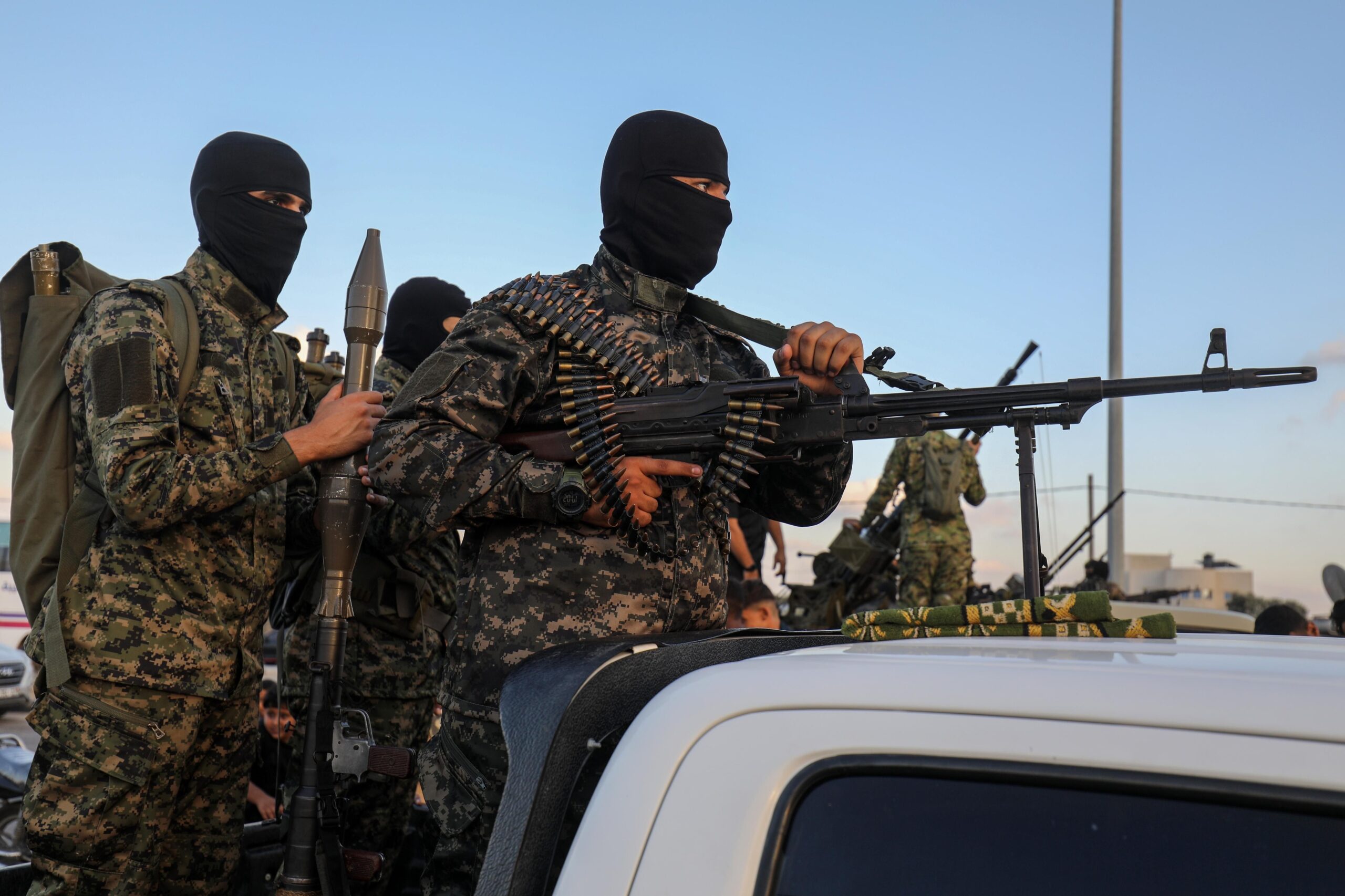
But more than four months in, none of this has happened. In March, the head of the BoP, Nikolay Mladenov, laid out a five-stage, eight-month vision for how Hamas should disarm. The group rejected the proposal, citing ongoing ceasefire violations and demanding full Israeli withdrawal.
Israel, the U.S., and much of the international community have pointed to this rejection to frame Hamas as the sole obstacle to peace, blaming the militant group for the stalled second phase. While this narrative may be politically convenient, an analysis of past agreements shows that the current proposal lacks several elements that will be necessary if a durable peace is to be achieved.
Biased Mediator
Historically, one of the most important factors in peace settlements has been a neutral mediator. Thomas Leahy, senior Lecturer at Cardiff University, explains that such a presence is essential from the outset in creating conditions for fair negotiations.
In Northern Ireland, even after the Irish Republican Army and the British government signed a ceasefire in 1994, a lack of proper mediation led to two years of stalling. Leahy notes that the Irish government “took the initiative to bring in a third party because talks were going nowhere.”
This third party was U.S. Sen. George Mitchell, who assumed the position of chairman throughout the negotiations and introduced the Mitchell Principles before formal all-party talks began in 1996. The principles, a set of six rules, bound all sides to use exclusively peaceful means to resolve political issues.
While the Board of Peace fills this third party role in Gaza, it has so far proven itself to be far from neutral. Despite boasting representatives from around the world, the organization is U.S.-led, with Trump self-appointed as chairman, a role that he could potentially hold for life. In Northern Ireland, mediating bodies were composed of countries with no historical or current stake in the region. In Gaza, the mediator is dominated by the U.S. — not only Israel’s most important financial backer, but also its largest arms supplier.
In Gaza, obliging both parties to uphold the ceasefire is where the Board of Peace has shown itself to be most biased.
According to the Gaza Health Ministry, over 900 Palestinians have been killed by Israeli forces since the ceasefire began. Humanitarian groups say the delivery of aid, which is entirely controlled by Israel, has also been insufficient, leaving the population malnourished and exposed to a growing rodent infestation. Hamas has also been accused of ceasefire violations, having killed four Israeli soldiers.
The Board of Peace has not treated these violations equally. The organization has issued firmer warnings to Hamas than towards the Israeli government, despite the lopsided number of breaches. In a leaked memo, Mladenov explicitly stated that he would not hold Israel to truce terms if Hamas refused the disarmament framework. By allowing Israel to continue killing with impunity and threatening to void the ceasefire’s terms, Mladenov’s strategy runs directly counter to the successful one implemented by Mitchell.
Improper Sequencing
The order in which the demands are being made is equally problematic.
This plan first requires Hamas to surrender all weaponry and destroy its tunnel network. After that, fighters would have to turn in both guns and rifles. Only then would the Israel Defense Forces (IDF) complete its withdrawal from the Strip, and reconstruction presumably begin. Notably, the 12-point plan makes no mention of Palestinian statehood.
In Northern Ireland, by contrast, the IRA only decommissioned its weapons several years after the accord was signed, and once tangible political gains, including a power-sharing agreement, were put in place. The same could be said about the FARC in Colombia, which received limited amnesty and guaranteed congressional seats as it surrendered its weapons.
Disarmament is “rarely the beginning of peace,” said Alpaslan Özerdem, dean of George Mason University’s Carter School for Peace and Conflict Resolution. Özerdem lists a slew of reciprocal steps usually required before disarmament such as “ceasefire consolidation, withdrawal arrangements, security guarantees, third-party monitoring, humanitarian access, and reconstruction.”
While Hamas has previously stated, on numerous occasions, that it would lay down its weapons in exchange for the creation of a Palestinian state based on the pre-1967 borders, Israel has repeatedly rejected such an offer. In fact, the IDF has pushed deeper into Gaza since the ceasefire was signed and now occupies 60% of the strip instead of the 53% that was originally agreed on.
By refusing to consider Hamas’s core demand, a mutually respected long term peace deal becomes difficult to envision. According to Özerdem, “armed groups do not usually disarm simply because they are pressured to do so; they disarm when they believe there is a viable pathway to security, political inclusion, social reintegration, and dignity.”
Given that the current plan offers none of this, the obligation to disarm feels more like a one-sided surrender.
For Leahy, Israel is in no position to make such a demand. “This can only work if the group is defeated, and accepts that defeat,” says Leahy. “I think it’s quite clear that this is not something Hamas accepts.”
Despite the improper sequencing, non-existent concessions and seemingly biased guarantor, Israel and its allies insist that Hamas is the one sabotaging the peace process. Ironically, rushing the issue could actually result in further chaos for all parties; botched decommissioning agreements have often led to the creation of splinter groups, or outright rearmament.
In recent years, the most devastating example of such can be found in Iraq, where after the U.S. disposed of Saddam Hussein, the Iraqi army was quickly disbanded with no reintegration plan. Hundreds of thousands of armed men were now without income, many later becoming a core contingent of ISIS fighters.
For Özerdem, the biggest risk is that disarmament can be perceived as surrender rather than transition. “If an armed group gives up weapons before credible guarantees are in place, it may fear political marginalization, arrest, revenge attacks, or loss of bargaining power.”
Perhaps deadlock is the goal. Israeli Prime Minister Benjamin Netanyahu has repeatedly argued that he is ready to return to war in Gaza “at any moment.” The deeply flawed disarmament process gives him one more way to justify such a step — and shields him from making concessions that his political opponents could hold against him.
The Board of Peace has continued to pay lip service to the idea of a prosperous and even futuristic Gaza. But, with a peace process like this, the board’s most lasting legacy could well be as a validator for continued war.
From Your Site Articles
Related Articles Around the Web







+ There are no comments
Add yours