



Did you know that Truthout is a nonprofit and independently funded by readers like you? If you value what we do, please support our work with a donation.
President Donald Trump has casually boasted about the destruction of Iran’s infrastructure during the U.S.-Israeli war, including bridges, desalination plants, and major industries relied on by civilians. Among those attacks on infrastructure, but less reported on by the international press, has been the targeting of Iranian media.
Iran’s newsrooms, broadcasting studios, publishing houses, and adjacent businesses such as bookstores and pulp and paper companies have suffered serious damage due to the U.S.-Israeli military campaign. Already facing fragile labor protections and significant restrictions on free speech, journalists in Iran are now enduring even worse working conditions.
Iranian authorities have estimated that the damage resulting from the war since the beginning of the aggression on February 28 equals at least $300 billion. Still, it’s not immediately clear how much damage has been incurred by the media institutions that were targeted, and if short-term recovery can be expected.
Ironically, the 39-day bombing campaign that ended with a brief ceasefire on April 8 and a short-lived memorandum of understanding on June 17 didn’t spare the pocket-size foreign press corps based in Tehran, demonstrating the ways in which military campaigns can disrupt the free flow of information.
In the most high-profile case, the office of Qatar’s Al Araby TV in Tehran’s Heravi neighborhood was hit in Israeli airstrikes on March 29 that cut live broadcast, caused extensive damage to the building, and injured 10 people, according to the Iranian Red Crescent Society. Journalists familiar with the case told Truthout they believe the TV bureau was deliberately targeted.
Hazem Kallass, Al Araby TV’s Tehran bureau chief, said that, after the strikes, he and his colleagues used the streets of Tehran, coffee shops, and other public places as their workspace for nearly a month before they could find a new office.
“I entered the studio to do my first live broadcast of the day at 8:30 am. A few minutes later, around 8:40 am, while I was speaking in front of the camera during a live broadcast, the camera shook, pieces of the ceiling fell, the electricity went out, and I heard an explosion — and all of these happened within seconds,” he told Truthout.
He rushed out of the studio and saw a chaotic scene: shattered windows, doors, and elevator shafts blasted apart and strewn everywhere. According to Kallass, no explanation could be found for the attacks since there were no sensitive installations in the neighborhood where the building hosting the Al Araby TV office was located.
“What is certain is that there are no military or security centers nearby. Everyone knows that foreign media operates in this building,” he said. “This has been our office for several years, and it also houses the offices of several other foreign channels. The area is generally a commercial and business district, in addition to being a residential area.”
Al Araby TV’s reporting helped raise awareness of the most intense periods of bombing in Tehran, especially as not many international broadcasters are licensed to operate out of Iran. The network may have been targeted as its coverage diverged from the war-friendly line pursued by corporate media that elided the civilian suffering in Iran.
Headquartered in Qatar’s third largest city, Lusail, Al Araby TV airs programming in Arabic and is accessible worldwide, with its viewers mostly concentrated in the Middle East and Europe. It has more than 60 correspondents in bureaus around the world, including the United States. Its social media following includes 9.6 million followers on X (Twitter) and 5.7 million followers on Instagram.
In another event that received little attention outside of Iran, the office of Sazandegi Daily was extensively damaged in airstrikes that hit Tehran’s Pasdaran Street on March 6. The newsroom was also damaged during the 12-Day War that Israel launched against Iran in June 2025. Sazandegi is one of Iran’s major pro-reform newspapers employing several accomplished young journalists.
Most press freedom groups didn’t issue public reactions to these incidents. Although polls have shown the war on Iran has been historically unpopular among Americans, the international community has been inconsistent in its response. The International Federation of Journalists and Reporters Without Borders didn’t respond to Truthout’s request for comment.
In its documentation of the impacts of the U.S.-Israeli campaign on press freedom worldwide, the Committee to Protect Journalists (CPJ) referenced the strikes that damaged Sazandegi’s office in Tehran and in a subsequent statement, its regional director condemned the bombing of Iran’s state broadcaster.
Mohsen Salehikhah, a political reporter with the Tehran-based Fararu news website, recalled that, on March 2, heavy airstrikes targeted a military facility a few blocks away from his newsroom, but the office wasn’t affected. He said, however, that the office of Ensaf News, another online publication where he is a freelancer, was damaged during the 12-Day War when Israel initiated unprovoked attacks on Iran amid Tehran-Washington negotiations.
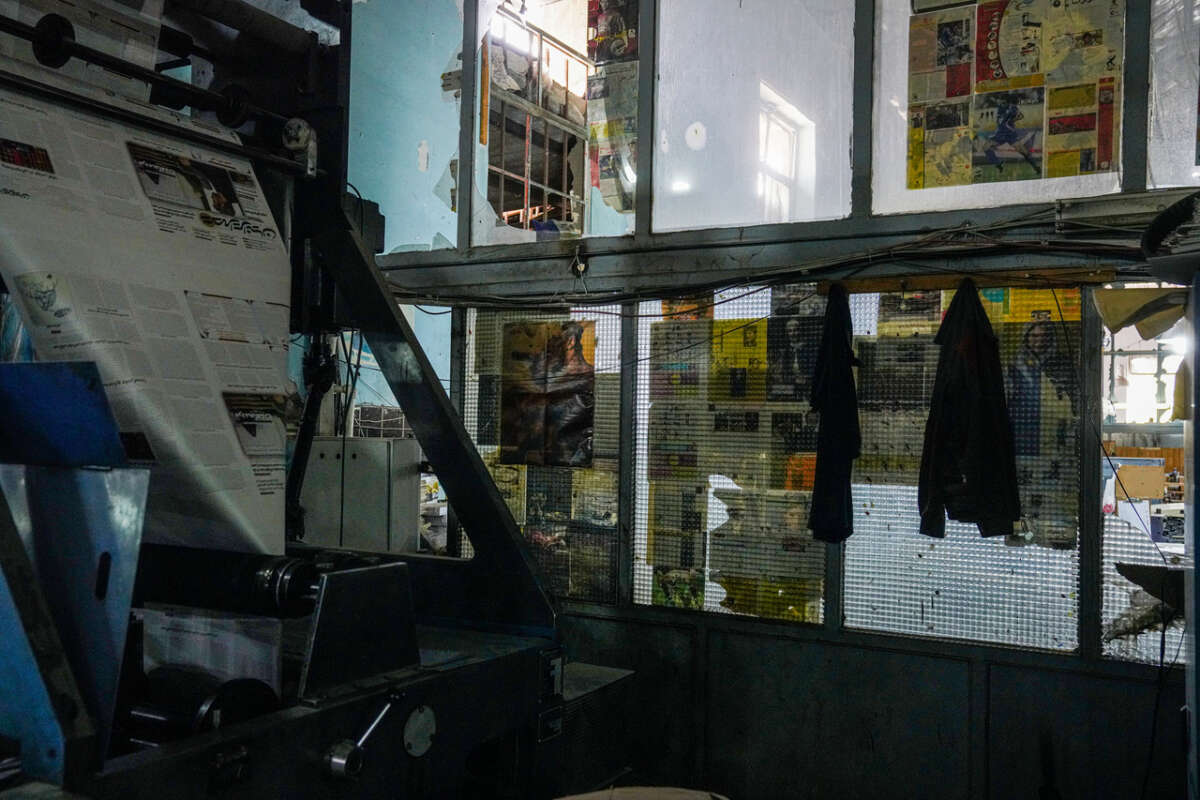
“When it comes to independent, small, and private media, the conflict and prolonged internet blackouts during the 12-Day War, protests in January and the recent war have caused deep problems, which have similarly impacted other private businesses” Salehikhah told Truthout.
“Layoffs, increased expenses, the need for reporters to work multiple shifts, and even withdrawals from the media profession … are happening.”
“Decline in the number of online visitors, cancellation of contracts, layoffs, increased expenses, the need for reporters to work multiple shifts, and even withdrawals from the media profession are events that are happening,” he added.
Salehikhah was resigned to the indifference of advocacy organizations and Western journalists who didn’t denounce the U.S.-Israeli military campaign damaging Iran’s media institutions.
“Maybe it’s because our eyes aren’t blue,” he lamented.
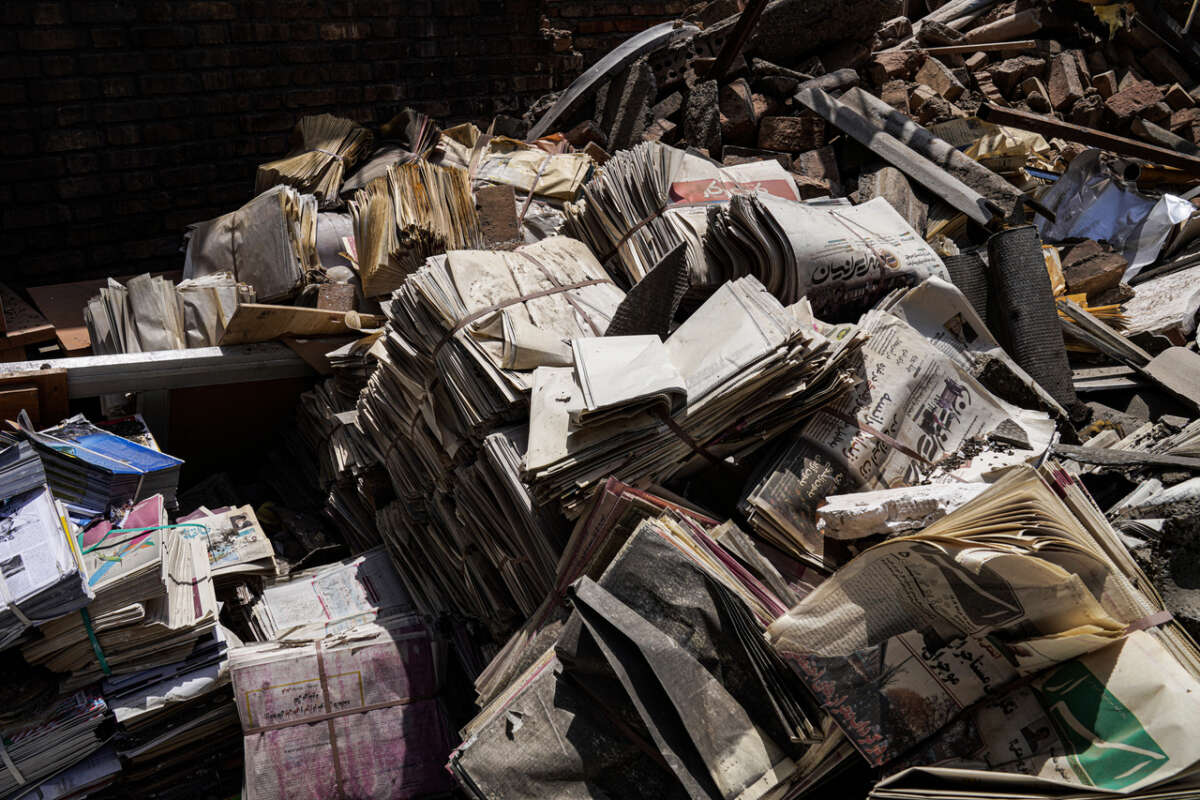
These incidents do not capture the full picture of the costs inflicted on Iran’s newsrooms, publishing industry, and cultural infrastructure. Billed as the most intensive U.S. air campaign since 2003, the war on Iran spanned a wide terrain across a country of 90 million three times the size of Texas, and in many cities, bombs fell and took a heavy toll on media-related enterprises.
In the province of Qom, bombings on March 8 damaged the Shahab Industrial Park, a sprawling operation stretching 200 hectares that was opened in 2022 to serve as a specialized printing and packaging facility. Last year, an under-construction pulp and paper mill in Harsin City in Kermanshah, which was reportedly nearing completion, was almost completely destroyed in Israeli airstrikes during the 12-Day War.
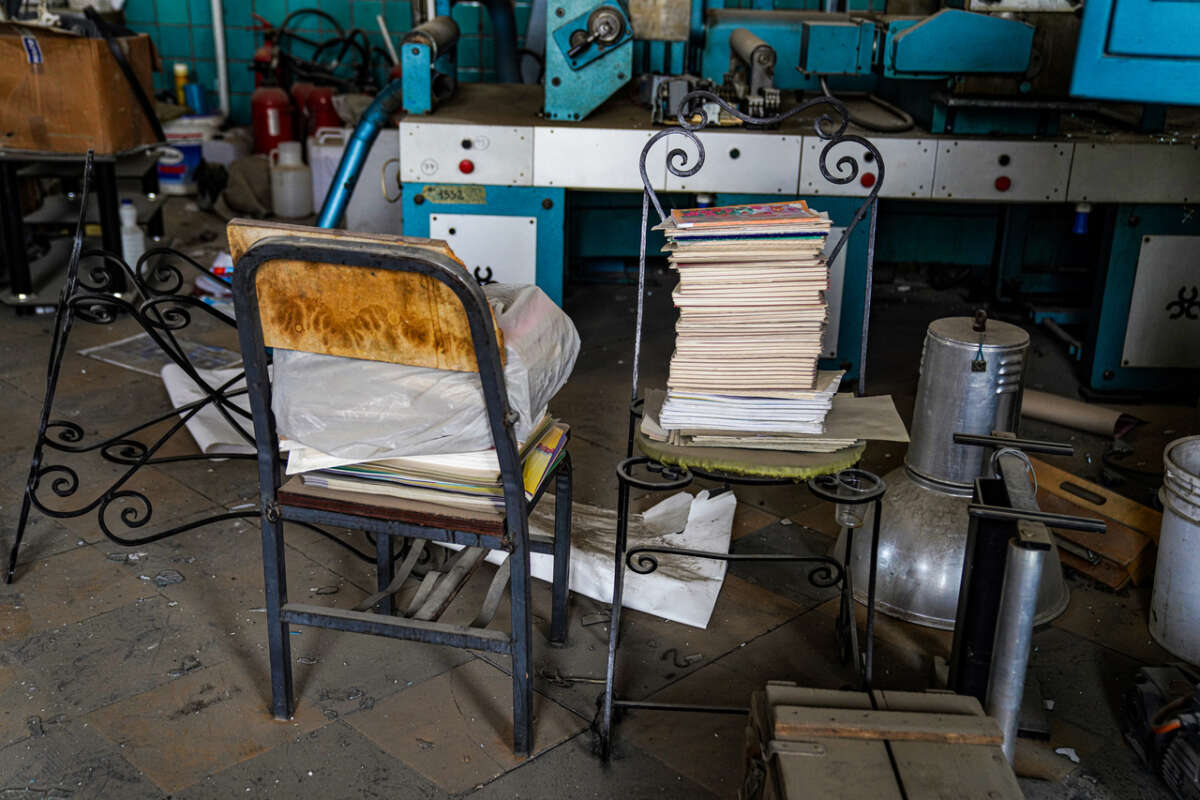
In Tehran, a printing plant that produced some of the country’s oldest magazines was destroyed in a fire sparked by Israeli airstrikes during the 12-Day War. The Golazin Printing House was also commissioned to print a large number of books, and its 17-year operation was halted after the attacks. A total of eight printing plants in Tehran were damaged or demolished in last year’s war, Iran Book News Agency reported.
Mickey Huff, the executive director of the U.S.-based nonprofit Project Censored, says any attack on public communication systems “is a violation of international laws and norms that we have strayed away from even acknowledging, let alone enforcing.” In an interview with Truthout, he said he deplores the fact that international organizations have been intimidated into overlooking these violations.
“There is a reluctance to criticize U.S.-Israeli actions given the U.S. standing at the UN and militarily in the world, and the repercussions that could follow for those who do,” he said. “Further, increased weaponization of antisemitism adds another layer of caution from those who would otherwise call out when another country attacked journalists or civilians in this way.”
The more devastating airstrikes targeted Iran’s state broadcasters. Unlike the other cases in which damage to civilian infrastructure was shrugged off as collateral damage or insignificant, the Israeli government claimed responsibility for dropping “dozens of bombs” on the headquarters of the Islamic Republic of Iran Broadcasting (IRIB) on March 2.
International reactions to these attacks have been muted as press freedom organizations and advocates didn’t wish to be seen as lending support to an unpopular state broadcaster run by the government in Tehran. Still, Iran’s state TV, which the Israeli military first bombed in June 2025, doesn’t have a military status, and as some scholars have argued, there are no legitimate targets in an illegitimate war.
IRIB, which is the state authority exclusively overseeing multimedia broadcasting in Iran, operates more than 100 local and national TV and radio stations that are transmitted across the country using digital terrestrial broadcast technology. Satellite dishes are officially banned, but a majority of Iranians own them to access international networks, which they rely on as an alternative to the programming of the state media corporation.
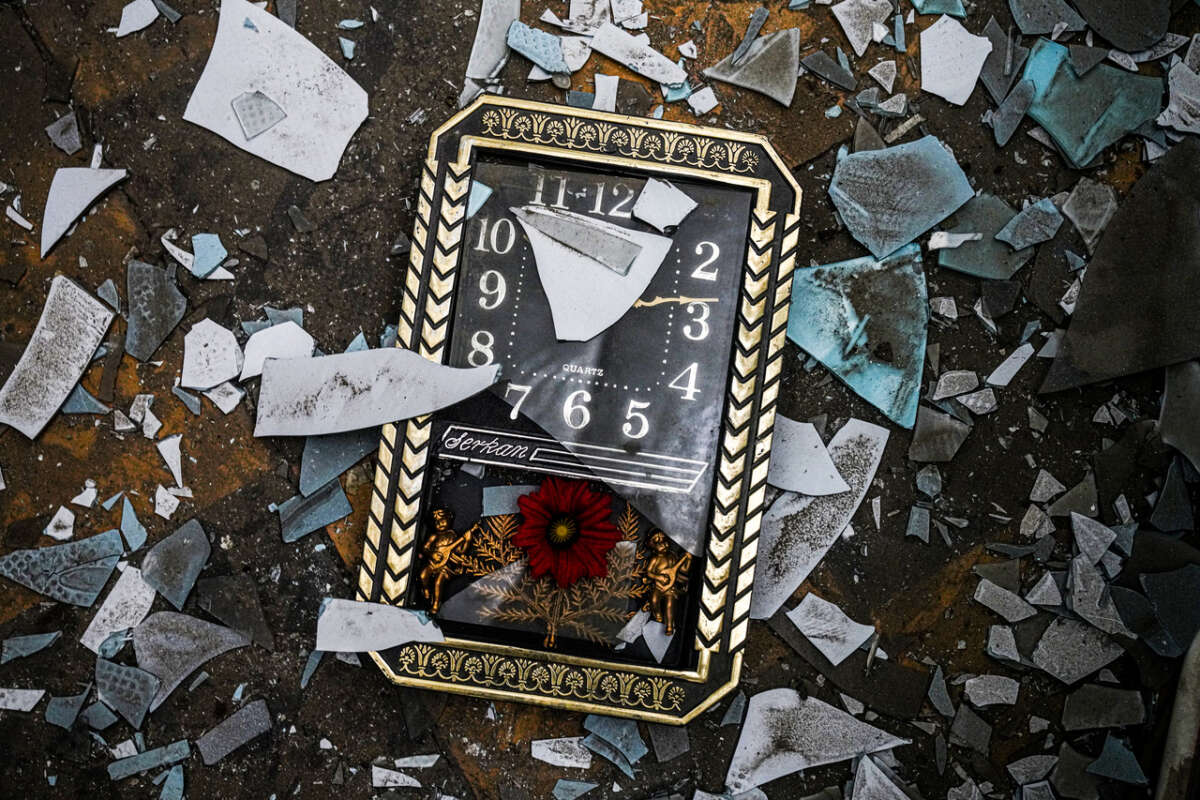
On the surface, the Israeli airstrikes hit a state-run media group that didn’t have many fans at home, but in essence they ruined a culturally significant edifice. The IRIB’s “Glass Building” that was destroyed in the attacks was an architectural icon, designed by the late Iranian architect Abdolaziz Farmanfarmaian. An offspring of the Qajar dynasty, Farmanfarmaian started conceiving and constructing the modernist building in the early 1970s, and it was unveiled in 1991.
Nahid Siamdoust, an Iranian American writer and assistant professor of media and Middle Eastern studies at the University of Texas at Austin, says the narratives demonizing Iran and presenting all media organizations there as propaganda outlets have been so successful that press freedom organizations are in some ways forsaking them.
“There should have been more of an outcry even against the targeting of state media. Israel has been criminally targeting media and journalists with complete impunity across the region, eroding our standards of protection for journalists,” said Siamdoust.
The latest tally by CPJ shows 263 journalists have been killed by Israel since October 2023 across different jurisdictions, including Gaza, Lebanon, Yemen, and Iran. The press freedom organization says Israel is engaging “in the deadliest and most deliberate effort to kill and silence journalists that CPJ has ever documented.”
According to Siamdoust, the impacts of the war on Iran will likely lead to further curtailment of free speech and renewed limits on journalists.
“When countries are at war and under attack, free speech is always the first casualty and media become more restricted, both due to external pressure and also self-censorship. The ongoing war will only continue to weaken the media industry, which is already highly restricted,” she told Truthout.
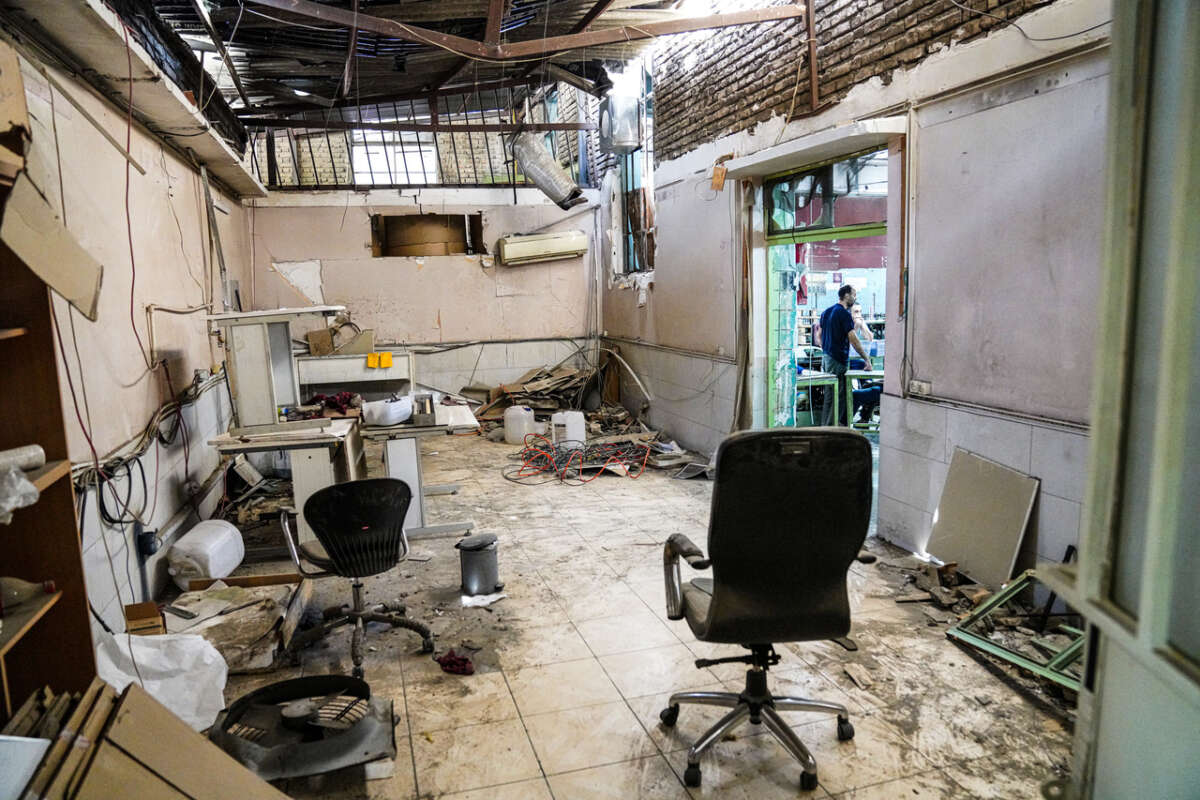
As the war drags on, private sector entrepreneurs without access to government grants and connections with the state will be left behind as reconstruction funding starts to be allocated. Independent journalists may find themselves beset by deepening constraints on their work, and community cultural spaces such as bookstores and private screening venues that were damaged in the war could become unavailable to young Iranians.
According to Azadeh Nazarboland, secretary-general of Iran Public Libraries Foundation, 64 public libraries were damaged during the first 39 days of the war. Some of these establishments, including the Dehloran library in Ilam Province and a religious library in the city of Zanjan were razed to the ground. Furthermore, the heavy bombardment of Enghelab Street, the de facto cultural center of Tehran, destroyed several privately owned bookstores in the first week of the war.
In southern Tehran, the capital’s first public cultural center serving a low-income community was extensively damaged in strikes that were reported on March 7. Bahman Cultural Center is affiliated with the municipality of Tehran and runs storytelling, athletics, computer skills, and English language classes for children and young adults.
Afrooz Mosallaei, a research associate at the Washington-based Center for News, Technology & Innovation, says military attacks on media institutions in Iran have been harmful in several ways, including by undermining an already fragile media ecosystem.
“Destroying these institutions does not create space for freer media; rather, it leaves many journalists with no legal avenue to publish their work at all.”
“Many freelance journalists and staff members who do not necessarily share the state’s ideology but rely on these institutions simply because there are no legal alternatives lose their jobs, their platforms, and often their only means of practicing journalism,” she told Truthout.
“Destroying these institutions does not create space for freer media; rather, it leaves many journalists with no legal avenue to publish their work at all.”
More than 3,500 Iranians have been killed so far in the illegal U.S.-Israeli war on Iran. When a Pakistan-brokered memorandum of understanding was signed on June 17, Trump praised it as a “very powerful document.” Its lifespan wasn’t more than three weeks, and the war has now resumed. Iran’s vulnerable media landscape, along with other parts of the society, will continue to pay the price.
Important Message: Please Read
For 25 years, Truthout has survived by publishing impactful investigative journalism and analysis; distributing full editions 365 days a year; and building a community of readers who support us with small, hard-earned donations.
Eighty percent of our $3 million yearly budget comes from small donors alone. Of those, 8,000 readers support us with monthly donations. Back in 2018, when Facebook decided to suppress the circulation of posts made by organizations, thereby cutting readers off from seeing many articles shared by the news organizations they had intentionally decided to follow, Truthout’s total traffic declined by 40 percent, as nearly all of our traffic from that platform disappeared.
Now, Google has recently rolled out its AI search bar, providing AI summaries instead of directing readers to our site. Google Search is our single largest source of traffic; it’s the route by which nearly one third of our readers find us. Much like in 2018, a shocking 40 percent of our Google traffic has disappeared overnight.
It will not be easy for Truthout to shoulder this blow. Nor will it be easy for our peers and collaborators — news sites that depend on traffic and aren’t bankrolled by large corporations.
If you can support Truthout with a donation today, you can help us resist the AI onslaught. Please give today.


+ There are no comments
Add yours